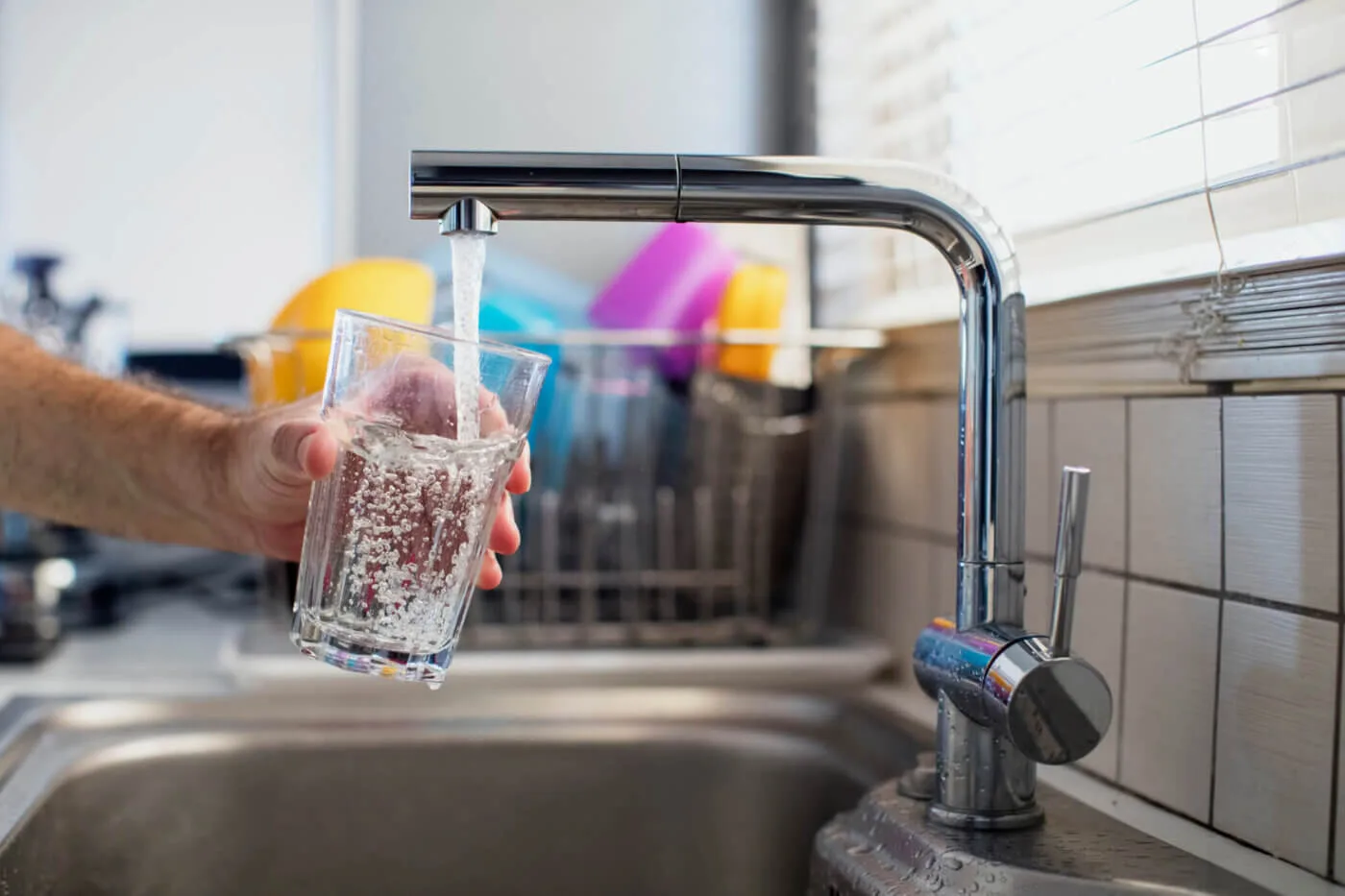
A study released last summer by J.D. Power ranked Pennsylvania’s tap water as the sixth worst in the nation, and found that 33% of the state’s rivers and streams failed to meet water quality standards.
Think about how many times throughout the day you use water. You probably use it to launder your clothes, bathe, cook, drink, and so much more.
But how much do you think about whether or not that water you rely on is contaminated? Depending on where you live in Pennsylvania, it’s something you might want to consider.
A study released last month by the US Geological Survey (USGS) found that at least 45% of the country’s tap water contains per- and polyfluoroalkyl substances (PFAS), which are commonly referred to as “forever chemicals” because they don’t break down in the environment. And Pennsylvania’s tap water ranked as the sixth worst in the nation, according to a study released last summer by J.D. Power, which found that 33% of the state’s rivers and streams failed to meet water quality standards.
While the term polyfluoroalkyl substances sounds rather scientific, those forever chemicals aren’t limited to laboratories and can likely be found in your home. The Centers for Disease Control and Prevention (CDC) defines PFAS as “a group of chemicals used to make fluoropolymer coatings and products that resist heat, oil, stains, grease, and water.” That means any nonstick cookware you use could contain PFAS, as could clothing designed to repel water (like rain jackets), stain resistant fabrics, or products that resist grease and oil.
PFAS in Pa. water
The USGS tested 161 Pennsylvania rivers and streams for PFAS in 2023, and found 76% contained one or more types of the chemical. High concentrations of PFAS were found in high-population areas, such as Philadelphia and Pittsburgh. The Environmental Working Group (EWG) hosts an interactive map on its website, showing PFAS contamination throughout the country. You can enter your address to see if there’s a possible contamination risk near you.
The EWG’s PFAS contamination map reveals over 100 instances in Pennsylvania. About one-third of the drinking water systems it tested in Pennsylvania were contaminated with PFAS.
Some of those instances, such as in Chambersburg, Carlisle, and Scranton, were due to PFAS used in firefighting foam at nearby military bases. Groundwater contamination has also been detected near the sites of shuttered military bases, like Willow Grove. The former Air Force base there closed in 2011, but contaminated groundwater was discovered in 2014 when public drinking water supplies were sampled.
The chemicals also were detected in the Schuylkill River in Philadelphia and Pottstown, the Wissahickon Creek in Philadelphia and Fort Washington, the Neshaminy and Valley creeks in Bucks and Chester counties, and the Brandywine Creek in Chadds Ford.
These waterways are sources of drinking water for residents in Philadelphia, the surrounding counties, and Wilmington, Del. However, the results only represent raw surface water, and not the amount of PFAS that comes out of taps. Several water providers already treat PFAS down to low levels before distributing it to customers.
While showering or washing dishes in contaminated water is unlikely to significantly increase health risks, research from the American Association for the Advancement of Science (AAAS) has shown that drinking water contaminated with PFAS could potentially lead to serious health problems such as some cancers, thyroid disease, ulcerative colitis, and developmental delays in children.
What is Pa. doing about PFAS?
The Environmental Protection Agency set a health advisory for PFAS in drinking water at almost zero parts per trillion. However, there are no enforceable federal regulations for the contaminants. That has prompted some states, including Pennsylvania, to take it upon themselves to do something.
Currently, Pennsylvania allows up to 70 parts per trillion of PFAS in drinking water. State Rep. Mary Isaacson (D-Philadelphia) introduced House Bill 604 in March 2023. It proposes to lower the acceptable amount of PFAS in drinking water to 10 parts per trillion.
“PFAS are forever chemicals,” Isaacson said. “They don’t go away. I felt the level that was currently allowed in the state now was too high. So I introduced a bill to lower it. I don’t know where my bill will go, but at least it will start a conversation to get these forever chemicals cleaned up.”
Isaacson’s bill is sitting in the Environmental Resources and Energy Committee.
What can you do about PFAS in your water?
In addition to checking for possible contamination near you, there are steps you can take to reduce the risk of PFAS contamination in your drinking water.
- Contact your local health department (find out if there’s one in your area here) or the state health department and your local water utility to find out what actions they recommend.
- Consider installing in-home water treatment options, like filters, that are certified to lower the levels of PFAS in your water.
If you have any concerns about the safety of your drinking water, you can reach out to your state Senator or Representative. For help finding out who represents you in the state government, click here.
“Every Pennsylvanian should be guaranteed clean drinking water and we should ensure it is readily available to them,” Rep. Isaacson said.
Author

Support Our Cause
Thank you for taking the time to read our work. Before you go, we hope you'll consider supporting our values-driven journalism, which has always strived to make clear what's really at stake for Pennsylvanians and our future.
Since day one, our goal here at The Keystone has always been to empower people across the commonwealth with fact-based news and information. We believe that when people are armed with knowledge about what's happening in their local, state, and federal governments—including who is working on their behalf and who is actively trying to block efforts aimed at improving the daily lives of Pennsylvania families—they will be inspired to become civically engaged.


Utility regulators vote to investigate Pa. American Water’s proposed rate increase
Pennsylvania regulators will investigate a proposed rate increase by the state’s largest water and wastewater utility. The potential move could...
US air travelers without REAL IDs will be charged a $45 fee
Air travelers in the U.S. without a REAL ID will be charged a $45 fee beginning in February, the Transportation Security Administration announced...
Gov. Shapiro sends nearly $220 million to SEPTA as agency complies with federal safety orders
After a months-long state budget impasse that resulted in no new recurring funding for mass transit agencies, Gov. Josh Shapiro announced Monday...

US Senate advances bill to end record-breaking government shutdown
Pennsylvania Senator John Fetterman was one of seven Democrats who voted in favor of the measure. WASHINGTON — Seven U.S. Senate Democrats and one...
Pennsylvania ramps up clean energy initiatives with Eos facility investment
While Pennsylvania trails behind some states in energy efficiency, new investments and financial incentives could indicate a shift toward...