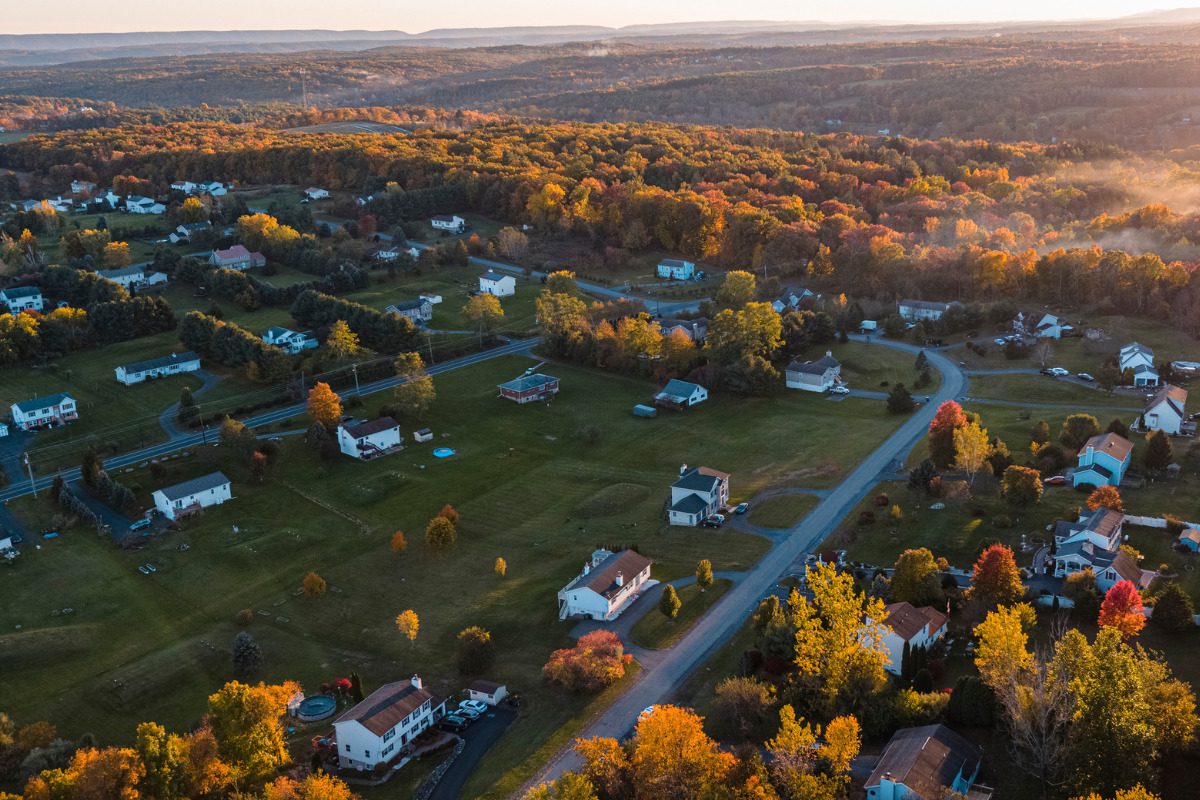
Sunset in the Appalachian Mountains over the small American town Jackson Township, Stroudsburg, Pennsylvania, Poconos region.
Medical debt is an issue that disproportionately impacts rural Pennsylvanians. Efforts to reduce medical debt have been thwarted by legislators representing those communities.
While rural Pennsylvanians are struggling under the weight of rising medical debt burdens, it’s their representatives in the legislature who are often least likely to pass measures to help.
State Rep. Arvind Venkat (D-Allegheny), who is the only practicing physician in the Pennsylvania House, explained during a recent interview that it is not that surprising for rural areas to experience more medical debt.
“If you want to look at where medical debt and collections is concentrated in Pennsylvania, it’s largely in rural Pennsylvania,” Venkat said.
“[Urban and suburban areas] have health systems that are far more integrated on the insurance side and the provider side, and so they’re able to offset costs by perhaps not sending patients into collections with medical debt.”
Rural communities have been impacted by hospital closures and mergers over the past 20 years. During that time, 33 hospitals closed across Pennsylvania with nine closures impacting rural areas.
With close to $1.8 billion of medical debt sitting in collections across the commonwealth, Venkat, along with Gov. Josh Shapiro, took steps to combat medical debt during the previous legislative session, but those efforts stalled due to Republican inaction.
The Pennsylvania House passed Venkat’s Medical Debt Relief Act with bipartisan support last year, but it has sat dormant in the Republican-controlled Senate since then.
Shapiro then attempted to include $4 million in his latest budget that would have eliminated $400 million in medical debt, but that fell short as well.
Data from the Urban Institute shows that Berks and Warren counties have close to 10% of their population with some sort of medical debt sitting in collections. That same data shows that those rural areas also have high rates of uninsured residents.
“When you’re talking about rural hospitals, when you’re talking about rural clinics, to the extent that they still exist as isolated areas and you have an aging population in rural Pennsylvania that may be working longer and even with Medicare or even with Medicaid, they often can be uninsured or underinsured in areas where the health systems don’t have as much of a choice or a margin to be able to absorb some of these costs,” Venkat explained.
“It’s perhaps unsurprising that this is largely concentrated in terms of medical debt collections in rural Pennsylvania.”
Author
Support Our Cause
Thank you for taking the time to read our work. Before you go, we hope you'll consider supporting our values-driven journalism, which has always strived to make clear what's really at stake for Pennsylvanians and our future.
Since day one, our goal here at The Keystone has always been to empower people across the commonwealth with fact-based news and information. We believe that when people are armed with knowledge about what's happening in their local, state, and federal governments—including who is working on their behalf and who is actively trying to block efforts aimed at improving the daily lives of Pennsylvania families—they will be inspired to become civically engaged.

3 Pennsylvania Republicans defy Speaker Johnson to force House vote on extending ACA subsidies
Four centrist Republicans broke with Speaker Mike Johnson on Wednesday and signed onto a Democratic-led petition that will force a House vote on...

As Congress debates ACA subsidies, Pennsylvania extends Pennie enrollment deadline
Pennsylvanians now have until Dec. 31 to enroll in the commonwealth’s health insurance marketplace. Pennsylvania officials have postponed to the end...
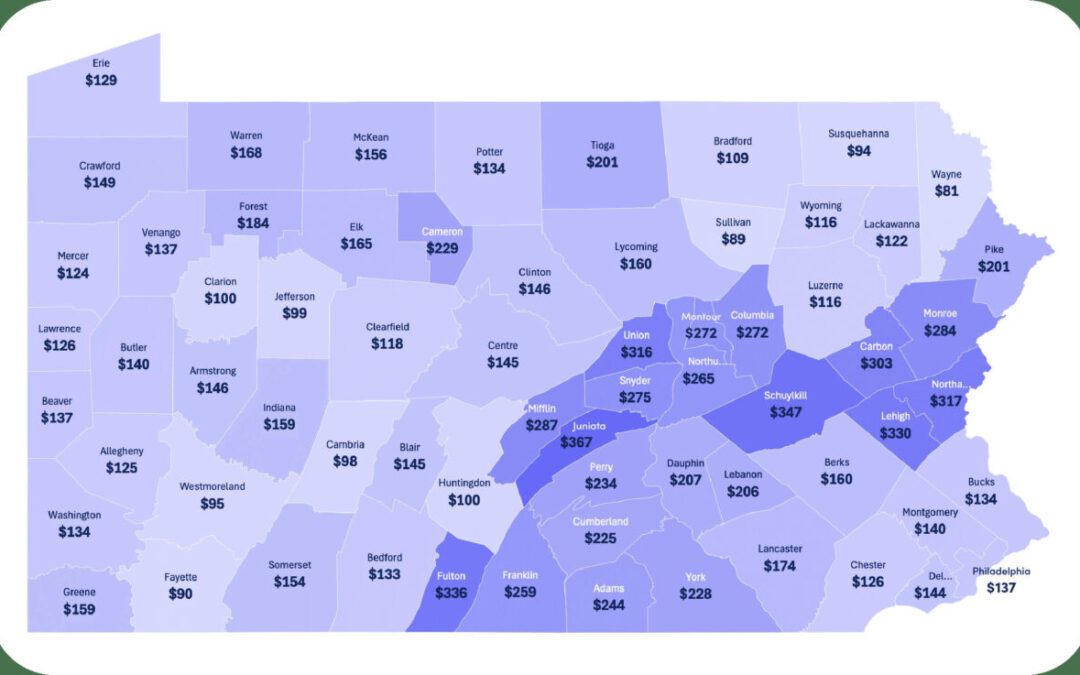
See how much Pennie premiums could go up by county in 2026
Pennsylvanians covered through the commonwealth’s Obamacare marketplace faced a Dec. 15 deadline for re-enrolling in the health program amid...

Home care workers in Pa. and other states are losing minimum wage protections — and fighting back
Three million care workers, many of them Black and Latina women, could be classified as “companions” instead of professionals. For more than two...
Congressional health insurance tug-o-war puts Pennsylvanians in a lurch
Premiums for state marketplace plans are expected to double in the coming year. Jamie and Carrie Wright rattle off the numbers with ease. It’s...