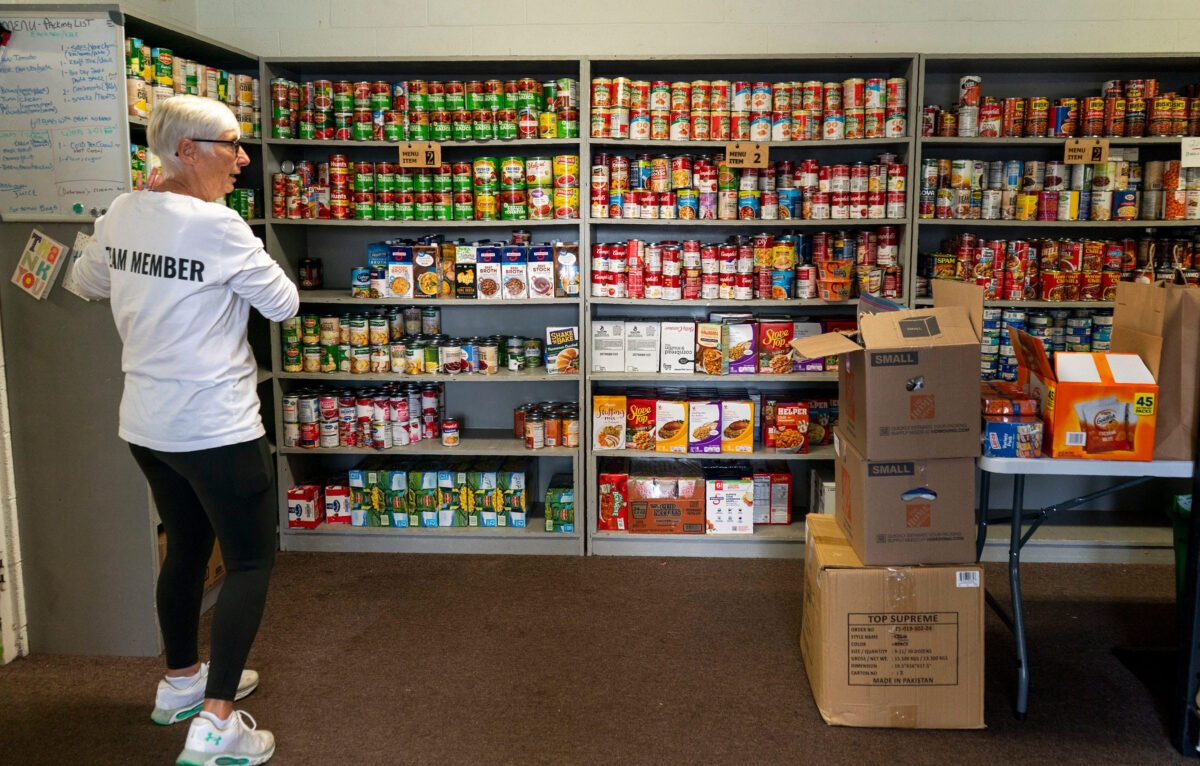
Cindy Field, New Britain Food Bank's executive director, shows the Courier Times around the food pantry in New Britain on Wednesday, Nov. 20, 2024. (USA TODAY Network/Reuters Connect)
Some 2 million low-income Pennsylvanians enrolled in the Supplemental Nutrition Assistance Program won’t be receiving their benefits for November due to the ongoing federal government shutdown. Food banks and community organizations across the state are stepping up to help those in need.
This story appears in the Keystone newsletter. Subscribe here.
Beginning Saturday, 2 million low-income Pennsylvanians will lose their SNAP (Supplemental Nutrition Assistance Program) benefits due to the federal government shutdown that began on Oct. 1.
Those benefits amount to around $187 per month ($5.85 per day) to buy groceries like fruits and vegetables, meat, poultry, fish, dairy, and bread.
Almost 60% of Pennsylvania’s SNAP recipients are in families with children. And more than 44% are in families with members who are older adults or are disabled.
Pennsylvania joined more than two dozen states in filing suit against the Trump administration Tuesday to demand the United States Department of Agriculture (USDA) use billions of dollars in Congressionally-appropriated contingency funding to make SNAP benefits available for November during the government shutdown.
The Trump administration has rejected the idea of using some $5 billion in contingency money to keep providing the federal cash for food, saying that reserve is limited to expenses such as help after disasters. That decision contrasts with a USDA report late last month that said a contingency fund could cover SNAP benefits if government funding lapsed.
Making matters worse is the fact that Pennsylvania’s ongoing budget stalemate has held up more than $25 million in aid to food banks. Senate Democrats are pushing for $60 million in emergency aid for food banks and Meals on Wheels programs to help offset the potential loss of SNAP support.
Here’s a look at how communities around the state are bracing for the cutoff in SNAP funding.
Bucks County
In Bucks County, where nearly 50,000 residents rely on SNAP benefits, food bank workers have said they’re already seeing an uptick in visitors prior to the Nov. 1 funding cutoff, including federal workers—many of whom are currently furloughed or working without pay during the shutdown.
That uptick comes as local food banks were already struggling to meet needs before the government impasse, as the number of SNAP recipients in Bucks County has risen by 28% since 2019.
Erin Lukoss, chief executive officer with the Bucks County Opportunity Council, said the group’s network of resources is already at capacity.
“The Bucks County Opportunity Council distributes more than 3 million pounds of food each year through our network of food pantries and community partners, but we simply cannot fill the gap left when federal nutrition programs like SNAP are underfunded or paused,” Lukoss said.
Council members estimated in their 2023-2024 report that roughly 56,570 Bucks County residents are food insecure.
Lukoss said that rising costs for housing, utilities, and childcare have already stretched families thin, and that a disruption in SNAP would mean even more people relying on the council’s food programs for help.
“Our message to the community is that this is not a partisan issue,” she added. “Access to food is essential for stability, health, and dignity. We are doing everything we can to ensure people have something to eat, but public programs like SNAP are critical to keeping families fed.”
Central Pa.
While the shelves inside the York County Food Bank are the most bare that CEO Jennifer Brillhart has seen in a long time, the nonprofit organization is preparing to serve more hungry people when the SNAP benefits dry up on Saturday.
Brillhart walked through the warehouse in East Manchester Township on Wednesday, pointing out the half-empty shelves, as she explained that approximately 60,000 neighbors in York County will be losing their SNAP benefits. The nonprofit typically serves 40,000 individuals each month.
The food bank will have a mass drive-through distribution at Living Word Community Church in Windsor Township on Tuesday, and it has been gearing up to meet the expected increase in need, she said. The staff has packed additional food boxes, and more volunteers are being called in to help.
“We’re a little nervous ourselves that we’ll be able to serve that need, but we plan to step up,” Brillhart said. “We’ll be there for our community.”
The York County Food Bank along with other nonprofits in the area, including New Hope Ministries and the Southern York County Pantry, have been receiving inquiries from families about what resources will be available.
In Republican US Rep. Scott Perry’s district, which includes Dauphin, Cumberland, and York counties, 114,860 SNAP recipients will lose their benefits, according to a news release. In fellow GOP Congressman Lloyd Smucker’s district, which includes Lancaster and York counties, the number is 73,729.
In addition to the SNAP benefits going away, funds for the Low-Income Home Energy Assistance Program (LIHEAP) that help families pay their heating bills also have been delayed by the federal shutdown. As people struggle to decide which bills to pay, such as rent, medical, heating and their car, they may be forced to live without multiple basic needs, said Eric Saunders, executive director of New Hope Ministries, which serves Adams, Cumberland, and York counties.
“I think we’re quickly going to see food security become really significant for our communities,” Saunders said. “There was a gentleman I heard quoted that said that we may be facing the biggest hunger crisis since the Great Depression. I hope that’s just alarmist, but I fear that that’s probably an accurate statement.”
Like the York County Food Bank, New Hope Ministries and the Southern York County Pantry are preparing to serve more individuals and families in the community. It comes with the holidays just around the corner as the nonprofits help to provide holiday meals to those with tight budgets.
Saunders said he is asking his board of directors to be able to tap into emergency funds to help serve the increasing need. With the federal cuts to programs, such as The Emergency Food Assistance Program, the social service agency’s food supply is at a lower level than it has been in a long time.
The nonprofit is trying to buy food from wholesalers and to get supplies from its partners, the York Food Bank, the Central Pennsylvania Food Bank and others, “but there’s just not enough food to go around for all the partners who need it right now,” he said.
Food banks and pantries are seeking monetary contributions as well as donations of goods from the public. With the upcoming Christmas fundraising season, Saunders said, he’s hoping that everyone remembers organizations doing the hard work and helping neighbors who are struggling.
“No donation is too small,” said Kristina Salko, a board member of the Southern York County Pantry.
During November, the pantry, located in New Freedom, typically receives strong community support through large donation drives, including the Boy Scouts, the Knights of Columbus and the Lions Club, she wrote in an email. In addition, Saubel’s Markets sells $5 donation bags, which helps to supply the pantry with staple items for the year ahead.
“While we do expect some strain, we’re confident that with the continued generosity of our partners and community, we’ll be able to meet the increased need,” Salko said.
Northwest Pa.
Second Harvest Food Bank of Northwest Pennsylvania, which feeds people in an 11-county area, sees growing signs of concern among those it serves.
Calls to Second Harvest’s food help line serve as an indicator of public angst.
“On an average day, we get from five to seven calls on that line,” said Gerry Weiss, director of network relations for Second Harvest. “Over the last two days, that number has tripled. Our neighbors in need are extremely worried.”
There are other signs of concern, including growing lines at food distribution events.
Weiss described one food pantry that does a weekly food distribution that typically serves between 130 and 140 households.
Last week, on Oct. 21, 150 households were served. On Wednesday, 170 households were served.
Weiss doesn’t think that’s an overreaction.
“As word gets out, people are concerned about how and where their next meal comes from,” he said.
Past government shutdowns—there have been 14 of them since 1980—haven’t resulted in a pause of benefits.
“A lapse in SNAP benefits is unprecedented,” Weiss said. “We are talking about what is probably the greatest anti-poverty program in the United States. This could cause a surge in the need for food assistance that we have never seen before.”
Due to the state budget impasse, Second Harvest is on track to spend $360,000 of its own cash reserves by the end of the year to fund the state food purchase program.
Weiss said Second Harvest and its network of nearly 400 food pantries and soup kitchens will find a way to help.
“Not feeding people is not an option for us. Our entire team believes that,” Weiss said. “We are here for our neighbors and always will be.
Erie’s Cynthia Torres understands the importance of SNAP benefits from a couple of different vantage points.
The 49-year-old, single with two adult children, works at least 30 hours each week as a house manager for the Mercy Center for Women, a nonprofit that provides transitional housing for homeless women and children.
Torres also works at the Mercy Center’s food pantry, which she said has been “slammed” in recent weeks. “We’ve been seeing lines around the block with people who need food.”
She talked about how a friend with a full-time job at a local group home, who has two small children herself, relies on SNAP benefits to feed her family.
“She makes $20 an hour and lives paycheck to paycheck,” Torres said.
And Torres, who earns $15 per hour, receives $290 each month from SNAP herself.
“If I could talk to the politicians, I don’t even know what I would say,” Torres said. “They’re not regular people like us. They’re still getting paid and they don’t have to worry about going hungry.
“I don’t know if they can even relate, because they’re not down here at our level dealing with the stuff that the kids, the single mothers and the senior citizens are,” Torres continued. “I guess I would ask them to think about the people who are working who need SNAP or the people who have disabilities who have trouble getting to the food banks.
“They have a political disagreement,” Torres said, “and we’re all paying for it. It’s sad.”
Somerset County
Somerset County Commissioner Pamela Tokar-Ickes said more than 10,000 Somerset County residents, or 14% of the county’s population, rely on SNAP benefits to purchase food for their households.
“It is unconscionable for federal officials to allow nutrition assistance to be used as a pressure point in the standoff over a federal budget. The USDA has funds that could be used to continue the program into the month of November,” she said in an email. “Emergency funds would provide more time for lawmakers to end their standoff and not disrupt families who need the program.”
On Wednesday, a line of 124 households waited in their vehicles or stood in line pulling carts, called walkers, outside the Somerset Food Pantry at Trinity Lutheran Church.
Soon 18 volunteers were filling boxes with food, while others carried the full boxes to the waiting families.
“We have had more clients over the past couple weeks. Last week we had 110 households and this week we have 124, with 30 new households signing up,” said Joseph Beer, a volunteer at the pantry.
The pantry serves those who live in the Somerset and Rockwood school districts in Somerset County. All food pantries serve specific school districts, Beer said.
The families must show a form of identification that proves they live in the community the pantry serves. On a simple one-page form, the family must list their income level. “It is self-certification,” Beer said.
He and his wife, Vickie Beer, believe the increase in those visiting the food pantry is because of the lack of funding that is to occur through such programs as SNAP and WIC, increasing food anxiety among families in the area.
When they enter the line outside the pantry, what most simply say is ‘We need food,’ Beer said.
There are eight food pantries throughout the county, run by volunteers and serving residents from the different school districts.
“The best thing you can do is to let people know we are here,” Beer said. At least this pantry has enough volunteers, normally about 20, but there is always a need for cash donations, especially, that can be sent to the church earmarked for the food pantry, he said.
Elsewhere, the Somerset County Mobile Food Bank distributes food to about 1,900 households each month at events held in Berlin, Boswell, Central City, Conemaugh Township, Confluence, Hollsopple, Meyersdale, Rockwood, Somerset, and Windber.
For now, the nonprofit is holding its own, but expenses have grown and financial help is dwindling, according to its executive director, Ben Tawney.
“Our food budget over the last few months has drastically gone up in price,” said Tawney. For example, frozen meat offered to food bank clients each month that was basically free now costs the organization thousands of dollars monthly to provide, he said.
The mobile food bank relies “heavily on donations and grants to supply food from the Greater Pittsburgh Community Food Bank, which is where the county’s food bank gets most of its foods and orders through to fund the operation,” he said.
“The Greater Pittsburgh Community Food Bank dipped into their emergency money for November to try to help. We are blessed that nothing has happened to our distribution. We haven’t cancelled any.”
However, the food bank is facing uncertainty, Tawney said, because “we don’t want to cut back the amount of food we give.”
What you can do to help
You can help your fellow Pennsylvanians battling food insecurity by donating to food banks and community pantries in your area.
Advocates encourage making monetary donations, which can have a much greater impact than donating food from your pantry. Many food banks have deals with manufacturers and distributors to purchase food in bulk at deep discounts. And with that money, they can buy the foods that are needed most in their area.
Some Pennsylvania food banks to consider donating to, based upon where you live:
- Philabundance (Greater Philadelphia)
- Central Pennsylvania Food Bank
- Greater Pittsburgh Community Food Bank
- Second Harvest Food Bank of Northwest Pennsylvania
- Second Harvest Food Bank of the Lehigh Valley and Northeast Pa.
Search for food banks and community pantries in your area here.
Keystone senior community editor Patrick Berkery contributed to this report.
Author

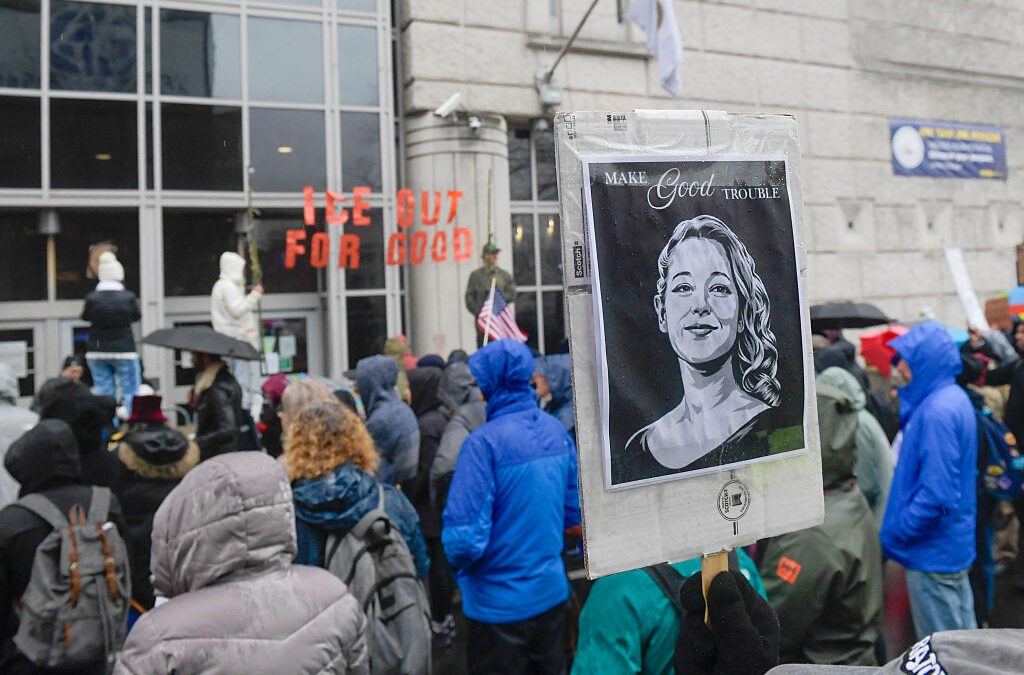
Philly labor and progressive organizations prepare for potential ICE surge
Philadelphia’s ICE Out legislation seeks to impose local regulations on federal immigration officials ahead of possible massive deployment....
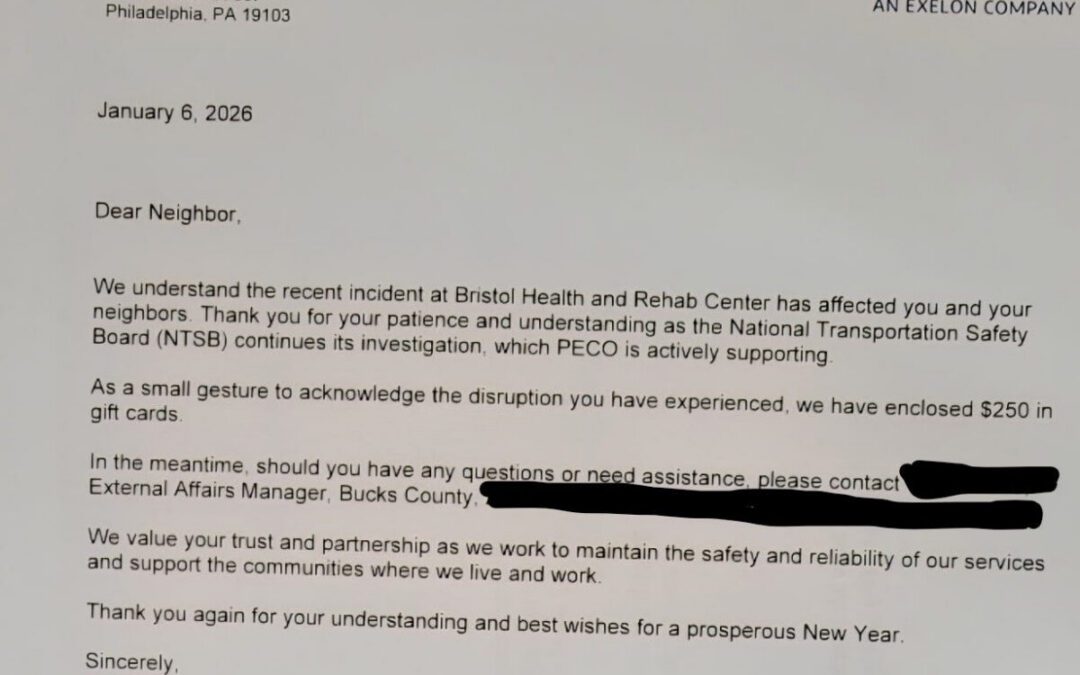
Why PECO handed out $250 gift cards to neighbors after gas explosion
After a fatal natural gas explosion at a Bristol Township nursing home, PECO distributed $250 gift cards to nearby residents while federal...

Why Pennsylvania public libraries may no longer process passport applications
Starting Feb. 13, most Pennsylvania public libraries will no longer be able to process passport applications after a US State Department decision...

More than books: A guide to free services at Pennsylvania public libraries
From 3-D printing, to passport renewal, to digitization of analog media, to professional development resources, you may be surprised to find out the...

Montgomery County man freed from jail after Minnesota church ICE protest arrest
The Montgomery County man arrested for protesting ICE at a church in Minnesota has been released from jail, according to Mother Jones. The U.S....