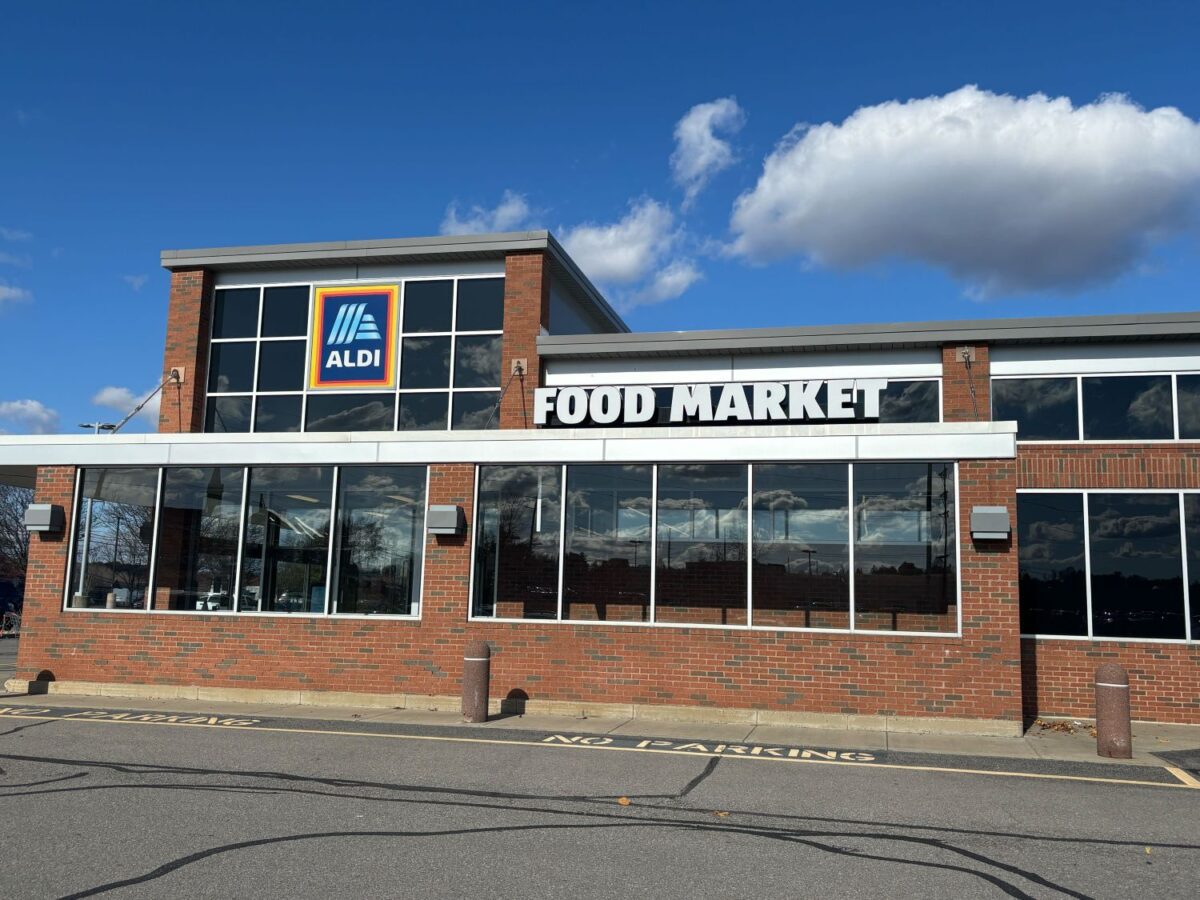
Aldi Food Market in Wexford, PA. Photo credit: Stacy Rounds
After surveying some Erie residents, folks overwhelmingly felt that Aldi is the most affordable grocery store in Erie. That does not mean that there aren’t great sales and specials at Wegman’s, Erie Food Co-op, Giant Eagle, or Walmart; it just means that overall, Aldi is the most budget-friendly place to shop.
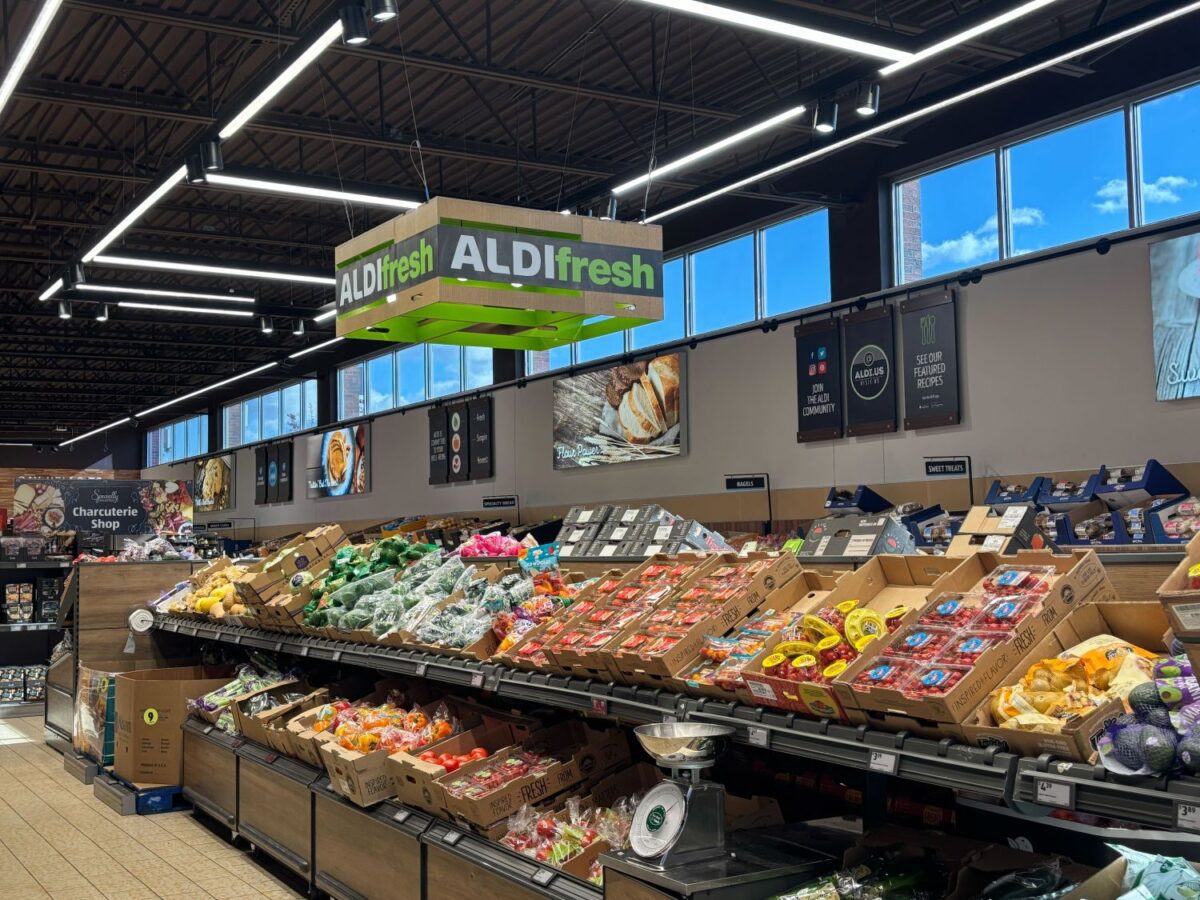
Inside an Aldi market. Photo credit: Stacy Rounds
A lot of everyday Americans, including myself, see Aldi as the most affordable grocery store because the whole shopping experience is engineered around saving money. Unlike big supermarkets that carry tens of thousands of items, Aldi keeps a very limited selection of mostly store-brand products—often under 2,000 items, compared to 30,000-plus at a traditional grocer. Less variety means simpler ordering, fewer suppliers, smaller stores, and lower labor and stocking costs. Those savings get passed on to shoppers in the form of consistently lower prices.
Shoppers also notice the little quirks that keep costs down. You put in a quarter for a cart and get it back when you return it, which means Aldi does not need to pay staff to chase carts around the parking lot. You bag your own groceries and either bring your own bags or pay a small fee if you forget them, which cuts down on supply costs. Many products are displayed right in their shipping boxes or on very simple shelving, reducing the time employees spend arranging displays. Everything from smaller staff sizes to streamlined layouts adds up, and customers see that in their receipts when meat, produce, dairy, and pantry staples ring up noticeably cheaper than at other chains.
Over time, that has built a strong perception that Aldi is the go-to store for stretching a paycheck. Media coverage regularly highlights how much a family can save on a weekly cart of groceries compared with conventional chains, and Aldi’s house brands have earned a reputation for good quality, which makes the low prices feel less like a compromise and more like a smart hack. The “no-frills, no-nonsense” vibe appeals especially during inflationary periods, when shoppers are trading down on brands but do not want to sacrifice quality.
Historically, Aldi started as a small family shop in Germany in 1913, when the Albrecht brothers’ mother opened a corner grocery in a suburb of Essen. After World War II, Karl and Theo Albrecht took over the business, expanding it into a chain of bare-bones discount stores built on tight cost control and low prices. In 1960, the company split into two separate but related entities—Aldi Nord and Aldi Süd—each operating in different territories under the same Aldi name.
Aldi’s American story begins in the 1970s. Aldi Süd opened its first U.S. store in Iowa in 1976, bringing its European discount model to a market that was used to much larger, brand-heavy supermarkets. From that foothold in the Midwest, Aldi steadily expanded, focusing on relatively small stores, low prices, and private labels. By the mid-2020s, Aldi operated roughly 2,400–2,500 stores in about 39–41 states, with headquarters in Batavia, Illinois, and ambitious plans to invest billions of dollars to add hundreds more stores by 2028.
Today, Aldi’s U.S. footprint stretches across much of the country. The chain is especially dense in the Midwest and Mid-Atlantic, as well as in Florida and other Southern states. Pennsylvania alone has more than 160 Aldi locations, and states like Florida, Illinois, and Ohio also have very high store counts. Recent growth has been driven both by building new stores and by converting existing supermarkets acquired from other chains, particularly in the Southeast.
For Erie specifically, Aldi has a strong presence for a city of its size. There are three locations within the city limits: one at 2222 Downs Drive on the southeast side, one at 2647 West 12th Street serving the west side, and one at 4728 Buffalo Road on the east side. All three typically keep similar hours, generally around 8:30 a.m. to 8 p.m. daily, and offer the standard Aldi mix of fresh produce, meat, dairy, pantry items, household basics, and weekly “Aldi Finds.” Many Erie shoppers also use curbside pickup or delivery through the West 12th Street store, which is set up for online orders and pickup.
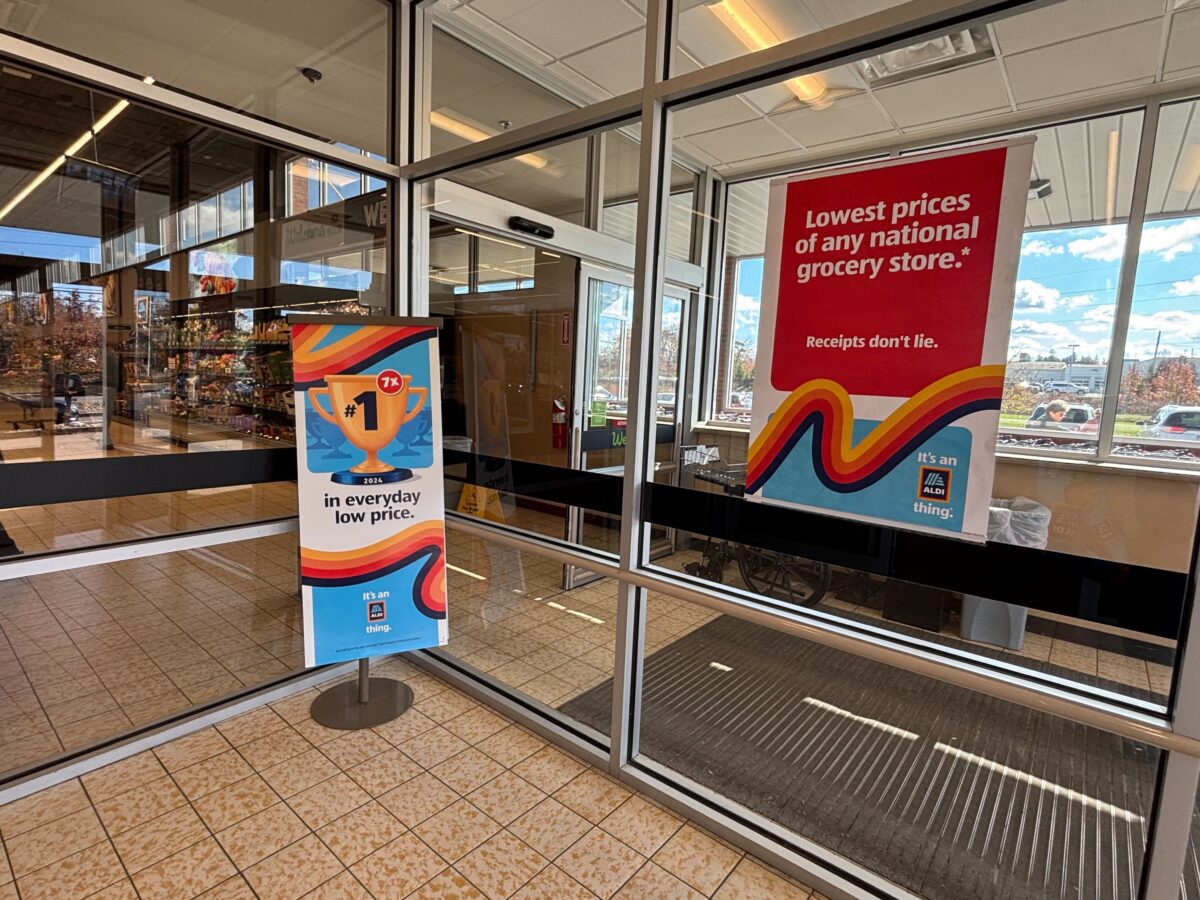
Inside an Aldi market. Photo credit: Stacy Rounds
Affordable groceries are particularly important in Erie because the city has higher-than-average poverty and food insecurity. Recent data show that about 24 to 25 percent of Erie residents live below the federal poverty line, roughly double the national average and higher than Pennsylvania overall. Erie County as a whole has a poverty rate of around 15 percent, also above the state average of around 11 percent, according to erievitalsigns.org. Nearly one in five residents countywide relies on SNAP benefits or cash assistance to help cover basic needs.
In real life, that means a lot of families, seniors, and people working low-wage jobs are constantly doing the math on every item they put in a cart. When rent, utilities, transportation, and healthcare eat up most of a paycheck, the grocery budget is often the only flexible line item. Stores like Aldi, where a cart of staples can cost substantially less than at a traditional supermarket, make the difference between being able to afford meat and fresh produce every week or relying more heavily on cheap processed foods or emergency food assistance. Over a month or a year, saving even ten or twenty dollars a week on groceries is meaningful for Erie households on tight budgets.
Erie’s economy is also in transition, with pockets of disinvestment and neighborhoods where transportation and access to full-service supermarkets are challenges. In those areas, having an affordable grocer that is reachable by bus or a short drive helps reduce the stress of food shopping. It supports parents trying to stretch SNAP dollars, workers whose hours fluctuate, students living on limited income, and older adults on fixed incomes.
For many people in Erie, including myself and my family, Aldi is the go-to place to shop for high-quality food while staying within budget.
Author


The 10 best pizzas in Pittsburgh, according to one local
Of all the places I’ve lived and all the pizza scenes I’ve attempted to conquer, Pittsburgh’s is by far the best. (Sorry, Denver.) There’s no...
From Animal Crackers to Simply Animals: York classic has a new name
The company explained it was a financial decision. Retaining the use of chocolate – which spiked in price due to poor weather-and-disease related...
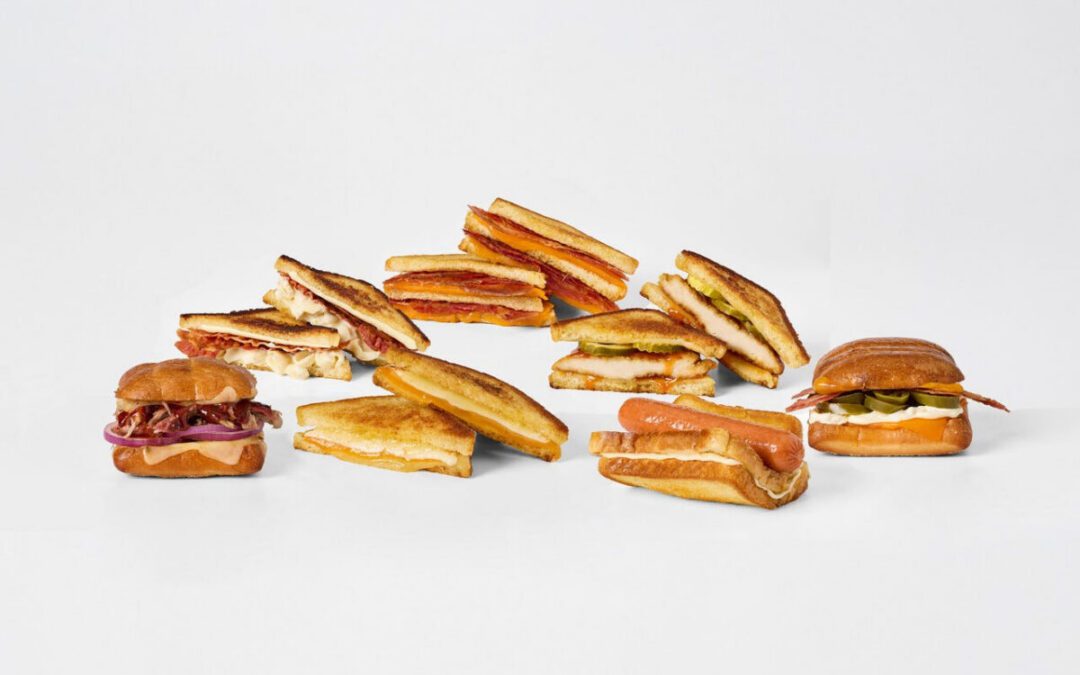
Rutter’s offers new grilled cheese sandwiches with a twist
Rutter’s has revamped its grilled cheese sandwich menu to put a modern spin on the classic comfort food, according to a news release. The...

Pickles on pies, craft beers on tap: Sabatini’s remains a NEPA pizza institution
The comforting pairing of Sabatini’s pizza and beer has kept generations of families coming back to the Exeter pizzeria that first opened in 1958....

This York County Indian fusion restaurant is one of the best in the US
Hamir’s Indian Fusion has set the bar for flavor and ambience in Central Pennsylvania dining for eight years. Now, it’s making headlines across the...