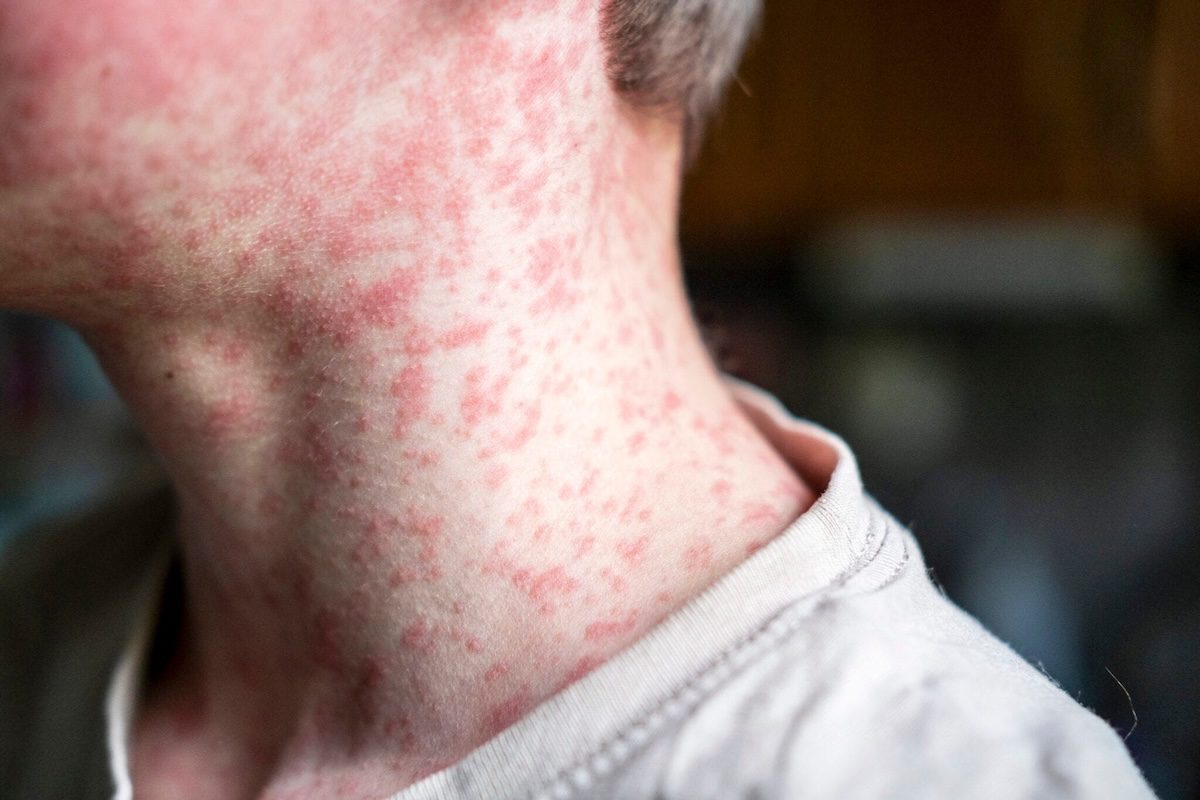
Measles begins with a blotchy red rash that typically appears on the face and then spreads to the body of the person infected. (Natalya Maisheva, Getty Images via Reuters Connect)
If you traveled through Terminal E at Philadelphia International Airport on Feb. 12, officials are warning of potential measles exposure.
Philadelphia officials responded to a confirmed measles case involving a person who travelled through Philadelphia International Airport last week.
The exposure was listed as Feb. 12 from 1:35–4:30 p.m. at terminal E, according to officials with the Philadelphia Department of Public Health.
Anyone who was in that location during the listed times is advised to monitor for symptoms and check to see if they’re immune to the disease, department officials said.
How to know if you’re immune from measles
According to city public health officials, individuals are considered immune if they:
- Received two doses of MMR vaccine.
- Were born before 1957.
- Have documentation of a past measles infection.
Anyone whose received only dose of MMR vaccine is still considered protected against measles and usually won’t need to stay home away from others after an exposure, but department officials recommend contacting a health provider to determine if a second dose is needed.
What to do if you’re exposed to the measles
City health officials said anyone who isn’t immune to the measles — especially those who are pregnant, have a weakened immune system or if their infant is less than 1 year old — should take the following immediate actions:
- Call your health care provider or pediatrician ASAP.
- Ask your health care provider if you qualify for post-exposure treatment, which can help prevent measles.
- Ask your health care provider to call the health department.
- Stay home (quarantine) and monitor your symptoms for 21 days after exposure. Avoid contact with others, especially if they’re unvaccinated or have a weakened immune system. City health officials said anyone exposed at the Philadelphia International Airport Terminal E on Feb. 12 should quarantine through March 5.
- If you or your child feel sick, especially if you have fever and/or rash, call ahead before visiting the clinic or hospital. Because measles spreads easily, special steps may be needed to protect others.
What is measles and its symptoms?
Common measles symptoms include high fever, cough, runny nose, and watery, red eyes. Some people may develop a flat, reddish-brown facial rash that eventually spreads to the neck, torso and rest of the body.
When the rash appears, a person’s fever may spike to more than 104 degrees Fahrenheit. Symptoms tend to appear a week or two after infection.
READ MORE: Pa. lawmakers and doctors push back against RFK Jr.’s vaccine policies
People are most contagious about four days before the rash appears and for about four days afterward. During this time, infection individuals should quarantine.
Other signs and symptoms of measles include:
- Loss of appetite and diarrhea.
- Koplik spots, tiny white spots that may appear inside the mouth two to three days after symptoms begin.
- Small raised bumps may also appear on top of the flat red spots (the spots may become joined together as they spread from the head to the rest of the body).
How contagious is measles?
The infectious disease caused by the measles virus is transmitted through the air when an infected person coughs, sneezes or breathes. It’s so contagious, health experts have said, that 90% of unvaccinated people exposed to it wind up contracting measles.
“Before the measles vaccine was introduced, an estimated 48,000 people were hospitalized and 400–500 people died in the United States each year,” the U.S. Centers for Disease Control and Prevention said.
By 2000, measles was declared eradicated in the U.S. thanks to a high percentage of people receiving the MMR vaccine, according to the CDC. More recently, however, measles activity in the U.S. has increased, which the CDC attributed to MMR coverage among kindergarteners dropping below 95% and a rise in global cases.
Can you get measles if you have been vaccinated?
While it’s rare, individuals who have been vaccinated with the measles, mumps and rubella vaccine (MMR) can contract the virus, especially if that person is exposed to a community currently experiencing an outbreak, according to the CDC.
Do older individuals need the measles vaccine?
Those born before 1957 have likely contracted the virus, according to the National Foundation for Infectious Diseases, and are therefore considered presumptively immune, having “developed life-long immunity.”
Do you need a measles booster?
Most vaccinated adults are immune to measles and don’t need a booster shot, according to the National Foundation for Infectious Diseases.
Is there a test to confirm immunity to measles?
For those who are unsure about their immunity to the virus, an MMR titer test can be done to determine whether you’ve developed the antibodies from past infections or vaccinations.
Author


Pennsylvania proposal aims to make vehicle registration cheaper
State car owners could save money when registering their vehicles, under a state lawmaker’s plan. In a memo seeking co-sponsors, House...

All Democratic governors, including Pa.’s Josh Shapiro, bow out of White House dinner after Trump snubs several
A traditional formal working meeting at the White House including governors of both parties appeared to be off the agenda. Democratic governors...

How to get new senior deduction for the 2026 tax season. It’s $6,000
A provision of the "big, beautiful bill" implementing most of President Donald Trump’s second-term legislative agenda passed in July includes a new...

Philly labor and progressive organizations prepare for potential ICE surge
Philadelphia’s ICE Out legislation seeks to impose local regulations on federal immigration officials ahead of possible massive deployment....
Why PECO handed out $250 gift cards to neighbors after gas explosion
After a fatal natural gas explosion at a Bristol Township nursing home, PECO distributed $250 gift cards to nearby residents while federal...