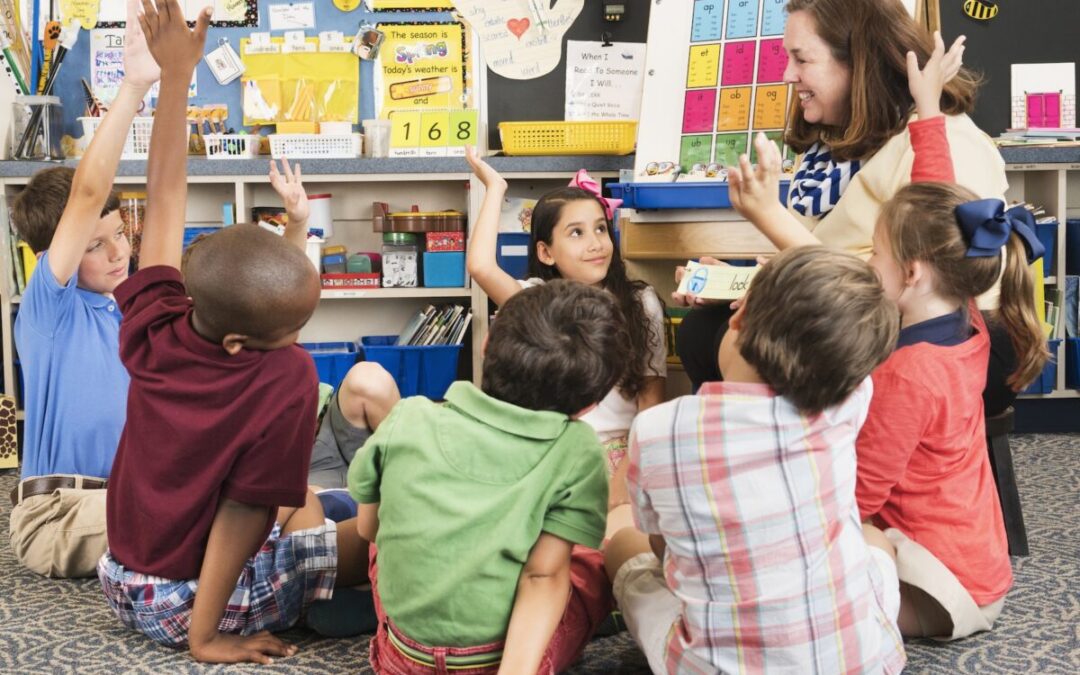
Less than half, or 44%, of the state’s 3- and 4-year-olds participate in high-quality, publicly funded pre-K, according to Pennsylvania Partnerships for Children. An estimated 84,000 children are left out and Black children are less likely to attend high-quality programs.
Research indicates that a quality pre-kindergarten education prepares children for kindergarten and beyond. Attendees are less likely to be incarcerated later in life and more likely to graduate from high school.
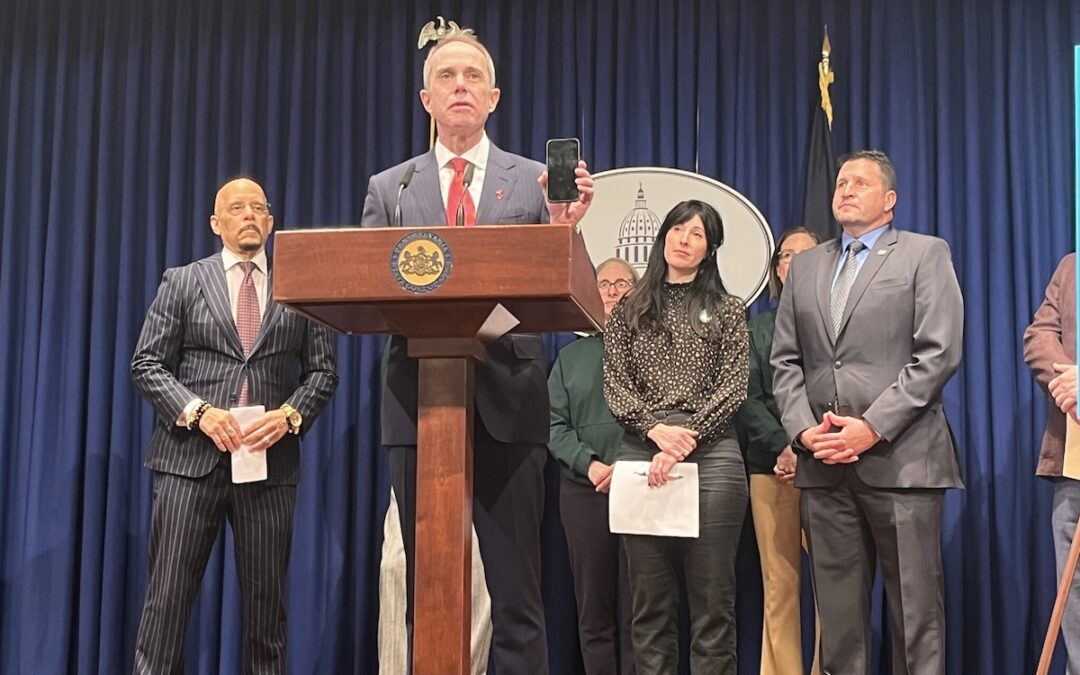
“Pre-K is one of the most cost-effective investments that the state can make,” said Rep. Sean Dougherty (D-Philadelphia). “High-quality early childhood education lays the foundation for lifelong learning and better health outcomes.”
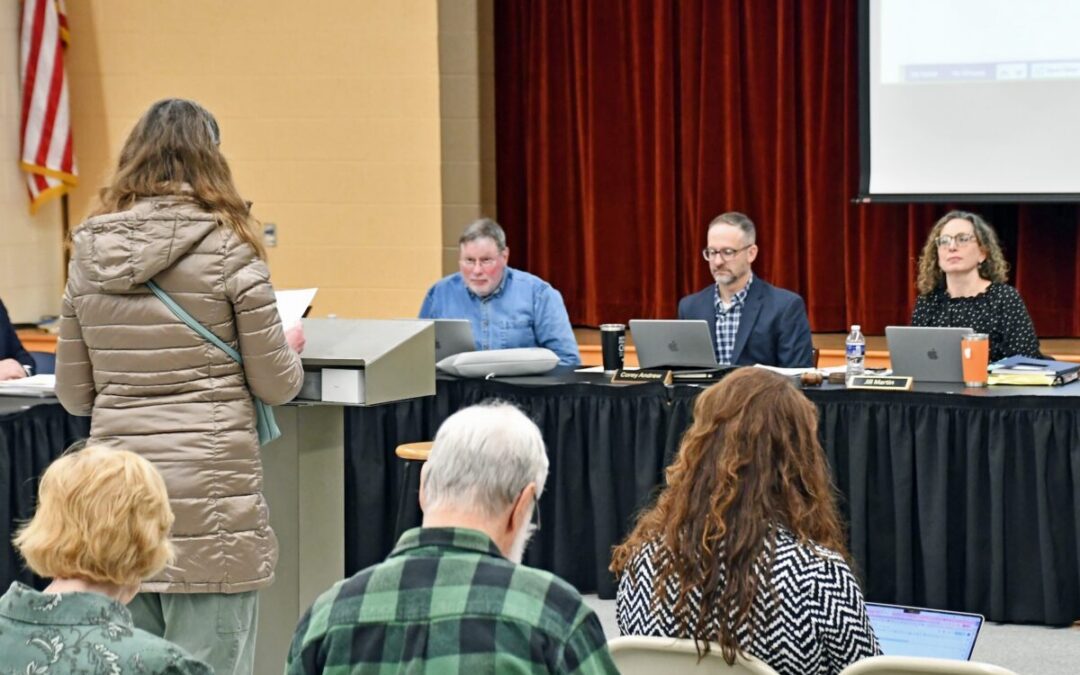
Dougherty is a co-sponsor of House Bill 46, which was the focus of a Tuesday committee meeting examining the benefits of universal pre-K.
Otis Bullock, the CEO of the Greater Philadelphia Community Alliance, noted low-income children are less likely to have access to early education resources and often enter school behind their well-off peers.
“It is widely recognized that the trajectory of educational success is determined before a child enters kindergarten. The experiences that children have in the first months and years have decisive impacts on their neuropathological development,” said Bullock. “Early childhood education must be a core component of any educational improvement or economic development strategy.
Recent analysis from the National Bureau of Economic Research reported that parent wages increased by nearly 22% when families had access to universal pre-K, Bullock added. The study found parental gains outweighed government costs, with each dollar spent yielding $10 in benefits.
A positive for families and schools
On average, preschool costs Pennsylvanian families more than $12,000 annually — but varies from region to region.
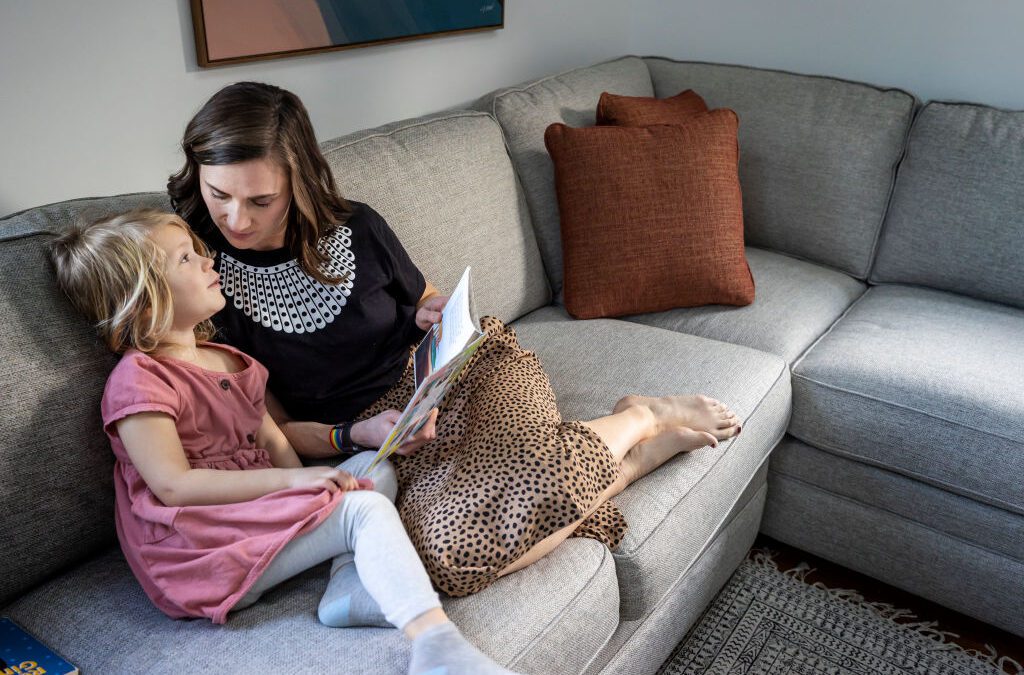
Zaina Cahill, an early childhood education policy director with Children First PA, said she spent $15,600 each year for her 4-year-old child in a low-quality classroom in Philadelphia.
“We were, unfortunately, not able to access a high-quality program in our neighborhood due to wait lists and costs. It was $20,200, so it’s pretty cost prohibitive,” said Cahill.
Universal pre-k, on the other hand, “would create a pathway for economic mobility for many families throughout the commonwealth, because then they wouldn’t be spending $15,600 a year on child care,” Cahill said. “This would be money that could be spent on all kinds of things to boost Pennsylvania’s economy.”
With more support, families may decide to have more children, Cahill added, which could increase the state’s sluggish population growth.
But Cahill and others warned that schools alone cannot fill the state’s need. Some districts, for example, offer only half-day kindergarten because of the lack of available space.
“The Philadelphia School District wouldn’t have the capacity to do it all on their own, and they will need organizations like mine to help them,” said Bullock. “So a mixed delivery system is probably the best way when addressing the entire commonwealth.”
The bill, sponsored by Rep. Tarik Khan (D-Philadelphia), would require school districts to offer preschool for all eligible children. But Khan called it an “opening gambit” that would evolve through the legislative process. He said getting to universal pre-K in the commonwealth will “definitely” use a mixed approach.
“The goal is to sort of get to where the programs — regardless of whether they’re coming from schools, whether they’re coming from these non-profits or some of these other agencies … are offering this high-quality pre-K and it’s available across the commonwealth,” Khan said.
Schools, he said, would see a “huge benefit” from having students with a quality pre-K education.
“It’s going to mean that (negative) behaviors are going to decrease. It’s going to mean that there’s less truancy (and) more engagement. Test scores are going to be higher,” said Khan. “It’s a net positive.”
A closer look at costs and spending
Pre-K Counts covers costs for thousands of children ages three and up from families earning up to 300% of the federal poverty level (or $99,000 for a family of four). Children with special needs or who are learning English may also qualify.
The program cost $317 million under the 2024-2025 budget to cover nearly 28,000 children, with nearly all funding going toward reimbursing providers. The state also allocated $91 million for the Head Start Supplemental Assistance Program, which expands an existing federal program for families making 100% of the federal poverty level ($33,000 for a family of four).
Gov. Josh Shapiro’s proposed spending plan bumps both of those funds up, adding $7.5 million to the former and $2 million for the latter.
Philadelphia expanded its free preschool programing more than eight years ago, outside of state- and federal-funded programs, using taxes from beverages. Though educational gains have been steady, the program is not without its challenges.
Khan, who praised improvements in his district since Philadelphia expanded pre-K, said prioritizing high-quality education investments has been “a very conscious decision” for the Democratic House majority, pointing to previous state spending.
“We still have significant investments to make in our schools, but this is a priority,” said Khan. “When we’re investing in education, we know that this is one of the smartest investments we can make.”
He also pointed to the need for additional revenue streams — a frequent theme of Shapiro’s budget proposals. But while the governor seeks to legalize and tax recreational marijuana alongside a tax on skilled games, Khan pointed to taxes for companies extracting natural gas and on the wealthiest Pennsylvanians.
“That rich gas that we have here in Pennsylvania, the companies that are extracting them are not paying their fair share,” said Khan. “We have an impact fee, but we don’t have a severance fee. That’s not hundreds of millions of dollars, that’s billions of dollars for the commonwealth that could be used to fund something like universal pre-K.”
Khan is a sponsor, along with primary sponsor Rep. Chris Pielli (D-Chester), of House Bill 2129 to create that severance tax. According to the bill memo, Texas — another large natural gas-producing state, collected $2.13 billion in 2024 in severance tax revenue.
House Bill 833, sponsored by Khan, would impose an additional tax on income exceeding $1 million. According to the bill’s memo, Massachusetts brought in more than $2.2 billion with a similar measure.
“Why can’t we do that here in Pennsylvania? It’s looking at other sources of income that are more than what we’re currently bridging in right now. Because right now it’s up to the working people to really shoulder the load and it should be more fair,” said Khan.