Rows of library books. (Photo courtesy of Zetong Li/Unsplash).
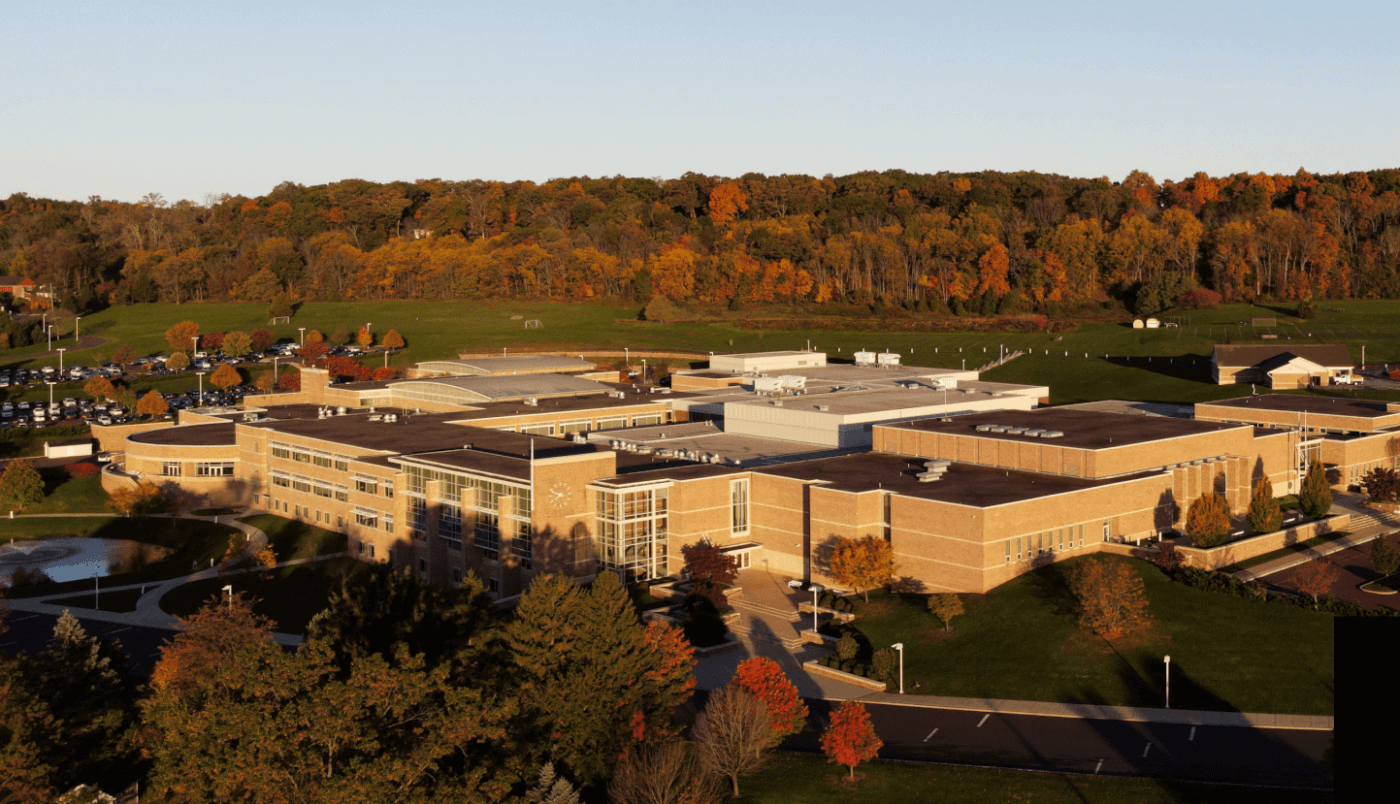
Southern York County’s elected school board approved a policy with broad language banning library books and any other material that “offends good taste or propriety.”
The language of the policy, adopted unanimously by members of the all-conservative board, is nearly identical to policies adopted by several other far-right school boards, including Pequea Valley in Lancaster County.
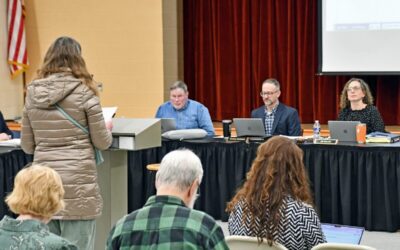
During Southern York’s March 19 meeting, board members said the library policy was drafted by the board’s solicitor. It’s not clear if any outside groups were also involved in its creation.
West Shore’s school board considered and ultimately tabled its own policy with similar language over concerns raised by administrators that it would inadvertently ban works by William Shakespeare and Geoffrey Chaucer.
That policy was based on one approved in the Adams County-based Bermudian Springs School District that, in turn, was drafted by the conservative, Christian Independence Law Center. The ILC has promoted book bans and anti-LGBTQ+ policies in districts across the state.
Southern York has itself passed several restrictions against its LGBTQ+ students. Last year, it also rescinded an invitation to a Black chemist who was invited by a parent-teacher organization to lead an elementary school’s STEM program.
The district’s new library policy states that vulgar language that “offends good taste or propriety” causes the material as a whole to “not offer serious literary, artistic, political or serious value for the intended audience.” The second half of that clause invokes the so-called Miller Test, which the U.S. Supreme Court created for determining when obscenity is acceptable in public contexts.
Books that meet the new policy’s definitions will not be stocked in Southern York’s school libraries, regardless of their artistic merit.
The new policy also requires that various sides of controversial issues are available for students to read, and any text that has been altered or is inconsistent with the author’s intent is not permitted.
Parents will also have the ability to opt their children out of certain teaching materials by requesting that their children’s access to those materials be restricted. This can be done by emailing the librarian an opt-out form explaining what the parent doesn’t want their students to read that material.
Southern York Board member Samantha Hall said she believes the policy will protect the school from possible liability in the event parents object to teaching materials.
“I feel comfortable as it is written that we are good with all of that,” she said.
A growing number of public school districts have faced lawsuits over curriculum and materials in libraries and classrooms. West Shore, for example, settled a lawsuit by several parents over its empathy-based curriculum.
“A library policy, no matter what it is, is going to be a potential political football in our climate,” Board member Bill Hall said.
South Western banned Mike Curato’s “Flamer” in 2024, which was included in a middle school classroom library. The district’s school board also required that teachers compile a list of the books in their classroom libraries and remove any they aren’t personally familiar with.
Central York also adopted its own version of a library policy in 2023 after two books were banned. Those books, “Push” by Sapphire and “A Court of Mist and Fury” by Sarah J. Maas, were returned to the high school library shelves after the policy was adopted.
Their policy created several categories for books in the district’s library system based on readers’ age. Parents also have the ability to restrict their children’s access to those age-based categories and request that books be recategorized based on content.
Author
Families turn to states for civil rights support as Trump dismantles the Education Department
In their mostly white school district, Black students routinely heard racial slurs. White classmates hurled insults like “slave,” “monkey” or worse....
State House Democrats: Pa. needs to prioritize universal pre-K
Research indicates that a quality pre-kindergarten education prepares children for kindergarten and beyond. Less than half, or 44%, of the state’s...
Pa. high school students weigh in on state policies for AI use following new tools
Students talked about peers who were “overly reliant” on AI for either their mental health, homework or basic skills. Shortly after the statewide...

How Pennsylvania school districts benefit from a closed education funding gap
School districts across Pennsylvania are starting to see the benefits of the commonwealth’s shrinking multi-billion dollar education funding gap...
School vouchers 101: Does Pennsylvania have them? How do they work?
Education funding is a regular topic of debate in Pennsylvania, both among lawmakers and residents—especially when you add school vouchers to the...