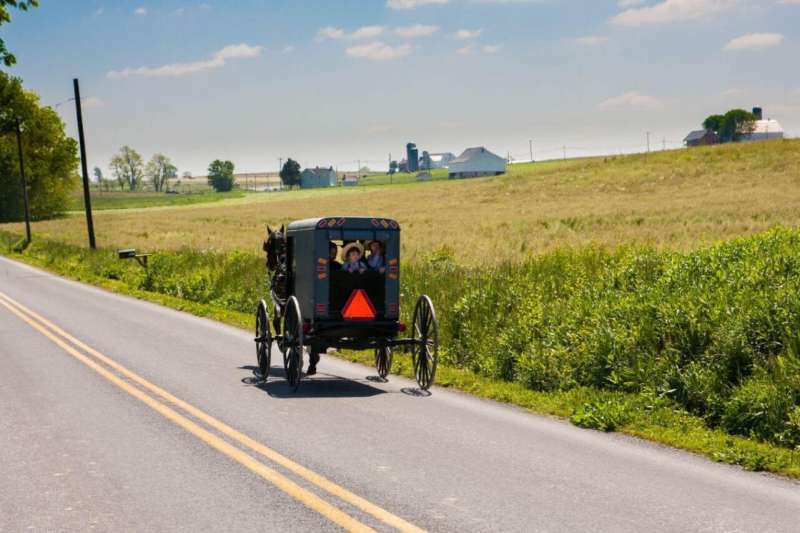
Taxes are due by April 15 for the Amish and their neighbors alike.
Contrary to some misconceptions, Amish individuals and businesses pay many of the same federal, state and local taxes as everyone else, often with the help of certified public accountants.
However, the primary difference lies in a federal exemption that allows some religious groups to opt out of Social Security and Medicare taxes.
Ernest Hershberger, an Amish man who owns Homestead Furniture in Mount Hope, Ohio, and Abner Henry Furniture, in Fredericksburg, Ohio, said preparing to file for taxes is “no different than anybody that’s not Amish.”
“We have our CPAs, local CPAs for businesses and also for personal,” Hershberger said. “We’re filing federal and state taxes, and we got business income taxes that we’re paying like everybody else.”
According to David Nagel-Nunez, a certified public accountant and account manager for Gift CPAs in Lancaster, Pennsylvania, the Amish pay taxes, but often less than non-Amish people.
“A lot of Amish are considered 4029-exempt, which in that case, it allows you to be exempt from Social Security and Medicare tax, which ends up being about 15% additional tax that everybody else needs to pay,” said Nagel-Nunez. He added that some Amish families with a lot of children are able to offset a lot of their income through child tax credits.
The Form 4029 exemption allows people in certain religious groups to be exempt from Social Security and Medicare taxes by waiving their ability to collect Social Security and use Medicare.
Hershberger said Social Security is the main tax exemption. He added that Amish also pay taxes toward the public school system, despite self-funding a parochial school system.
“It’s almost like a double taxation for us for our schools,” Hershberger said. “But we’re OK with that because it’s more important for us to teach the Christian curriculum than it is for us to be exempt from the public school system’s taxes.”
What taxes do Amish people pay?
Nagel-Nunez said that when people suggest “Amish people do not pay taxes,” they might not consider state and local taxes.
“In almost all cases, they still do need to pay local,” said Nagel-Nunez, adding that the Amish might end up paying “a decent amount” of local tax compared to the general population. He added that, depending on the family’s income level and if they have enough children for exemption, Amish people might be exempt from all Pennsylvania taxes.
Hershberger said he was not sure where the myth that Amish people don’t pay taxes comes from.
“I know it’s a myth that, for some of us, is a challenge because we carry more than our fair share of paying taxes,” Hershberger said.
Hershberger added that, in lieu of not mounting license plates on buggies, his community makes a special collection that goes to the state, township and county levels to help pay for road taxes.
What is the biggest tax burden for the Amish?
Nagel-Nunez said property taxes can be a burden for Amish businesses.
“A lot of Amish do have a lot of land in general because a decent amount of them are farmers and such,” said Nagel-Nunez. “So real estate taxes could be a bit higher for them.”