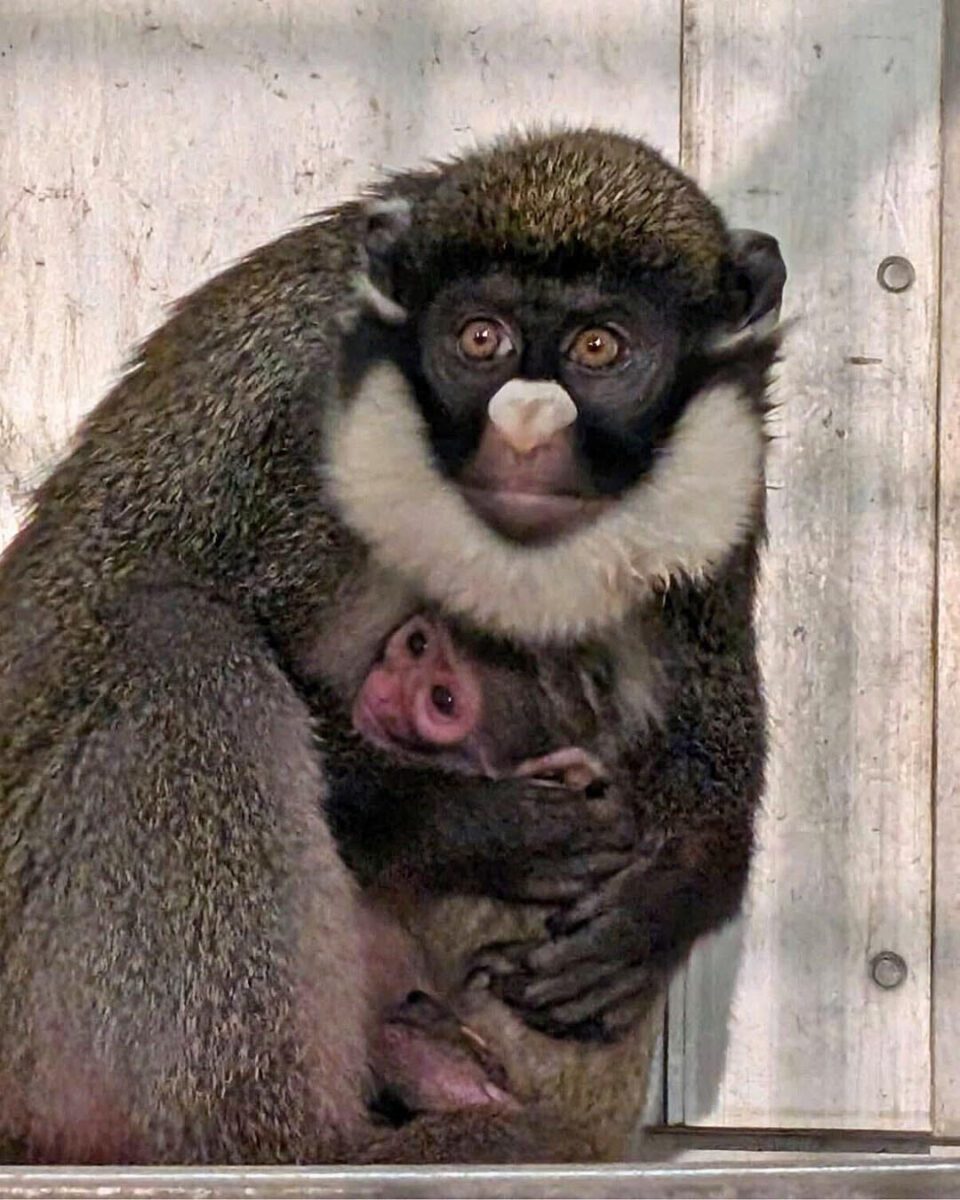
Georgia, one of the Erie Zoo's lesser spot-nosed guenons, is shown with her first baby, born Oct. 8, 2025. The baby monkey's gender wasn't yet known. Its father is the zoo's lesser spot-nosed guenon named Nemo.
The Erie Zoo welcomed a baby monkey.
The baby, a lesser spot-nosed guenon whose gender isn’t known yet, was born Oct. 8 to first-time mother Georgia and to father Nemo, zoo officials announced Oct. 9. They said the mother and the baby are both healthy and bonding well. Zookeepers also said that Georgia is showing excellent maternal instincts and keeping her little one close.
“This birth is a wonderful milestone for our zoo family,” said Jenn Salandra, animal curator of the Erie Zoo. “Each new arrival is a testament to the dedication of our animal care and veterinary staff and the success of our ongoing conservation and breeding efforts.”
Can I see the baby monkey?
The baby, who has not been named yet, might be visible with its mother periodically in their dayroom of the zoo’s Hilbert Family Primate Habitat, officials said in the release. This will depend on the mother’s comfort level and the baby’s needs during their early bonding period.
Zoo officials invited the community to stop by and welcome the newest member of the zoo family. However, visitors were encouraged to be patient and quiet near the exhibit dayroom to help mom and baby adjust during their first few weeks together. Both are being looked after by the zoo’s animal care and veterinary teams.
What is a lesser spot-nosed guenon?
These monkeys are native to the forests of West Africa, including the countries of Nigeria, Cameroon and Gabon, according to information from the zoo. Their conservation status is “near threatened” and, in the wild, spot-nosed guenons face challenges including habitat loss due to deforestation, hunting pressures and human encroachment.
Births like this one at the Erie Zoo are an important part of global conservation efforts, helping to ensure the survival of this species and educating the public about the need to protect their natural habitats, according to the zoo.
A lesser spot-nosed guenon gives birth to a single baby after 165 to 170 days of gestation. The monkeys grow to 14 to 18 inches in size plus a 2-foot tail, according to the zoo’s website. They eat fruits, leaves and insects and have a lifespan of 17 to 19 years.
Author

See births of thoroughbred horses via Bucks County’s live ‘foal cams’
The next thoroughbred champ may come from Bucks County, and you can watch as a star is born, literally, on “foal cams.” Pennsylvania Horse Racing...

Snow geese take off for the Arctic in mesmerizing sunrise display
A few dozen birdwatchers gathered in the predawn darkness to wait for the moment when thousands of migrating snow geese stopped honking and preening...
Texas Longhorns find a new home in Pennsylvania
You're driving down the road, and suddenly you see what you think is Texas Longhorn cattle. Wait. Did you somehow get transported 1,200 miles away?...
Get to know Pennsylvania’s viral animal stars
These Pennsylvania animals have fans far beyond the state’s borders. Animals have always lived alongside us, from the pets in our homes to the...
PA issues ‘do not eat’ fishing order in 3 counties due to contaminants
Trout stocking changes are being made in three Pennsylvania counties because of water pollution. The Department of Environmental Protection (DEP),...