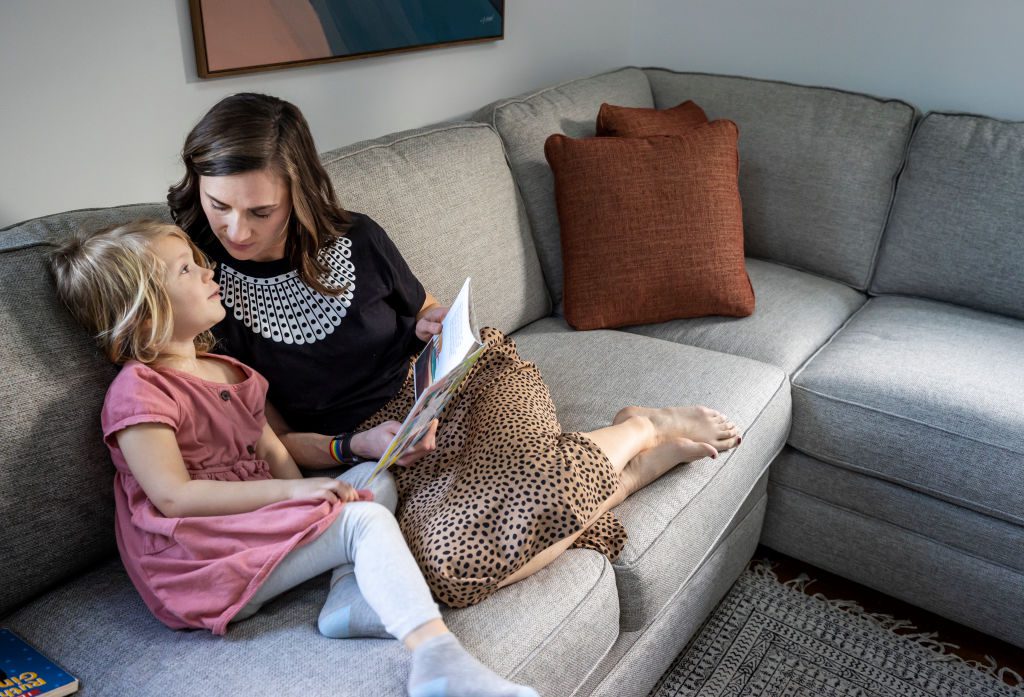
(Photo by Kyle Grantham for The Washington Post via Getty Images)
My summer tutoring sessions with soon-to-be-2nd-grader Victoria were exhausting for both of us.
She labored through sounding out small words like cat and Sam, forgetting them halfway through a text. We practiced words like he, my, and his again and again. As a 3rd-grade teacher, I did everything I could to make reading, writing, and practicing spelling patterns fun. We read engaging stories, we played games, we hunted for words around her kitchen.
After each session, I chatted with her mom, who asked thoughtful questions and sought my advice on what conversations to have with Victoria’s teachers, resources and books to buy, and how to best advocate for her daughter and her future. Our support ensured that this young reader was able to break apart larger words, reading texts at her grade level with confidence when the new school year began.
But Victoria’s reading struggles are not unique. In Cumberland County alone, where we live, one in three 3rd graders cannot read proficiently. Furthermore, Pennsylvania System of School Assessment (PSSA) English language arts scores dropped last school year, with only half of 3rd graders passing. Not every family can afford private tutoring to help their children learn to read. Not all families know what questions to ask, resources to buy, or have the time to sit with their children and read every night.
Thankfully, our state has begun to tackle this literacy crisis, acknowledging that students need structured literacy instruction—the systematic, explicit teaching of foundational skills like phonemic awareness, phonics, fluency, vocabulary, and comprehension. After months-long delays, Pennsylvania’s most recent budget includes $10 million for early literacy, an investment in students like Victoria.
The Commonwealth also passed a comprehensive literacy policy around screening young students to identify reading gaps early, as well as provided lists of evidence-based, higher quality resources and more targeted professional learning for educators. Yet, in years to come, schools will need additional financial support to implement these new mandates, purchase new materials, and train teachers. Schools must be held accountable to make sure all kids learn to read, not just the ones whose families have the means to do so.
It’s time for our Pennsylvania Department of Education (PDE) to assume a proactive role. This starts with ensuring teacher preparation programs include courses and field experience about how to teach structured literacy, with educator certification tests reflecting these skills. As it is now, not all teacher preparation programs include evidence-based reading strategies—like identifying syllable patterns and visualizing—in their coursework, and aspiring teachers don’t always have the opportunity to practice these approaches with students. Tutoring would not be necessary for students like Victoria if their early elementary teachers were taught and coached on how to use strategies like those I used with her during our sessions, including word segmenting and blending.
Additionally, PDE must publish a clear, comprehensive list of scientifically backed teaching materials that school districts should use. While lists have been provided, they lack specificity, consistency, and clarity. Now that districts will be required to implement structured literacy by the 2027-28 school year, they will look to PDE for resources, direction, and accountability.
When my district piloted and then purchased a new reading program, a district team thoughtfully evaluated the materials and ensured teachers were trained to use them effectively and robustly with their students. Imagine how additional support from a vast department like PDE will help whittle away at our statewide literacy crisis.
Finally, state education officials must issue concrete guidance about how districts adopt literacy resources and materials, provide teacher training on such topics as progress monitoring and fluency, and conduct student screenings to identify reading struggles early, creating follow-up oversight protocols that make sure the guidelines are followed. When it comes to collecting data about literacy, the state should create a system to track students’ scores on the screeners to identify patterns and ways to address trends. Victoria was screened in 1st grade—before screeners were part of state education law—which led to me tutoring her and targeting her reading gaps, setting her up for success as she moved from learning to read to reading to learn.
Her reading progress can be attributed to many factors, including her mom’s dedication, my tutoring, her school’s screening systems, and her own hard work. Recently, Victoria and I reflected on how far she has come. Now a 3rd grader, she is reading multisyllabic words like rainbow and paper, continuing to strengthen her confidence and love of reading. As Pennsylvania prioritizes early literacy and supports schools with evidence-centered continuity, I’m hopeful all our students will experience that same confidence and love of literacy.
Author

Families turn to states for civil rights support as Trump dismantles the Education Department
In their mostly white school district, Black students routinely heard racial slurs. White classmates hurled insults like “slave,” “monkey” or worse....
State House Democrats: Pa. needs to prioritize universal pre-K
Research indicates that a quality pre-kindergarten education prepares children for kindergarten and beyond. Less than half, or 44%, of the state’s...

Pa. high school students weigh in on state policies for AI use following new tools
Students talked about peers who were “overly reliant” on AI for either their mental health, homework or basic skills. Shortly after the statewide...

How Pennsylvania school districts benefit from a closed education funding gap
School districts across Pennsylvania are starting to see the benefits of the commonwealth’s shrinking multi-billion dollar education funding gap...
School vouchers 101: Does Pennsylvania have them? How do they work?
Education funding is a regular topic of debate in Pennsylvania, both among lawmakers and residents—especially when you add school vouchers to the...