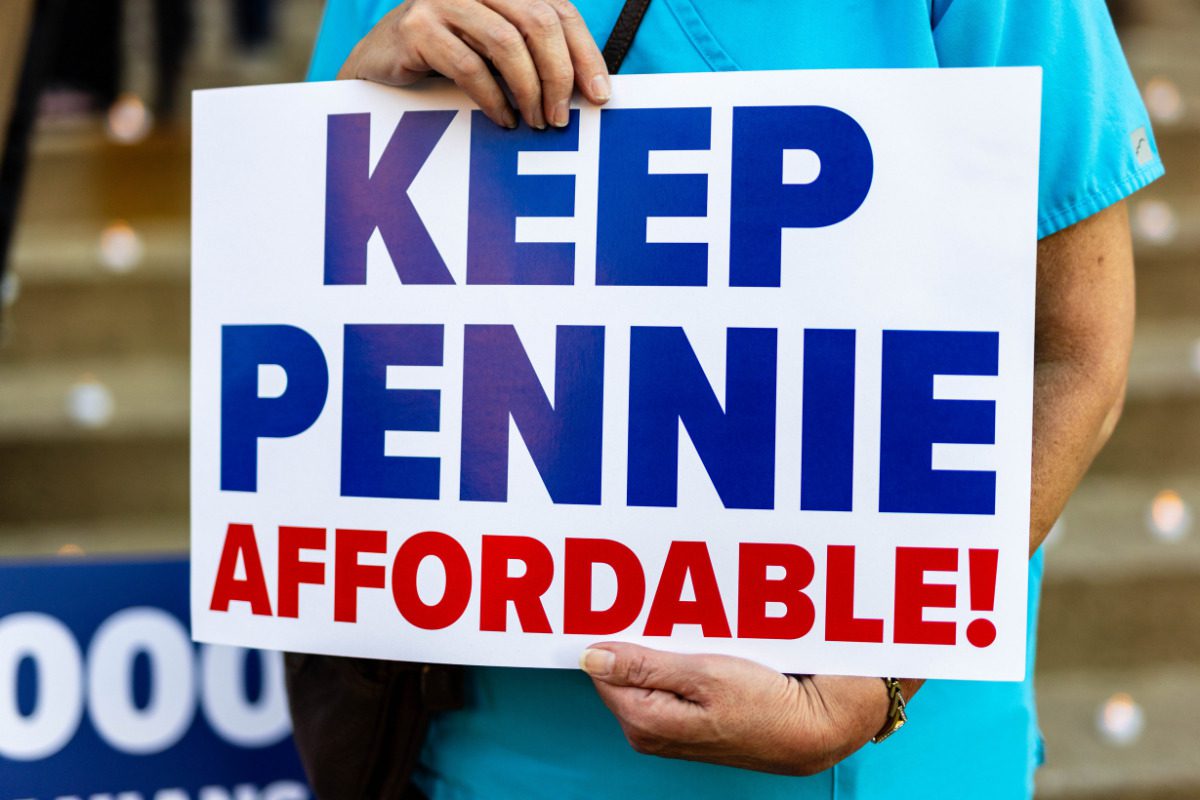
Susan Wiggins, a laboratory technician at Regional Hospital of Scranton, holding a sign advocating for Pennie outside of Scranton Municipal Building on Oct 5, 2025. (Photo: Sean Kitchen)
The Affordable Care Act was signed into law 16 years ago, giving millions of Americans access to affordable health insurance for the first time. But Republican opposition has made obtaining coverage through the exchange prohibitively expensive for millions, due to expiring federal subsidies.
One of the most consequential changes to the American health care system in generations became law 16 years ago.
As a result, millions of people discovered what it felt like to finally be able to afford health insurance.
“It was like a godsend,” said Lynn Weidner of Allentown.
The Affordable Care Act (ACA), signed March 23, 2010 by President Barack Obama, expanded Medicaid eligibility, created online insurance marketplaces, and protected people with pre-existing conditions from being denied coverage.
For many Americans, the ACA has meant earlier diagnoses, more consistent care, and greater peace of mind.
While hardly a perfect solution to the nation’s health care crisis, the ACA has opened doors for families who previously faced impossible choices between paying medical bills and covering everyday necessities.
Though for some, those doors have been closed indefinitely.
About 1 in 10 Americans (9%) who were enrolled in an ACA marketplace health plan last year are now uninsured following the lapse of enhanced federal subsidies that reduced their monthly premiums, according to a new survey by KFF, a nonpartisan health policy research group.
Nearly 85,000 Pennsylvanians (20%) previously enrolled in the state’s ACA marketplace plan, Pennie, have dropped their coverage due to rising premiums. The average premium increased by 102%, with some reporting monthly premiums that tripled.
While the US House voted in January to extend subsidies for moderate-income enrollees for three more years, the Senate has yet to take up the resolution.
To mark the 16th anniversary of the ACA’s passage, we spoke with several/two Pennsylvanians about their experience with the ACA.
Sarah Sculley, 30 — Philadelphia
“The Affordable Care Act saved my life. Growing up, I had an extensive family history of cancer and had a few extended family members who tested positive for the BRCA2 genetic mutation. BRCA2 drastically increases a person’s likelihood of developing breast and ovarian cancer, and has also been linked to others like pancreatic, prostate, melanoma, colorectal, uterine, and gastric cancer. Aware of that history, my family doctor recommended visiting a genetic counselor when I started puberty.
“In my appointment with the genetic counselor, she told me that there was a strong chance that I had the BRCA2 mutation, and that her medical advice would be to get tested for it, so that I could determine a preventative treatment plan as early as possible. But then she told me that her realistic advice would be to delay testing, because a positive BRCA2 result would make it nearly impossible, or at best prohibitively expensive, for me to find a new health insurance plan when I turned 18. She explained that the genetic mutation would be seen as a pre-existing condition, and health insurance companies wouldn’t consider covering someone who would likely develop cancer. Early intervention has been shown to substantially increase survival rates, particularly with breast cancer, but for me, early intervention would have prevented me from being able to afford treatment if it turned out I had the mutation and developed cancer.
“A year or two later, the Affordable Care Act was passed, and health insurance companies were no longer allowed to discriminate based on pre-existing conditions. I could finally be more afraid of cancer than medical bills. I gave it a few years to make sure the ACA was sticking around and then decided to get tested when I was in college. I found out that I did, in fact, have the BRCA2 genetic mutation. But, because of that diagnosis, it meant that I was able to formulate a plan with medical experts to increase my chance of survival and maybe even prevent these cancers entirely.
“The breast cancer prevention plan for someone with my history is aggressive: mammograms, ultrasounds, and breast exams once a year (in addition to monthly self-checks) until I turned 25, when the cadence would switch to every six months. Yet again, the ACA saved me, as all of this preventative care now had to be covered by my health insurance, including my prophylactic bilateral mastectomy.
“Without the ACA, I don’t think I would have been able to afford the preventative measures that more than likely saved my life, reducing my lifetime risk of developing breast cancer from about 70 percent to virtually non-existent. I have a few more years before I need to start on my prevention plan for ovarian cancer, but I worry that with all of the attacks on the ACA, I’ll be in the same boat as before, unable to access the care that would save my life.”
Lynn Weidner, 43 — Allentown
“I tried to get insurance before through private pay (prior to the ACA), but was denied because of pre-existing conditions. But they offered me a high-risk pool but it was expensive and the coverage wasn’t great. So it wasn’t worth it and I just didn’t have health insurance for a while, probably three or four years. I quit home care work for a while so I could work at a group home to get insurance.
“When the ACA came in, it was like a godsend. As soon as I could, I signed up for the ACA and got insurance. I was actually not feeling great. You know, you do stuff that you have to do. I had an ear infection, and I hit up a friend who had eardrops. I got sick at one point and I took fish antibiotics, because you can buy them off Amazon, and they’re basically the same as regular antibiotics. Or if I had to go to an urgent care and they gave me a prescription, I would never finish the prescription so I could save pills, just in case. That kind of stuff.gate
“I found out the reason I felt so crappy is that I had iron deficiency anemia, so my hemoglobin was very low. For whatever reason, I don’t absorb iron properly. I say the ACA saved my life. It quite literally could have. I could now get regular iron infusions. I get them every other month now. And my numbers are great and I feel good. Anemia’s not fun!”
Author
Support Our Cause
Thank you for taking the time to read our work. Before you go, we hope you'll consider supporting our values-driven journalism, which has always strived to make clear what's really at stake for Pennsylvanians and our future.
Since day one, our goal here at The Keystone has always been to empower people across the commonwealth with fact-based news and information. We believe that when people are armed with knowledge about what's happening in their local, state, and federal governments—including who is working on their behalf and who is actively trying to block efforts aimed at improving the daily lives of Pennsylvania families—they will be inspired to become civically engaged.

Pa. pharmacists call on the state to take a bigger role in how they’re paid for Medicaid patients
Their plan would sideline middlemen in the pharmaceutical supply chain known as pharmacy benefit managers — or PBMs. As hundreds of pharmacies close...

More Pa. hospitals are creating private police forces to curb violence
Just spotting the word “police” on an officer’s badge can encourage people to keep their tempers in check or think twice about committing a crime,...

Gender-affirming health records from UPMC can’t be made anonymous, federal judge rules
U.S. District Judge Cathy Bissoon said the DOJ’s request carries a “stench” of ill-intent With a stinging rebuke of the credibility and motives of...
Mom’s ‘miracle’ baby defies odds after rare pregnancy rupture
Ericka Michel was standing on a stepstool in her Corry living room, spreading joint compound on drywall, when a small gush of fluid flowed between...
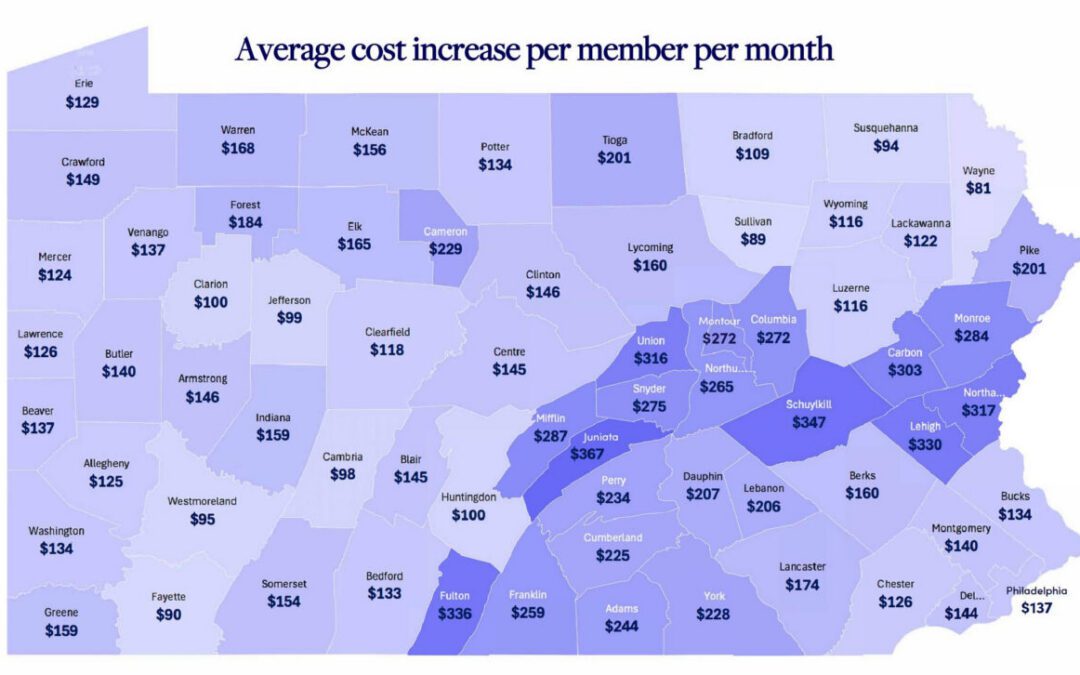
How much more are Pa. residents paying for ACA insurance
Pennsylvania's health care marketplace released data on average insurance cost increases in 2026 as media reports that Senate negotiations to...