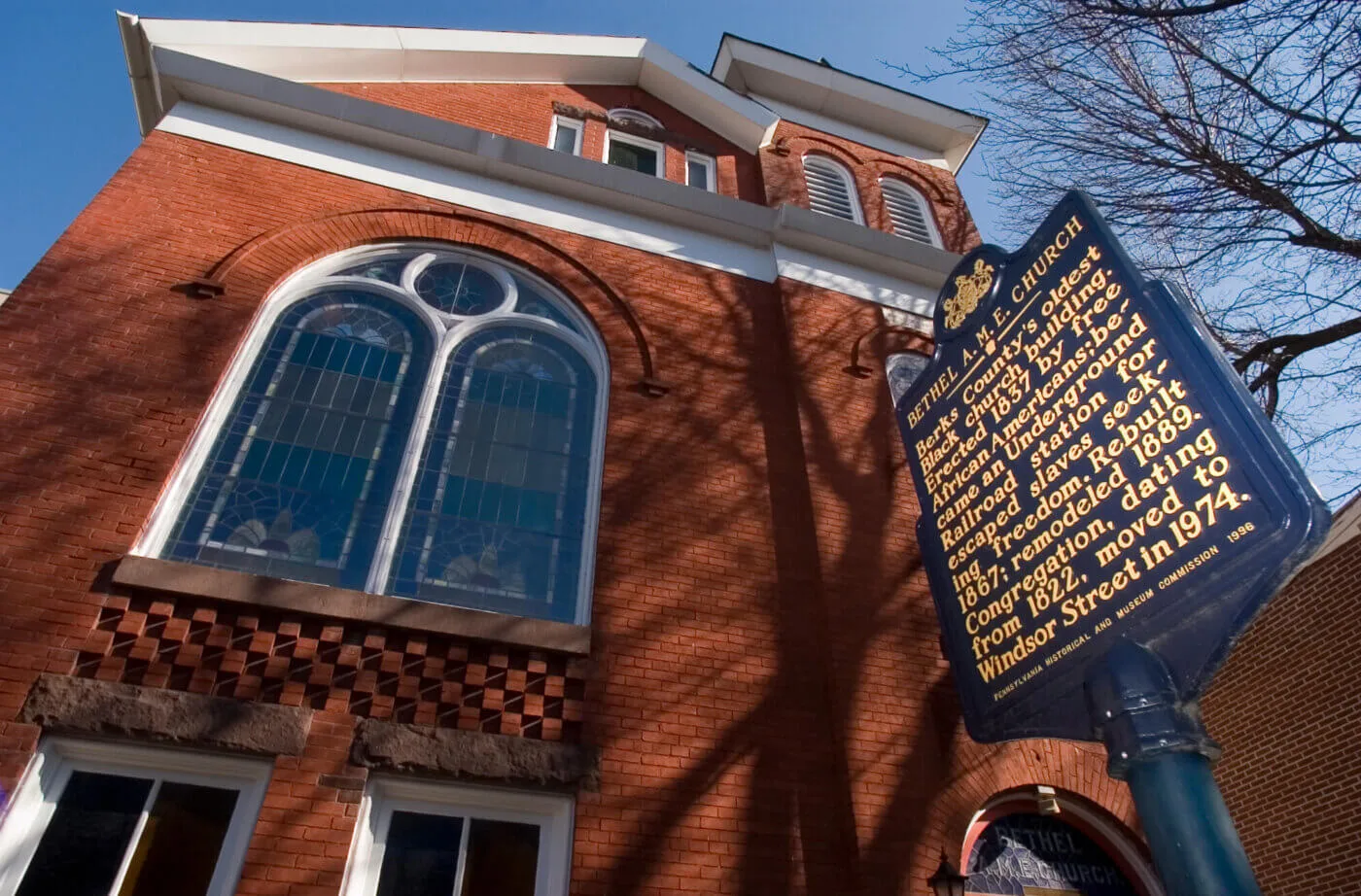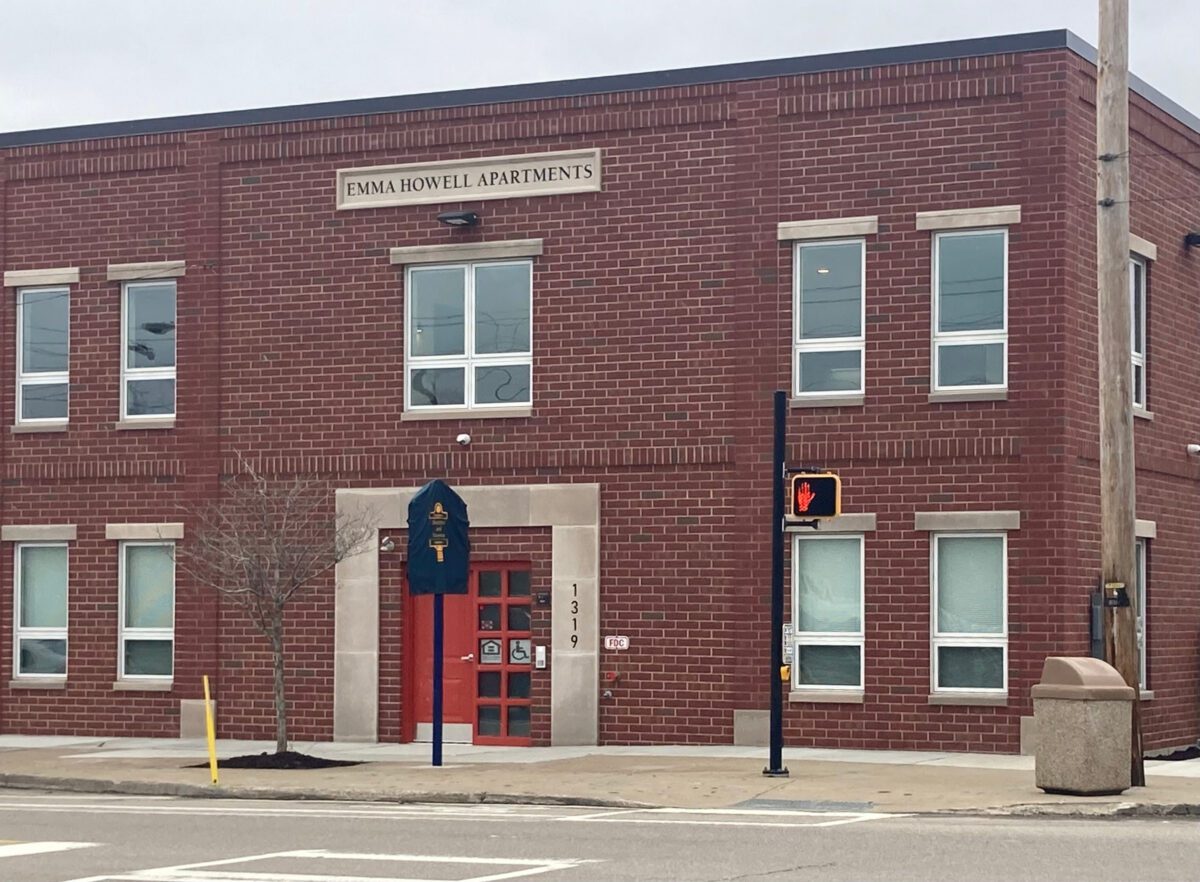
This is the Emma Howell Apartments building at 1319 Parade St. in Erie. The state historical marker honoring Howell and Ford Station is in front of the building. (Photo: USA Today Network)
A formerly enslaved Erie woman who helped conduct others to freedom was remembered in ceremonies on lower Parade Street on March 27.
Emma Howell and her family operated Erie’s first known Underground Railroad station and are credited with helping more than 300 formerly enslaved Blacks reach freedom in Canada.
A new state historical marker outlining Howell’s achievements and a new apartment complex named in her honor were unveiled in the ceremonies, during Women’s History Month.
The Emma Howell Apartments at 1319 Parade St. were built by the Housing and Neighborhood Development Service on land once owned by Howell. The four-unit building was designed for disabled occupants and will continue Howell’s legacy of hope and freedom, HANDS CEO Matthew Good said.
“This housing will offer a new chance in life and escape to freedom” for its tenants, Good said.
The historical marker
The Ford Underground Railroad Station marker by the Pennsylvania Historical and Museum Commission reads:
“In the early 1800s, Emma Howell, a Black woman freed from slavery, and her husband, James Ford, who liberated himself, owned the property at Parade and 12th streets and operated it as an Underground Railroad station. Prior to Emancipation, it was known to freedom seekers as a place for shelter and safe passage. Erie’s location on Lake Erie, proximity to Canada, and network of abolitionists made it a crucial way station for many freedom seekers.”
Ford Station was a station on the Underground Railroad from 1811 to 1836. Blacks helped to freedom included runaway slaves brought to Ford Station by abolitionist John Brown, who lived in Crawford County during that time.
The apartments
The Emma Howell Apartments were built on a previously blighted property at East 14th and Parade streets as part of H.A.N.D.S.’ commitment to neighborhood stabilization, affordable housing development and inclusive growth on Erie’s eastside, Good said.
The agency has built apartments and single-family homes and provided help for first-time homebuyers on the city’s eastside since the 1990s, Good said.
The Emma Howell Apartments are the first built and operated by H.A.N.D.S. east of Parade Street.
“It’s the direction we plan on going” in the future, Good said.
The apartments are an example of the type of housing greatly needed in Erie, Mayor Daria Devlin said.
“Housing continues to be a significant challenge in Erie,” Devlin said. “There is available housing. What’s needed is affordable, quality housing at a level that residents deserve.”
More about Emma Howell and Ford family
Emma Howell was brought to Erie by her enslaver, John Grubb, in the 1790s. She later was sold to land company lawyer William Wallace, who freed her in 1811 and gave her 45 acres of farmland centered along what today is Parade Street, according to documentation by biographer Kevin Johnson of Erie.
Johnson wrote “The Short Story, Big Life of Emma Howell, the Ford Family and Erie’s First Underground Railroad Station,” available at Blasco Library.
“She was a pioneer of Erie and was accepted as any other citizen of Erie,” Johnson said.
“Everyone knew her. Everyone could count on her. Her farm was a beacon for a lot of people who had nowhere else to go,” including Black sailors from Oliver Hazard Perry’s fleet during the War of 1812, Johnson said.
Howell married James Ford, who bought his freedom in Kentucky but was sold to the British in Canada. He escaped and came to Erie.
The family moved to St. Catherines, Ontario, in 1836. There they worked with Harriet Tubman and Frederick Douglass to help the formerly enslaved settle in Canada.
Author


Celebrate Pennsylvania’s rich history: Free entry to museums and landmarks on Charter Day
William Penn was granted a charter from England’s King Charles II to create the state of Pennsylvania. To celebrate the 344-year old charter, many...
A woman was the voice of Erie’s Black community a century ago
Segregation was the norm and the Ku Klux Klan was at the peak of its power when Jessie Pope advocated for racial equality. An early president of the...

9 interesting facts about the PA-born pretzel paradise, Auntie Anne’s
Be careful reading these facts about Pennsylvania-born Auntie Anne’s, the biggest soft pretzel company in the world, because you might just find...

The Valentine’s Day operation in Pittsburgh that made medical history
On Feb. 14, 1984, Dr. Thomas Starzl performed the world’s first heart-liver transplant at University of Pittsburgh Medical Center. Forty-two years...
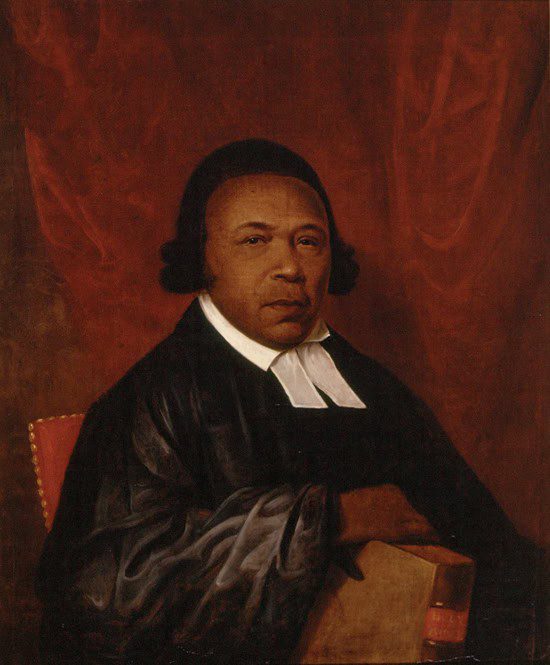
Explore the legacy of Philadelphia’s Black Founding Fathers
Philadelphia’s Black Founding Fathers fought for freedom during an era when it was routinely denied to Black people. Usually, when Americans talk...