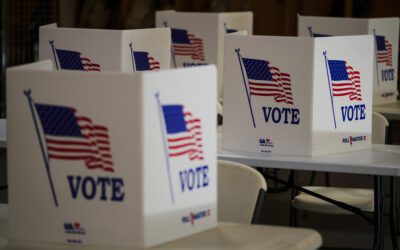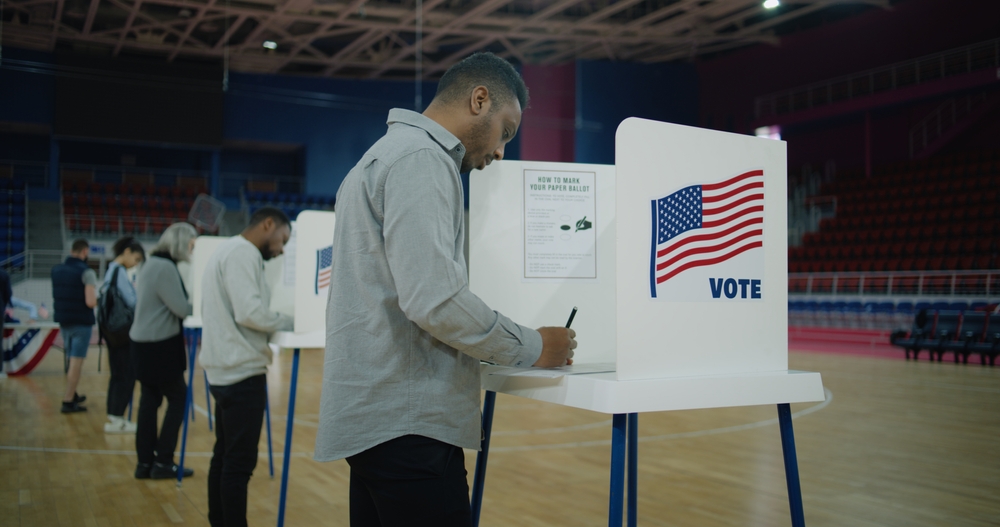
(Shutterstock)
Auditor General Tim DeFoor examined PennDOT’s procedures and found only one instance, due to human error in 210,000 records
An audit of more than 200,000 transactions in Pennsylvania’s motor-voter registration process found only one instance when officials allowed a non-U.S. citizen to apply, state Auditor General Timothy DeFoor said Friday.
The single case occurred because a PennDOT employee omitted the person’s immigration status when they entered data into the state’s driver’s licensing and control system. If no immigration information is provided, the system automatically classifies a person as a U.S. citizen and gives them the option to register to vote, he said in a news conference.
“The motor voter process worked as intended, but due to human error, the driver’s license camera card had incorrect information about the individual’s citizenship. That is unacceptable,” DeFoor said in a news conference where he and staff presented the audit’s findings.
While the non-citizen’s voter registration application was forwarded to the Department of State, which maintains voter records, PennDOT informed the Department of State when it discovered the error, DeFoor said.
A spokesperson for PennDOT said the mistake was corrected immediately, before the person left the driver’s license center.
“This person is not a registered voter in Pennsylvania, never voted in Pennsylvania during any election, and is no longer a resident of the Commonwealth. Ultimately, the audit confirms that PennDOT was and remains in compliance with both state and federal elections regulations,” Press Secretary Alexis Campbell said.
The audit also revealed problems with PennDOT’s data security protocols and recommended tighter internal controls.
DeFoor, a Republican, started the six-month audit in January 2024, a few months after Democratic Gov. Josh Shapiro signed an executive order making registering to vote automatic when applying for a driver’s license or state ID card. Registrations increased 66% following Shapiro’s order in September 2023.
According to the Department of State, the 353,000 new registrations from September 2023 through March represent about 8.1% of the people who were eligible but unregistered. Among the new voters, about 37% are third-party or independent and the remainder are nearly evenly divided between Republicans and Democrats.
Shapiro’s order prompted an outcry from conservative lawmakers who claimed it usurped the General Assembly’s authority to direct federal elections in the commonwealth. A federal judge, however, dismissed a lawsuit in March 2024 by two-dozen Pennsylvania Republicans.
In the lead up to the 2024 presidential election, President Donald Trump, then running for his second term, and others pushed baseless claims that non-citizens were voting in elections across the country.
On Friday, DeFoor was deliberate in stating the audit did not include the Pennsylvania Department of State, voter rolls, the Statewide Uniform Registry of Electors or how elections are conducted.
“I want to be very clear about a few things,” he said. “This is not an audit to determine if non-U.S. citizens voted in elections … This is an audit performed at the request of legislators to determine if PennDOT and the governor’s Office of Administration are properly implementing the motor voter process.”
DeFoor added that the scope of the audit was limited by practical considerations, such as the time needed to examine the records. PennDOT and the Department of State would need to determine whether the solitary error the inquiry found was an isolated glitch or whether other non-citizens have been given the option to complete a voter registration application.
The federal motor-voter law, formally known as the National Voter Registration Act, aimed to boost voter registration by requiring states to offer opportunities to register at motor vehicle offices. Recognizing that many low-income people don’t drive, the 1993 law’s drafters also required that states offer voter registration at public assistance offices.
Shapiro’s order changed the voter registration offer from an opt-in question to an opt-out, meaning that unless a person affirmatively chooses not to register, an application is automatically sent to the Department of State. The order applied only to PennDOT and not public assistance agencies.
For the audit of PennDOT’s motor-voter process, DeFoor’s staff met with PennDOT and Office of Administration personnel and conducted interviews to determine how the process works and requested information. DeFoor noted the effort required his office to enter non-disclosure agreements, given the sensitivity of the personal information involved.
Out of about 210,000 records, the auditor general’s staff identified 58 for additional review because they indicated the person was a permanent resident non-citizen or contained no information about the person’s citizenship status.
Todd Wisniewski, director of the Bureau of IT Audits, said the system recognizes four indicators of citizenship status on the camera cards it produces when a person is determined to be eligible for a license or state ID. They are “P” for permanent resident non-citizens, “T” for temporary resident non-citizens, “N” for naturalized citizens and “Null,” for natural citizens.
Five of the records pulled for further review had indicated the person applying was a permanent resident but not a citizen and the remaining 53 had the immigration status field blank, Wisniewski said.
“We reviewed passports, birth certificates and or other supporting information to verify that 57 of the 58 individuals analyzed were, in fact, citizens, as indicated in their voter registration application,” Wisniewski said. “We verified that one individual was a non citizen, and their voter registration application was mistakenly sent to [the Department of] State.”
The audit also found that while PennDOT and the Office of Administration indicated that 706 employees had access to the PennDOT system, it was unable to provide logs and other automatically generated evidence that only authorized employees had access. The agencies also told auditors they did not conduct periodic reviews of user access and had no formal requirement to do so, Wisniewski said.
Author

Ex-Bucks County man guilty of double voting for Trump in 2020 election
A federal jury has found a former Bucks County man double voted in the 2020 election rejecting an earlier defense that the crime was covered under a...

Secretaries of state honor Erie Benedictine Sisters for political courage
The political courage of the Benedictine Sisters of Erie was recently recognized after they spoke up against false accusations of voter fraud at...
What does bid to let PA independents vote in primaries mean for you?
A group of five independent voters including political commentator Michael Smerconish filed a lawsuit Dec. 10 asking a Pennsylvania court to end the...

Pa. voter turnout topped 42% in November’s municipal election dominated by Supreme Court race
More than 42% of registered voters in Pennsylvania cast ballots in last month’s election, marking a significant jump in participation over turnout...

History reveals Joe Khan, Bucks County’s DA-in-waiting, is a political anomaly
Voters have chosen Joe Khan as the latest of just a few Democrats to ever serve as Bucks County district attorney. Khan earned approximately 54% of...