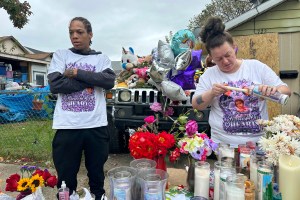
For Tanisha Long, affordability means working nearly every day of the week.
The Pittsburgh resident works for the Abolitionist Law Center, substitute teaches in schools, and bartends. Long said she never imagined she’d need multiple jobs just to maintain the life she already had.
“My preference is one [job],” Long said. “Everything has been so much more expensive. Gas prices have skyrocketed. House prices have skyrocketed. My rent has skyrocketed. I don’t have a partner so I pay for everything by myself. At this point, it just makes sense for me to have three jobs.”
Working long hours just to get by leaves little room for rest, Long said.
“I try to make time to do the things that bring me joy, but when you’re working all the time, you don’t get to go out to the lake for the day. You don’t get to go out drinking with your friends as much. You’re working.”
Exhaustion and burnout have spilled into every part of Long’s life.
“I think a lot of what I do is avoiding the problem until I feel prepared to handle it,” Long said. “I think the way the economy’s set up, you don’t have the time to confront your mental health. So you engage in unhealthy behaviors.”
Long isn’t alone. Across Pennsylvania, rising housing costs, grocery bills, utility prices, and healthcare expenses are creating more than financial stress. Mental health professionals say they’re seeing growing numbers of people whose anxiety and depression stem from the relentless pressure of simply trying to afford everyday life.
Financial stress fosters emotional stress
For Andi Snyder, a licensed clinical social worker and co-owner of a Philadelphia-area mental health practice, affordability has become one of the most talked about topics in therapy sessions.
“People are stressed about money,” Snyder said. “They’re stressed about affording everyday things, such as groceries and gas.”
Many of her patients are dealing with layoffs, tighter budgets, and insurance plans with deductibles so high they still can’t afford treatments. Others have lost insurance altogether.
“We’re seeing many more people come in with just dealing with the stress of daily life,” Snyder said. “Sometimes that anxiety can lead to depression because you’re not able to pay your bills or take care of your family the way that you thought you could.”
Snyder said her patients are also telling her that they’re working multiple jobs, putting off vacations, dipping into savings, and feeling like they’re constantly trying to ‘catch up.’
“The term ‘side hustle’ shouldn’t be a term,” Snyder said. “You should be able to live on one job.”
Affordability can mean life or death
For Cory Roma, affordability isn’t simply about stretching a paycheck. It’s about survival.
The 26-year-old political organizer from the Pittsburgh area has lived with autism, bipolar disorder, PTSD, and anxiety disorders for most of his life. Therapy and medication have helped him build a career and maintain stability after years of struggling.
“I attribute me still being on this earth to two things,” Roma said. “My mental health treatment routine, and my friends and family. Without either of those, I would not be here.”
Now, rising costs and uncertainty around health coverage have added another layer of anxiety.
“I live with that fear of having to sacrifice something, or heaven forbid I lose insurance entirely,” Roma said. “Having access to health insurance is life or death for me.”
Every employment decision, he said, revolves around one question.
“Everything I do has to revolve around, can I keep my mental health care and can I keep my access to insulin?”
Before starting his new job, Roma survived on a little more than $1,000 a month in disability benefits.
“My SSI check before I started working was $1,020 a month,” he said. “My rent takes up half of that.”
The rising cost of electricity and other necessities left him wondering whether he could continue living independently.
“If I want to be able to have a career, if I want to have some kind of life outside of my home, I have to do my mental health treatments,” Roma said. “I have to. It’s not an option for me.”
Working harder just to stand still
What frustrates Long most is that she isn’t working extra jobs to get ahead—she’s working to preserve the life she had just a few years ago.
“One of the reasons that I work three jobs is I don’t think it’s fair that I should have to give up every single thing that makes me happy just because I’m being priced out of it,” Long said. “I’m hustling harder just to maintain the lifestyle that I had three or four years ago.”
That constant pressure, she said, has changed how people think about work.
“You shouldn’t be working yourself to death,” Long said. “That hustle mentality… it’s one of the most toxic things in the world. I think we don’t have space for joy, and everybody’s miserable now.”
While Long is fortunate to have insurance that covers weekly therapy, she knows many Pennsylvanians don’t.
“Being able to go to therapy every week is a luxury,” she said. “Not a lot of people can afford that.”
The importance of community
Despite their unique experiences, both Long and Roma credit the same thing with helping them weather difficult times: people.
Roma points to friends, family, and years of therapy as invaluable resources for helping him maintain healthy coping skills and navigate financial issues.
“Having a good network of friends and family around you” is the first thing Roma recommends to anyone struggling.
Long said she learned a similar lesson after experiencing severe burnout in 2020 while balancing work, school, and running a nonprofit. She now protects her therapy appointments, says “no” more often, and relies on friends instead of trying to carry every burden herself.
“It just sucks that we constantly have to create these support systems because we don’t have the things we need,” Long said.
Snyder offers similar advice to people waiting for professional mental health care: lean on trusted family and friends, spend time outdoors, and give yourself permission to disconnect from the nonstop news cycle.
“It’s really okay to turn those [news alerts] off,” Snyder said. “You don’t need to know the instant everything happens.”
Finding hope
Long spends much of her free time helping distribute food and supplies to people leaving jail or experiencing homelessness. While she finds purpose in that work, she also sees the growing strain on volunteers and community organizations trying to fill gaps left by shrinking resources.
“We’ve seen an increase in people needing things and a decrease in available resources,” Long said. “Our volunteers are exhausted.”
Roma worries about those same people.
“What keeps me up at night,” Roma said, “is thinking of the people that are worse off than me and how they’re dealing with this.”
He believes what many people need isn’t just financial help, but understanding.
“In this time of worldwide craziness, having a little bit more grace can mean the world to somebody who is going through so much right now,” Roma said.
Long agrees. Even amid the uncertainty, she refuses to surrender the small things that make life worth living.
“We shouldn’t be compromising our mental health,” Long said. “We shouldn’t be compromising the small luxuries and joys that we still have. You need to fight for every little piece of joy you can find in this really terrible economy.”