The Pennsylvania Department of Health is working to identify and prevent measles among individuals in Lebanon County, saying 11 residents have already been diagnosed with the disease.
Following the hospitalization of three individuals from Lebanon County with measles, department staff conducted contact tracing and identified additional mild cases among other Lebanon County residents.
“As of May 6, 11 Lebanon County residents have been diagnosed with measles,” officials said in a release. “Of these, 10 were unvaccinated, and one had a vaccination status that could not be verified. The individuals are no longer infectious. This brings the total number of Pennsylvania residents with measles in 2026 to 23, including 12 individuals from prior unrelated cases reported earlier this year.”
Officials said that of the 23 total cases in the commonwealth, 22 were unvaccinated. One resident had an “unverifiable vaccination status.”
“The Department of Health remains vigilant and prepared to manage measles cases with established public health practices and a dedicated team of experts,” Secretary of Health Dr. Debra Bogen said in the release. “That is exactly why we are taking proactive action to both inform the impacted communities and the greater public so we can stay ahead of this incredibly contagious disease. We need the public’s support to contain this virus – including asking anyone who thinks they may have had measles in the past month to call the Department toll-free at 877-PA-HEALTH (877-724-3258). Pennsylvanians can remain completely anonymous in their reporting which greatly helps our mission of preventing any further spread. The other important way people can contain the spread of measles is to get vaccinated; getting vaccinated protects yourself, your family, and your community.”
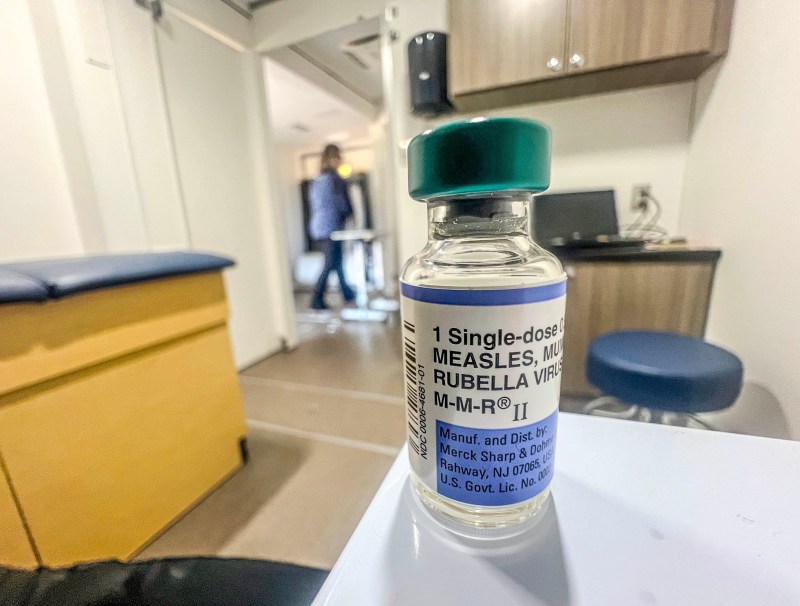
In addition to issuing a statewide Health Alert message for all health care providers outlining the signs and symptoms of measles, DOH staff held a measles vaccination clinic in Lebanon yesterday, where 26 individuals received vaccinations.
For privacy reasons, department officials said they cannot disclose any further details about the specific impacted communities or those who received a vaccine.
“Getting the measles vaccine is the best way for Pennsylvanians to protect themselves against measles,” officials stated. “Children should receive two doses of the measles, mumps, and rubella (MMR) vaccine, starting with the first dose at 12 to 15 months, and the second dose at 4 through 6 years. The vaccine is highly effective at preventing measles; people who receive two doses have 97% lifetime protection against measles.”
To safeguard public health following a potential measles exposure, Department of Health staff are conducting contact tracing to understand where the individual went in their community while contagious, providing educational resources, performing diagnostic testing, and encouraging isolation for people with infection.
Based on vaccination data from Pennsylvania schools, nearly 94% of kindergarten students during the 2024-2025 school year had received the two doses of the MMR vaccine to prevent measles. County-level vaccination rates can vary and are published on the Department’s website.
Lebanon County’s 2024-2025 kindergarten MMR vaccination rate was 93.2%, according to officials.
The MMR vaccine is available throughout pediatric and other primary care practices in the commonwealth. Vaccinations are also available through local Federally Qualified Health Centers and Rural Health Centers.
“The MMR vaccine is available at no cost to children 18 years and younger insured through Medicaid, as well as children who are uninsured or underinsured at any of Pennsylvania’s 59 state health centers,” officials said. “Uninsured and underinsured adults can receive the MMR vaccine at no cost at state health centers, removing financial barriers to their protection against measles.”
Pennsylvanians who think they may have had measles in the past month are asked to call the Department of Health toll-free at 877-PA-HEALTH (877-724-3258). Residents wanting to learn more about measles, visit DOH’s measles webpage.