Over the past year, thousands of women in Pennsylvania who relied on Medicaid for routine reproductive healthcare found themselves without access to the provider they trusted.
Cancer screenings were delayed. Birth control appointments were postponed. STI testing was harder to obtain. Many women simply went without care.
It was due to President Donald Trump’s One Big Beautiful Bill, which blocked federal Medicaid funding for certain reproductive health providers like Planned Parenthood. Reps. Lloyd Smucker, Scott Perry, Guy Reschenthaler, Dan Meuser, and Rob Bresnahan Jr., along with Sen. Dave McCormick, all voted for the cuts. But their one-year ban expired at the beginning of July.
What was lost
Melissa Reed, president and CEO of Planned Parenthood Keystone, said the federal defunding had immediate consequences for patients across Pennsylvania.
“Twenty thousand patients a year relied on Medicaid for coverage of their family planning care, their cancer screenings, wellness exams, STI testing and treatment,” Reed said. “What we found was that there were significant reductions in those tests and treatment and prescriptions, and that leads to a significant public health impact.”
Patients who could no longer be seen at Planned Parenthood often faced waiting times of weeks or months at other affordable clinics.
“Many of our patients delayed care for quite some time or didn’t get care at all,” Reed said.
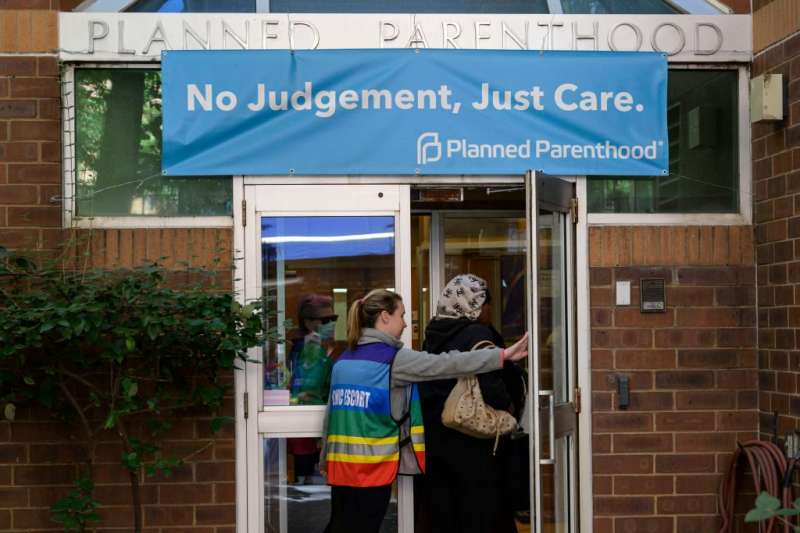
Although Planned Parenthood Keystone was able to keep all of its Pennsylvania clinics open, Reed said surviving the funding loss wasn’t easy.
The organization lost approximately $1.2 million over the past year through the loss of Medicaid reimbursements and Title X funding. An outpouring of community support and donations helped the organization survive.
“Our supporters really stepped up and gave generously,” Reed said.
Medicaid patients return almost immediately
The federal defunding expired on July 4, allowing Planned Parenthood to begin seeing Medicaid patients again on July 6.
The response was immediate.
“By July 7th, 20% of our patient volume was Medicaid patients once again,” Reed said. “People were so excited.”
Before the federal funding ban, about 40% of patients used Medicaid. Reed expects current numbers to continue climbing as more people learn they can once again receive care at Planned Parenthood.
Medicaid abortion coverage
While Planned Parenthood can once again bill Medicaid for standard reproductive healthcare, it can now receive reimbursement for abortion care as well.
In April, the Commonwealth Court ruled that reproductive autonomy is a fundamental right protected under the Pennsylvania Constitution and that the ban on Medicaid funding for abortion violated that constitutional protection. While Attorney General Dave Sunday (R) has appealed the ruling to the state Supreme Court, the ban was temporarily lifted.
“State Medicaid will, according to a decision by the Commonwealth Court, need to cover abortion under Medicaid while the attorney general’s appeal is being heard at the state Supreme Court,” Reed said. “I feel very positive that ultimately we’ll be successful at the state Supreme Court as well, and it’s a wonderful victory for reproductive justice and for equity.”
While coverage was supposed start last month, the Pennsylvania Department of Human Services is still in the process of establishing a billing and reimbursement system to process the coverage. Medicaid patients will not be able to use their abortion coverage until that is figured out.
A constitutional right
Sue Frietsche, executive director of the Women’s Law Project, called the court’s ruling one of the most significant reproductive rights decisions in Pennsylvania history.
“Having reproductive autonomy recognized as a fundamental right under our state constitution is huge,” Frietsche said. “It is almost impossible to overstate how important this is.”
According to Frietsche, recognizing reproductive autonomy as a constitutional right means every branch of state government must respect it.
“No court, no legislature, no governor, no local official, no police officer—nobody can interfere with a person’s reproductive decisions except in extremely narrow circumstances,” Frietsche said.
Pennsylvania’s constitution now provides stronger protections than those that existed under Roe v. Wade, Frietsche said, because state officials are independently obligated to uphold those rights regardless of changes to federal law.
The largest barrier for low income Pennsylvanians
For decades, the state’s Medicaid funding restrictions have disproportionately affected low-income residents, forcing many to delay abortion care or continue pregnancies they otherwise would not have kept.
Frietsche said lifting those restrictions removes what she describes as the state’s single greatest obstacle to abortion access.
“This ban on Medicaid funding of abortion has been in effect for decades and decades,” she said. “It is the single largest barrier to abortion in Pennsylvania, and it is inflicting severe harm on people.
“And now that we have recognized this constitutional right of reproductive autonomy, every day that goes by without that right being implemented is just a terrible injustice and a terrible harm to people who should never have been subjected to this unjust law in the first place.”