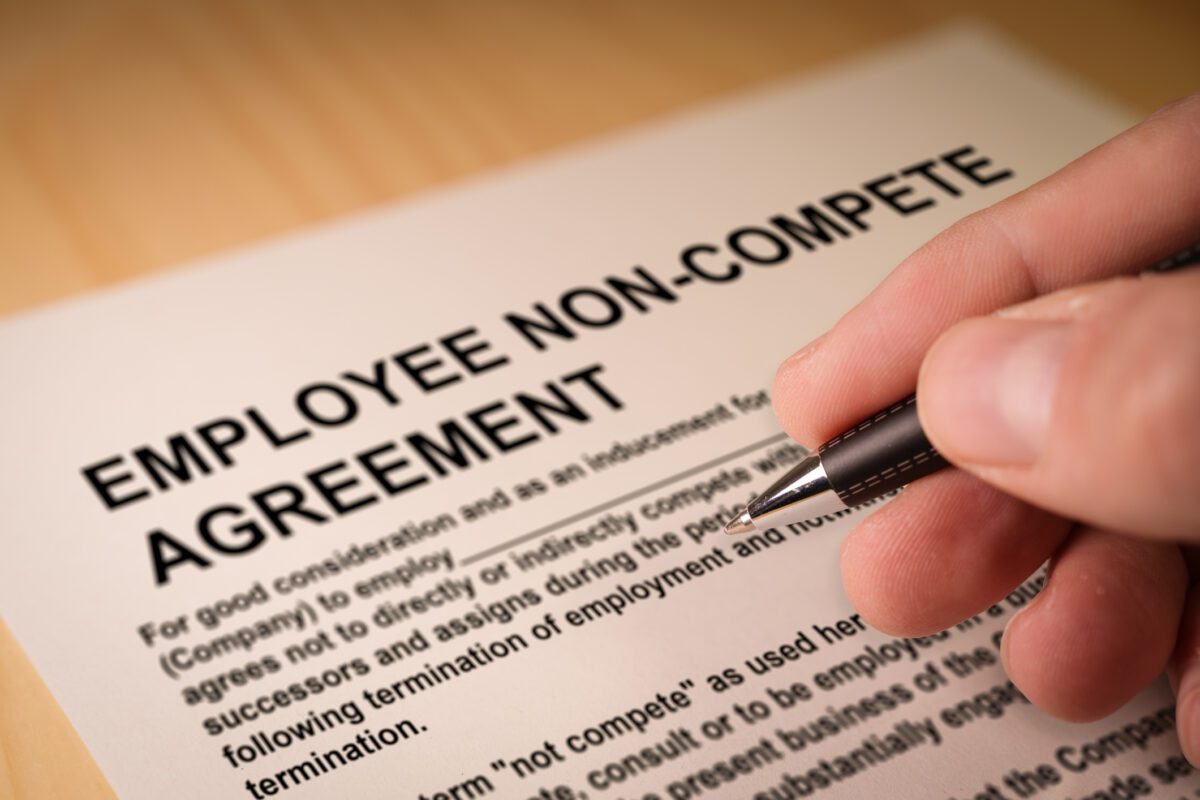
The FTC voted to ban noncompete agreements in April—those pesky clauses that employers often force their workers to sign which effectively bar them from starting their own business or finding a new job in the same field within a certain area or timeframe after leaving their current job. (Photo via Getty Images)
The FTC voted to ban noncompete agreements in April—those pesky clauses that employers often force their workers to sign which effectively bar them from starting their own business or finding a new job in the same field within a certain area or timeframe after leaving their current job.
Judge Ada Brown, a Trump-appointed federal judge in Texas, has issued a preliminary order against the Federal Trade Commission’s (FTC) ban on noncompete clauses, which is scheduled to take effect this fall.
The order was issued last week in a lawsuit brought by Ryan LLC, a company owned by a Republican mega donor and tax adviser to former president Donald Trump.
In April, the FTC voted to ban noncompete agreements—those pesky clauses that employers often force their workers to sign which effectively bar them from starting their own business or finding a new job in the same field within a certain area or timeframe after leaving their current job.
The move was lauded by the country’s largest labor federation.
“Noncompete agreements trap workers from finding better jobs, drive down wages, and stifle competition,” the American Federation of Labor tweeted.
An estimated 30 million American workers are currently affected by noncompete clauses—that’s roughly 18% of the US workforce. These clauses have been shown to lower workers’ pay and restrict their opportunity and mobility.
The rule agreed upon earlier this year would ban new noncompete agreements for the vast majority of American workers and require employers to let current and past employees know they won’t enforce them going forward. Companies would also be required to throw out existing noncompete agreements for most of their employees.
Additionally, existing noncompetes for senior executives, who represent less than 0.75% of workers, can remain intact under the new rule. Employers would be banned, however, from entering into any new noncompete agreements with senior executives.
The FTC estimates that the rule, if put into place, would boost workers’ wages by up to $488 billion over the next decade, with earnings for the average American worker increasing by an additional $524 per year. The agency also expects that banning noncompetes would lower spending on physician services by between $74 billion and $194 billion over the next decade.
The final rule is also expected to help drive American innovation; the FTC estimates there would be 17,000 to 29,000 more patents filed each year over the next decade. Additionally, new business formation is expected to grow by 2.7% each year.
Ryan LLC argued that the FTC overstepped its legal authority to ban noncompete agreements; the Dallas-based tax services firm uses noncompetes to keep workers from poaching firm clients and to keep competitors from hiring its workers.
Ultimately, the court agreed that the FTC lacks the authority to institute such a rule.
This injunction comes just days after the United States Supreme Court’s decision to overturn the Chevron doctrine, which for decades has led judges to defer to federal agencies when interpreting a law with unclear language. In overturning the legislation, judges were given more power to challenge these agencies’ rulemaking authority.
Brown’s ruling is limited in scope, however—it only bars the FTC from enforcing the ban on noncompetes against plaintiffs, such as Ryan LLC and the US Chamber of Commerce, which filed a lawsuit against the FTC in federal court in the Eastern District of Texas in April.
Chamber President and CEO Suzanne Clark called the FTC vote “a blatant power grab that will undermine American businesses’ ability to remain competitive.”
Brown said last week that she intends to rule on the merits by the end of next month.
Author


More than 250 are on strike at Parker Lord’s Erie County plant. HeresWhy
Members of Local 1211 of the International Association of Machinists say they waited patiently for five years as they lost earnings to inflation....

Pittsburgh Post-Gazette ceases operations in order to break union
The Pittsburgh Post-Gazette owners’ decision to cease operations on May 3, 2026, comes after the US Supreme Court denied their appeal to stay a...
Will labor unions propel Josh Shapiro to reelection victory?
Labor leaders remain optimistic that Gov. Josh Shapiro will be able to once again win Pennsylvania’s union voters at a time when Democrats have...

New year, same wage: Pa. retains minimum wage despite 19 states seeking an increase
Pennsylvania Democrats hope that flipping the Pennsylvania Senate in November will finally bring a resolution to the minimum wage debate. Nineteen...
5 takeaways from Pa. billionaire Jeffrey Yass’ Washington Post interview
Jeffrey Yass shared a lot of his personal motivations in an interview and revealed what drives his political views. Pennsylvania’s richest...