Experts have warned that ending the Essential Air Service program, as Project 2025 sets out to do — and as Donald Trump tried to do during his first term — could lead to the closure of small town airports and higher flight prices, leaving rural communities disconnected from the rest of the United States.
Air travel could become a lot more expensive and inconvenient for rural communities in Pennsylvania should Donald Trump be elected president in November.
Buried deep in Project 2025, the 900-page far-right plan for a second Trump term, is a call for ending the Essential Air Service (EAS), a federal program that ensures rural Americans have access to air travel by subsidizing the cost of service in smaller towns and communities that would otherwise go without air service.
The program has enabled small towns and communities to attract and keep businesses and jobs and made it easier for rural Americans to access work opportunities, medical appointments, and visit family members.
But on page 631 of Project 2025, the report’s authors make clear their desire to end the program, even though they acknowledge that it would mean the loss of many airports that it acknowledges “are not otherwise commercially viable.”
“The program was established in the 1970s as a temporary measure to cushion deregulation. It has since been made permanent,” the plan reads. “Finally ending the program would free hundreds of pilots to serve larger markets with more passengers. A new administration could reform regulations to encourage airports in lower-served areas of the nation.”
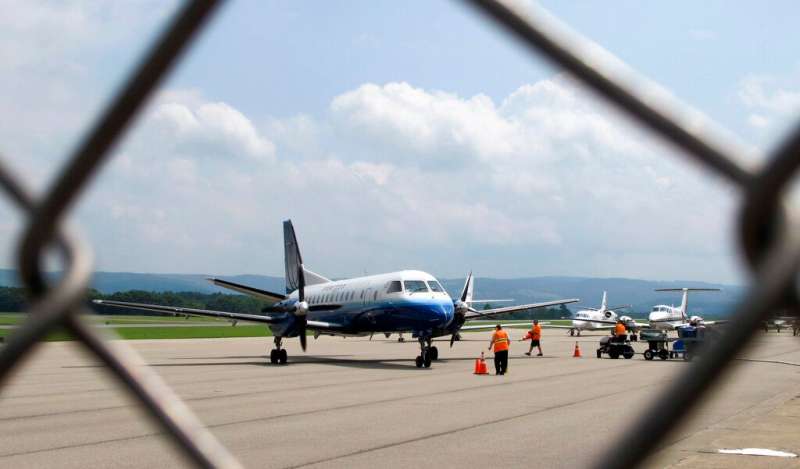
As of 2024, the EAS program supports air service to around 175 rural communities across the United States, including some right here in Pennsylvania. Altoona–Blair County Airport, Bradford Regional Airport, DuBois Regional Airport, John Murtha Johnstown–Cambria County Airport, and Lancaster Airport are served by the EAS program.
The program specifically serves communities where commercial airlines typically don’t operate due to a lack of traffic. By providing millions of dollars in grant money to airports in these areas, the EAS program ensures that costs stay low for residents and key rural routes continue to be served.
According to the Congressional Research Service, the US Department of Transportation subsidizes two to four round trips per day with a small aircraft from an EAS community to a medium or large hub airport. In some cases, the department subsidizes flights to more than one hub. This adds up to $493 million per year, excluding Alaska.
Without the subsidies from the EAS program, these small-town airports could lose air service altogether or close, as airlines would be free to abandon smaller markets that might not guarantee high profit margins. Such an outcome could leave surrounding communities without access to air travel, forcing residents to drive to larger airports when necessary, or forcing them to pay unaffordable ticket prices.
“Transportation is part of the basic foundation families need to work, along with access to care and educational opportunities,” Michael Chameides, communications and policy director with the Rural Democracy Initiative said in a statement. “Our supply chains and economic systems depend on well-functioning transportation infrastructure.”
“Project 2025 threatens to pull the rug out before we see the full benefit of these generational investments,” he added. “Canceling Essential Air Service flights would disrupt our airports, drastically reduce transportation access, cause loss of jobs, and decrease economic activity. But for giant corporations, it would be a first-class upgrade, with more profit and consolidation, and the power to pass over our communities and leave us behind.”
Colin Seeberger, senior adviser for communications at the Center for American Progress Action Fund, concurred with this assessment.
“Project 2025’s plan to eliminate the Essential Air Service program will raise the cost of air travel and reduce flight options for Americans living in rural communities,” he said.
Seeberger added that the proposal is especially alarming given that Trump has promised to assert sweeping constitutional power to cancel federal funds if he’s reelected, even though the Constitution’s text and structure don’t allow for this.
“A second Trump administration could try to eliminate or reduce money for Essential Air Service without consent from Congress,” he said. “It’s even more alarming given the MAGA majority on the Supreme Court recently ruled that the president can pretty much do whatever they want so long as their act is deemed an official duty.”
Project 2025 isn’t the first time that Republicans and conservatives have targeted the EAS, either.
The Heritage Foundation, which authored Project 2025, also calls for ending the program in its 2023 Budget Blueprint.
Trump also repeatedly tried to make cuts to the program during his first term and even called for its elimination, even as it would have harmed communities that disproportionately support him. Republicans in Congress have also previously tried to ending funding for the Essential Air Service, so should they retain their majority in the House, they could help Trump enact cuts to the program.