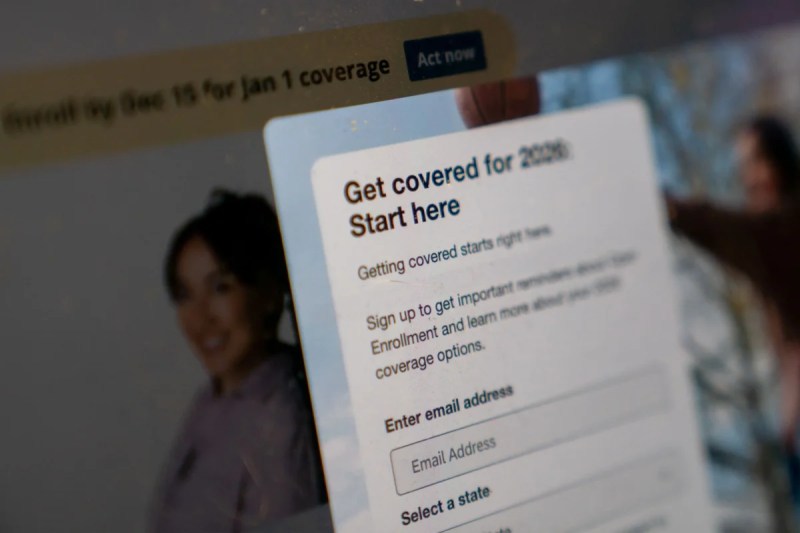
While an end to the federal government shutdown could come this week, the main issue behind the shutdown—whether or not to extend enhanced tax credits for millions of Americans purchasing their plans on Affordable Care Act marketplaces like Pennie—remains unresolved.
This story appears in the Keystone newsletter. Subscribe here.
An end to the longest government shutdown in history appears on track after seven Senate Democrats—including Pennsylvania’s John Fetterman—and one Independent joined with Republicans late Sunday to break the impasse in what has become a deepening disruption of federal programs and services.
A legislative package cleared a procedural hurdle, 60-40, Sunday, and the Senate could wrap up formal passage as soon as today. It would next go to the House for a vote, where lawmakers have been away since September but were being told to prepare to return to Washington this week. It would then go to President Donald Trump’s desk to be signed into law.
Here’s a quick look at what is, and what isn’t in the bill, and what it means for Pennsylvania.
The bill does not address extending health care subsidies.
Sunday’s legislation lacks a clear resolution to the main issue behind the shutdown: Expiring health care subsidies that Democrats have been fighting for as millions of Americans stare down rising insurance premiums. That includes the 500,000 Pennsylvanians who purchase health insurance through Pennie, the state’s official state-based health insurance marketplace.
Pennie enrollees are made up of part-time employees, gig workers, farmers, small business owners, and others without affordable insurance options. Most use tax credits to lower their monthly premium costs. Without those subsidies, monthly premiums could increase by an average of 102%, and rise significantly higher in more rural parts of the state.
The debate over extending the subsidies was pushed off for a vote next month, weeks before the subsidies are set to expire.
The bill guarantees that all federal employees who were furloughed or worked without pay during the shutdown will receive the wages they are owed retroactively.
Included is funding to keep much of the federal government running for the next couple of months, to Jan. 30.
The stopgap measure would provide back pay for federal workers who were furloughed or working without pay during the shutdown—something that’s traditionally provided but that the Trump administration had threatened was not guaranteed.
An estimated 42,000 federal workers in the commonwealth are currently furloughed due to the shutdown, and have not been receiving a paycheck.
Food assistance benefits would be reinstated.
The measure provides full-year funding for Supplemental Nutrition Assistance Program (SNAP) food benefits and the Women, Infants and Children (WIC) program. That means those programs wouldn’t be vulnerable to being cut off in another shutdown if lawmakers reach an impasse on Jan. 30.
More than 2 million low income Pennsylvanians rely on SNAP benefits each month to buy groceries like fruits and vegetables, meat, poultry, fish, dairy, and bread. About 180,000 Pennsylvanians participate in WIC, a program which provides supplemental foods, health care referrals, and nutrition education for low-income pregnant, breastfeeding, and non-breastfeeding postpartum women, as well as to infants and children up to age five who are found to be at nutritional risk.
About $100 million in SNAP benefits have already been restored to Pennsylvanians, according to Gov. Josh Shapiro. The package would ensure states would be reimbursed for money they spent to keep the SNAP and WIC programs running during the shutdown.
Information from the Associated Press was used in this report.