It was a Monday night, usually a slow night as far as police work goes, weekends being prime time for malfeasance and disturbances of the public peace.
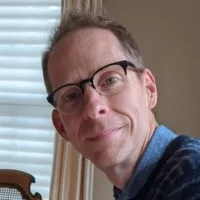
Jamie Miller was on duty with his partner of six years, a woman whose husband was one of their supervisors at Springettsbury Township, a police department with 32 officers dedicated to protecting and serving the suburban community in York County.
A typical night would include what could be considered routine calls – domestic disputes, shoplifting, traffic stops, that kind of stuff.
The afternoon before – Feb. 16, 2014 – had been anything but routine. And looking back, Miller believes it was a harbinger of the events of that Monday night. That night, he and his partner responded to a call about a despondent man threatening to shoot himself in the parking lot of the New Eastern Market on Memory Lane.
He and his partner saw the car and tried to spy on the occupant through binoculars. It was a cold day and the car’s windows were fogged. As they approached the car, they noticed the car was still running. Miller opened the driver’s side door and was immediately hit by intense heat.
The man in the car had made good on his threat, shooting himself in the head. There were teeth on the dashboard and an eyeball on the steering wheel. He could smell the blood, that coppery odor like none other.
His supervisors told him and his partner to take off Monday. But they were cops. For one thing, they didn’t want to let their fellow officers down, leaving them to cover for their absence. It was snowing that day, and he knew the department would be stretched thin responding to cars sliding off the road. Besides, he said, he felt he had to prove to his brothers and sisters that he was able to climb back on the horse, that even though what he saw that Sunday afternoon deeply disturbed him, he was able to get back in the patrol car and do the job. That’s what police do.
He and his partner were at the station that snowy Monday evening when they got a call for an unknown medical issue. It was 9:30 p.m., just half an hour before the end of their shift. The dispatcher provided the address, and Miller’s partner turned white.
“Jamie,” she said, “that’s my house.”
They took their separate cruisers and made the five-minute drive. On the way over, Miller recalled he had a “sick feeling.” Something didn’t feel right. He keyed his mic and asked the dispatcher what was going on. The dispatcher was crying. “Jamie, it’s not good. It’s just not good. This is just not good.”
Miller entered the house first. He knew the house. He and his partner’s husband were friends. Not long before, he had helped him convert a basement room into a bedroom, building walls and installing drywall.
The couple’s two dogs didn’t greet them at the door, Miller recalled. The house was quiet. He went up the stairs from the foyer to the kitchen.
“What I saw, I would never, ever be prepared for. No academy, no training can prepare you for that,” Miller would recall later.
Slumped against the dishwasher was his partner’s husband. Blood pooled around his body. A Kimber .45 semi-automatic pistol was in his lap.
His partner was behind him and began screaming. The mic on Miller’s radio was stuck open and every police officer on duty that night heard her. She screamed, “Jamie, you have to help him. You have to fix him.”
Miller kneeled next to the man’s body. He felt the blood soaking his trousers. He heard the man’s phone ringing. He felt he had to follow his training. He plucked the gun from the man’s lap, cleared it and placed it on the kitchen counter.
Other police officers began arriving. Miller was incoherent, babbling and spouting gibberish. He said later he didn’t remember any of it. It was surreal. Police officers were all over the scene; they lined the staircase as Miller was assisted out of the house. Nobody said a word. He just remembers hearing his heartbeat as he was led from the house.
“I never felt more helpless than I did there,” Miller said.
His chief told him to take three months off to get right.
Miller bristled at the suggestion.
“I felt I needed to prove myself,” he said. “I had to get back up on the horse.”
‘Suck it up and take it’
Miller told that story in 2018 – at a U.S. Department of Justice conference intended to raise awareness about the mental health needs of law enforcement officers – after he left police work and began advocating for mental health services for police officers.
His experience during his 25 years as a cop could be an anomaly. He responded to suicides, an incident in which a fellow officer shot a suspect in the police station and one in which he killed a suspect who was threatening Kmart shoppers with a knife. Not many police officers’ resumes contain that litany of horror and tragedy.
It took a toll. After more than 20 years on the job, he froze during a call and the department offered him desk work, telling him he wouldn’t be permitted on the road. He was able to retire.
He has worked with police officers and others working to remove the stigma attached to cops who seek mental health therapy. It’s a difficult job. Police are supposed to be strong and unflinching while facing tragedy and trauma. But, as Miller said, police officers are still human beings. Witnessing the worst aspects of human behavior has to have an effect, he said. The attitude, he said, is “to suck it up and take it.”
The officer’s job is to protect other people. But, he said, police need to “protect themselves.”
He said he was lucky to have a chief and supervisors who were able to see that he was in a dark place and needed help. It was something – along with his deep Christian faith – that saved his life.
“We handle everybody else’s problems,” he said. “We’re called to fix families that we know we can’t fix. We go to the same houses over and over for domestics. But who fixes us?”
If a police officer breaks a leg chasing a suspect, he said, he goes and gets it fixed. But what happens when the job “breaks your head?” he asked.
The need for counseling services for police is particularly in focus this year. Four police officers have been killed in the line of duty in York County – West York Officer Andrew Duarte, killed during a hostage situation at UPMC Memorial Hospital, and Northern York County Regional Police Detectives Mark Baker, Cody Becker and Isaiah Emenheiser, killed in an ambush while seeking to arrest a man who had been stalking a woman. Two others, York County Sheriff’s Deputy Lt. David Godfrey and an unidentified Northern Regional detective, were critically wounded during that ambush in North Codorus Township.
‘I was going to change the world’
Miller worked construction when he was in his 20s. At 32, he decided to become a police officer. Well, he said, he didn’t decide to do it. “I prayed about it,” he said. “I think Jesus Christ wanted me to do it. I was called to it.”
He said, “Generally, there are two reasons to be a cop. One, you want the badge and want that authority. That’s the wrong reason. The second reason you want to do it is to be a public servant. It’s not always about arresting people; it’s about helping.”
For Miller, it was the latter. “I would rather talk somebody into the handcuffs than wrestle them,” he said.
He worked for the Wrightsville and Lower Windsor departments before joining Springettsbury. “I was full of piss and vinegar,” he said. “I was going to change the world.”
‘How was he not bothered?’
On Nov. 11, 2004, Miller and all the officers in the department were called into the station at 3 a.m. One of the township’s officers had taken his own life. Miller had gone to the police academy with the officer. His first thought was that the officer was “weak,” he said. “I felt filthy inside,” he said. “I knew it wasn’t true. I felt I betrayed him.”
Almost three years later, on July 7, 2007, Miller was at the station practicing his bagpipes. It was a Saturday, and the township had a skeleton crew on duty to allow members of the department to attend the wedding of a fellow officer.
An officer on duty had taken a 39-year-old man accused of attempted robbery into custody. When he placed the suspect in a holding cell, the suspect attacked the officer and tried to grab his sidearm. A scuffle ensued and ended when the officer shot the suspect twice and killed him.
Miller heard the gunshots and went inside. He saw the suspect lying face down in a pool of blood. He checked on the suspect, kneeling in the blood. He was there when the suspect drew his last breath. The officer was shaken. He told Miller, “I had to shoot him.”
The entire episode was recorded by surveillance cameras, the video providing investigators with clear evidence that the shooting was justified.
He and the other officer were sent to speak to a police psychologist. Miller was still haunted by the scene, and when he spoke to the therapist, he got the feeling that the psychologist just wanted to hear the details of the shooting. The officer who shot the suspect stopped going after the one session, ordered by the police department. He told Miller he knew what to say so he didn’t have to go back. He told Miller he was good. (He wasn’t. He eventually left police work after some unspecified difficulties.)
“How was he not bothered?” Miller wondered. “I knew I wasn’t right.”
The next day, Miller went to work and couldn’t put the key in the slot. “I knew something wasn’t right,” he said. “I never felt safe in the station. I had to walk down that hallway every day.”
He spoke to his chief and asked whether he could see a different psychologist. He said he was fortunate that he had a chief who saw the value of therapy and did not believe that it was a sign of weakness to ask for help. Miller said, “It’s weak not to get help.”
‘That joy was gone’
On Dec. 29, 2012, Miller was among the officers who responded to a call at Kmart on Haines Road. A 40-year-old man who had been caught shoplifting was threatening people with a knife.
Miller and the other officers tried to talk the man down. He was swinging the knife at them and trying to flee. Officers tasered him four times and he didn’t surrender. Miller struck his shin bone with his expandable baton; an autopsy showed later that he had broken the man’s tibia.
The suspect turned and lunged toward shoppers watching the confrontation. Miller recalled saying, “My God, he’s going toward the people.”
He unholstered his service weapon and shot the suspect, killing him. Only later, during the investigation, did he learn that he had fired 14 shots. (The shooting was ruled justified. In 2017, the township and York County settled a civil suit with the suspect’s family for $285,000.)
At the time, Miller said, his wife was battling cancer and he said, “Everybody has issues. I was just trying to hold it together.”
After the shooting, he had a hard time dealing with the fact that he had taken a life. “I loved being a cop,” he said. “But things just shut off. It was gone. That joy was gone.”
It felt like he had a cloud over his head, he said.
He returned to the psychologist.
He had just been released from the psychologist’s care when he and his partner were called to the suicide at the Eastern Market parking lot and the call where he and his partner responded to the suicide of his partner’s husband.
A few days later, he was back visiting the psychologist.
Still has nightmares
On Dec. 1, 2021, Miller was working the midnight shift when he was dispatched to a local motel for a report of a man threatening people with a knife. He was at the room speaking to the caller when the suspect, holding a knife, approached him in the hallway.
He wrote in his report that he drew his gun and ordered the suspect to drop the knife.
That never happened. He had flashed back to the Kmart shooting and froze, he said. He never drew his sidearm.
He spoke with an attorney who represented the Fraternal Order of Police, who told him that maybe it was time to consider leaving police work. “I didn’t want to hear that,” Miller said. “I needed to get back up on the horse.”
He met with his chief and lieutenant, who told that him he couldn’t go back on the streets, that if he stayed in the force, he’d be on desk work. “They were protecting me and protecting my family,” Miller said. “It was decent of them to do the right thing.”
But, he said, “It could have been easy (to take desk work). … I wasn’t going to do it.”
He decided to retire from police work.
Police work, though, didn’t leave him. He still has nightmares about the violence and trauma he witnessed.
‘It’s OK not to be OK’
His work helping cops going through tough times has been rewarding, he said. He believes that he’s made a difference.
For instance, just recently, a police officer who’d been on the scene of the North Codorus Township ambush this year called him in the middle of the night. The officer was in a bad way. He couldn’t shake it and needed to talk.
Miller met him for coffee and they spoke for two and a half hours. In the end, Miller said he advised the officer to get help.
His message – as is his message in his talks and to other police officers – was simple.
“It’s OK not to be OK.”
Here’s how you can help
This year’s YDR Christmas Emergency Fund supports York County police officers’ mental health, raising money for counseling services after a tragic year of losses and trauma in law enforcement. All donations go directly to the Officer Wellness Fund created by the York County Safety Collab. Readers can mail checks to LogosWorks Partners at 255 W. King St., York PA 17401 − please note the donation is through the Christmas Emergency Fund. To donate online, visit https://yorkcountysafetycollab.org/officerwellness/