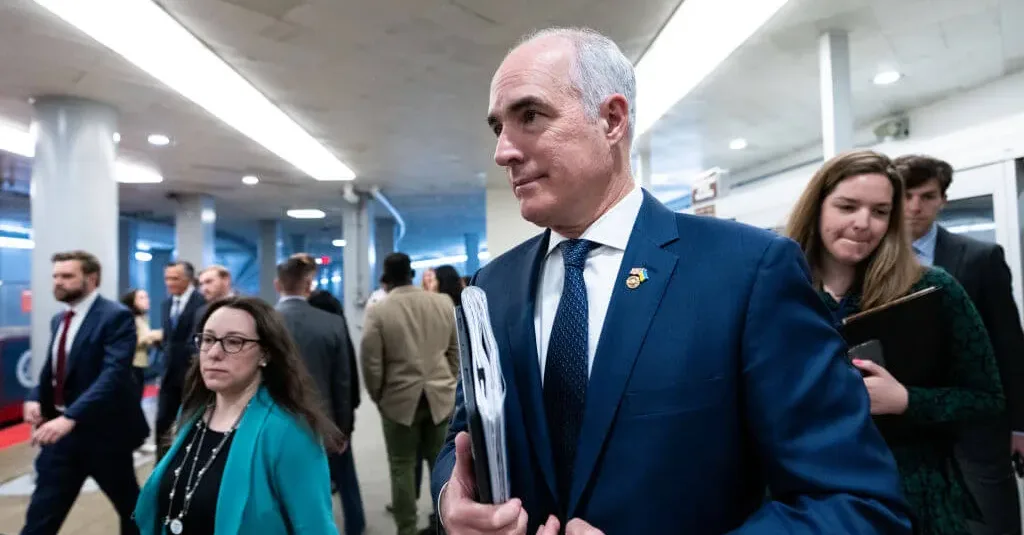
Sen. Bob Casey (D-Pa), arrives in the Senate subway for a vote in the Capitol on Tuesday, May 2, 2023. (Bill Clark/CQ-Roll Call, Inc via Getty Images)
The Community TEAMS Act would establish a nationwide grant program to fund medical training in rural communities and prepare medical school graduates to serve high-risk communities.
US Sen. Bob Casey (D-Pennsylvania) introduced bipartisan legislation earlier this week to address the growing crisis healthcare providers are facing in rural Pennsylvania and other parts of the country.
The Community Training, Education and Access for Medical Students (TEAMS) Act aims to increase training opportunities for medical students in rural and underserved communities and it would create a nationwide grant program for medical schools and community-based clinics to fund training in those rural or underserved communities.
The legislation would also prepare more medical students for the challenges of serving in high-risk communities after graduation and increase the number of medical training sites in rural communities.
“One of the most critical investments we can make in our underserved communities is to provide quality health care. That requires medical professionals who understand the health challenges these communities face and possess the necessary experience to help patients through them,” Casey said in a statement.
Last year, medical professionals and providers told the Center for Rural Pennsylvania, a bipartisan legislative agency, that Pennsylvania’s rural hospitals are dealing with a shortage of medical personnel according to the Pennsylvania Capital-Star.
Rural hospitals are having a hard time filling vacant nursing positions when compared to the rest of the commonwealth, the story reports. A study by the Hospital and Healthsystem Association of Pennsylvania found that rural hospitals have struggled to fill 39% of vacant registered nurse positions while the average vacancy rates are near 30%.
“I’m supporting the Community TEAMS Act because it’ll help more of our future doctors gain invaluable experience supporting underserved communities and working towards bridging the gaps in health outcomes,” Casey said.
Author
Support Our Cause
Thank you for taking the time to read our work. Before you go, we hope you'll consider supporting our values-driven journalism, which has always strived to make clear what's really at stake for Pennsylvanians and our future.
Since day one, our goal here at The Keystone has always been to empower people across the commonwealth with fact-based news and information. We believe that when people are armed with knowledge about what's happening in their local, state, and federal governments—including who is working on their behalf and who is actively trying to block efforts aimed at improving the daily lives of Pennsylvania families—they will be inspired to become civically engaged.

Shapiro visits Lebanon County to celebrate farm preservation milestone
As a result of the Farmland Preservation Program, Pennsylvania has preserved more than 6,600 farms and 650,000 acres of farmland for agricultural...
Federal cuts to SNAP are squeezing families and farmers in Pennsylvania
Republican-backed cuts to the SNAP program could hit nearly 144,000 Pennsylvanians and send a ripple effect through farms and small businesses. Here...

What potential funding cuts to NPR, PBS will mean in Pennsylvania
A House vote is all that stands in the way of President Trump’s effort to claw back more than $1 billion in funding to the public radio and...

Gwen Frisbie-Fulton: ‘The people closest to the problem are often the ones who can find the solution’
About two years ago, tents started to show up in my neighborhood along the creek beds and in small stands of trees. Most only became visible when...

A love letter to the working class, from Gwen Frisbie-Fulton
It started in the back seat of my family’s Jeep Cherokee, the one with the broken AC and vinyl seats that stuck to my thighs in the late summer...