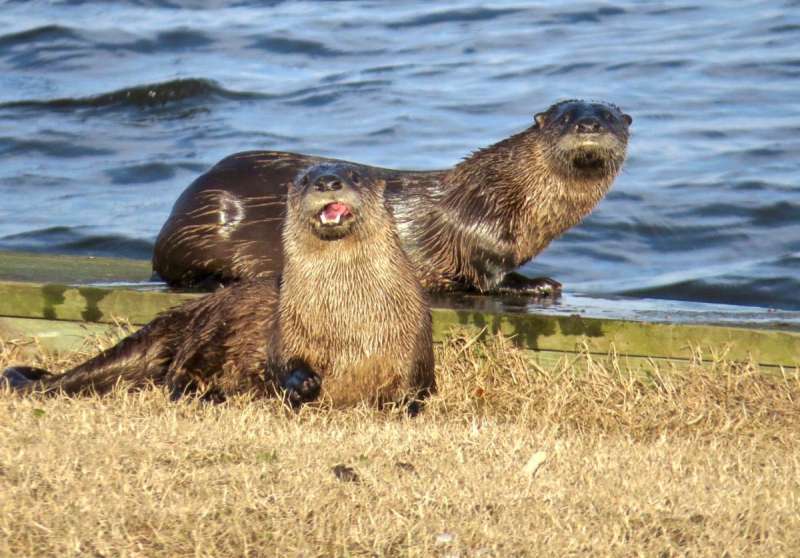
You can find otters in Pennsylvania in every healthy river system. Here’s how to spot them in the wild!
Otters, adorable and playful aquatic mammals, are also rather elusive. Many people have only ever seen these cute critters at zoos or aquariums. But did you know that North American river otters live in every river—as long as it’s not significantly polluted—in Pennsylvania?
In fact, North American river otters represent a comeback story. In the early days of the United States, otters nationwide were hunted so extensively for their fur, and industry encroached so much on their habitats, that otters nearly became extinct in Pennsylvania in the early 1900s.
But over the past several decades, conservation efforts to clean up rivers and reintroduce otters have helped the population grow and thrive. Today, the biggest otter populations live in northwestern and northeastern Pennsylvania, but you can find them throughout the state—if you know where to look.

Otters in Pennsylvania
Belonging to the weasel family, otters are one of the land animals best at swimming, and Pennsylvania’s rivers, creeks, and lakes are perfect habitats for them. River otters’ long and slender bodies, plus four webbed feet, help them glide easily through the water. Their thick fur keeps them warm, and they can hold their breath underwater for as long as eight minutes!
Many Pennsylvania rivers have struggled with water pollution, but cleanup efforts have allowed otter populations to bounce back. In fact, the North American river otter is the only species of the 13 otter species worldwide that is not endangered or otherwise facing population decline. That’s due in part to conservation efforts like those by Frostburg State University wildlife ecology professor Tom Serfass and his research team, who have spent decades reintroducing otters to western and central Pennsylvania waters, like the Youghiogheny River in southwestern Pennsylvania and Pine Creek in north-central Pennsylvania.
How and where to spot otters
River otters live alongside clean waters that can support healthy ecosystems full of fish and other aquatic animals (frogs, mussels, snakes, etc.) that otters enjoy at mealtimes. Biologists call otters “indicator species”—that is, their presence indicates high biodiversity, essential for a healthy environment. Otters make their homes in dens adjacent to clean lakes or rivers, with entry accessible by water as well as land.
Even with rebounding populations, it can still be hard to spot otters in the wild, as they are often shy and more active at night than during the day. It can help to learn some of the signs indicating that otters may be close. It will also help to have patience—you might need to sit and wait on a riverbank for some time before an otter appears.

Clues otters may leave behind
Tracks: River otter prints are distinctive due to their webbed feet. Count five toes!
Otter slides: Like animals leaving game trails in the woods, otters leave “slides”—places where the earth is packed down where they slide on their bellies into the water.
Otter scat: “Scat” is another word for poop. Otters don’t just poop anywhere—they build little bathrooms for themselves and their groups (aww), and the poop in these latrines likely contains evidence of the otter diet—small fish bones, scales, and shells.

Where you may see otters
You might see otters playing in different rivers and other bodies of water. Remember, otters live in every healthy watershed in Pennsylvania. We recommend checking out state parks and other areas with past reports of otters, especially in the early mornings and evenings. Here are some specific places you may spot these furry friends—and remember, you can check for signs of otter activity before you start looking for otters out and about. You can also talk with park rangers, who may have intel about where otters have recently been seen.

Youghiogheny River–Ohiopyle and surrounding area
Otters were reintroduced into the Youghiogheny River area decades ago, and the population has since grown. Head to Ohiopyle State Park for beautiful trails around “the Yough,” as the river is known locally.
Sinnemahoning State Park–Cameron and Potter Counties
Otters have been spotted near the dam at Sinnemahoning State Park in north-central Pennsylvania; you may also see them nearby in First Fork Sinnemahoning Creek.
Presque Isle State Park–Erie
There were signs of otters at Presque Isle State Park for years, but the animals were finally caught on video on the peninsula in 2022. They’ve also been spotted on the state park’s Long Pond Trail.
Cook Forest State Park–Clarion County
Otters love the Clarion River! In fact, Cook Forest State Park held an otter watch program this past March taking visitors to different parts of the river where otters have been spotted. You can also talk with park rangers about recent otter sightings.
Philadelphia suburbs
Yes, the Philly suburbs! In December 2023, a river otter was spotted by a game camera along Ridley Creek in Chester County—the first sighting of a river otter in the area in more than 100 years, according to the Willistown Conservation Trust. Since otters need healthy waters and abundant food to thrive, “their arrival is a signal of a strong ecosystem,” the conservation trust’s director of watershed protection told Philadelphia’s NBC10.
Pocono Mountains
The only reason otters were never fully extinct in Pennsylvania is because there was always a population active in northeastern Pennsylvania in the Pocono Mountains! After all, the water quality of Pocono rivers and streams remained high even as pollution took over other state waterways. As such, the region is home to a dense population of otters and is perfect for an otter-forward vacation. Keep your eyes peeled along any of the creeks and rivers in this area, including the Delaware River. Skytop Lodge also reports otters along Leavitt Branch Creek and the lodge’s Trout Stream Trail.
How to protect otters
To ensure otters continue thriving in the state, be sure to keep a good distance from the wild animals if you spot them. While they are playful with each other, they are wary of humans. Don’t feed them, and don’t scare them with bright camera flashes or by yelling at them. If you’re lucky enough to see otters in Pennsylvania waterways, just enjoy the brief moments you get to share with these cute and fun-loving animals.
You can also make it your mission to help clean up waterways in your area, ensuring that otters have spaces where they can live and play. Check out volunteer opportunities with conservation groups near you, like the above-mentioned Willistown Conservation Trust in Chester and Delaware Counties, Three Rivers Waterkeeper in the Pittsburgh area, or the Conemaugh Valley Conservancy in Johnstown.