Reporting by Mia Hollie
A recent economic impact study commissioned by VisitPITTSBURGH puts a big number on the 2026 NFL Draft’s benefit to the region: $177 million.
City and county tax figures offer another way to consider the draft’s financial impact, and they show a more complicated picture.
Some revenue sources increased during periods overlapping with the draft, though officials can’t say how much of those gains came from the event. Pittsburgh’s parking tax revenue fell, meanwhile, and the increase in county hotel taxes was smaller than the amount of hotel-tax funding directed toward draft planning.
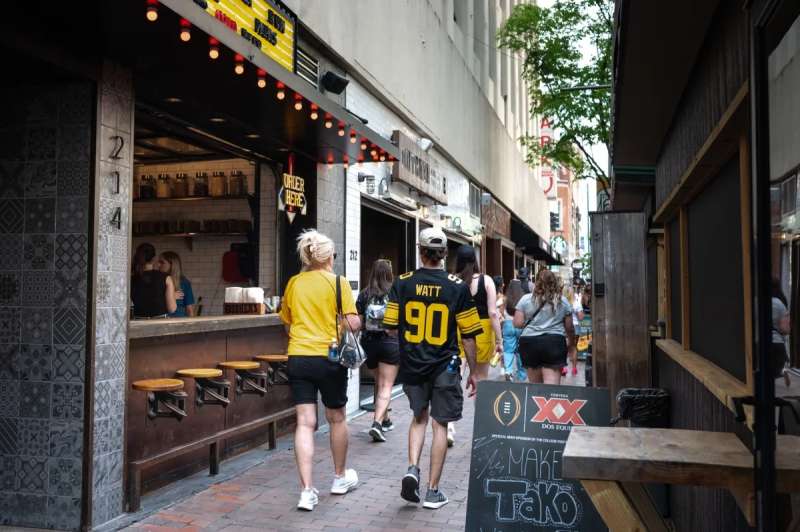
Overall, the figures suggest that some regional businesses fared well during the draft — despite the less-than-ideal outcomes experienced by some business owners outside of the event’s campus. But for those who were hoping the $19 million investment in the draft from the city, county and state would result in extra public dollars for local benefit, the results are less clear.
Which businesses benefitted from the draft?
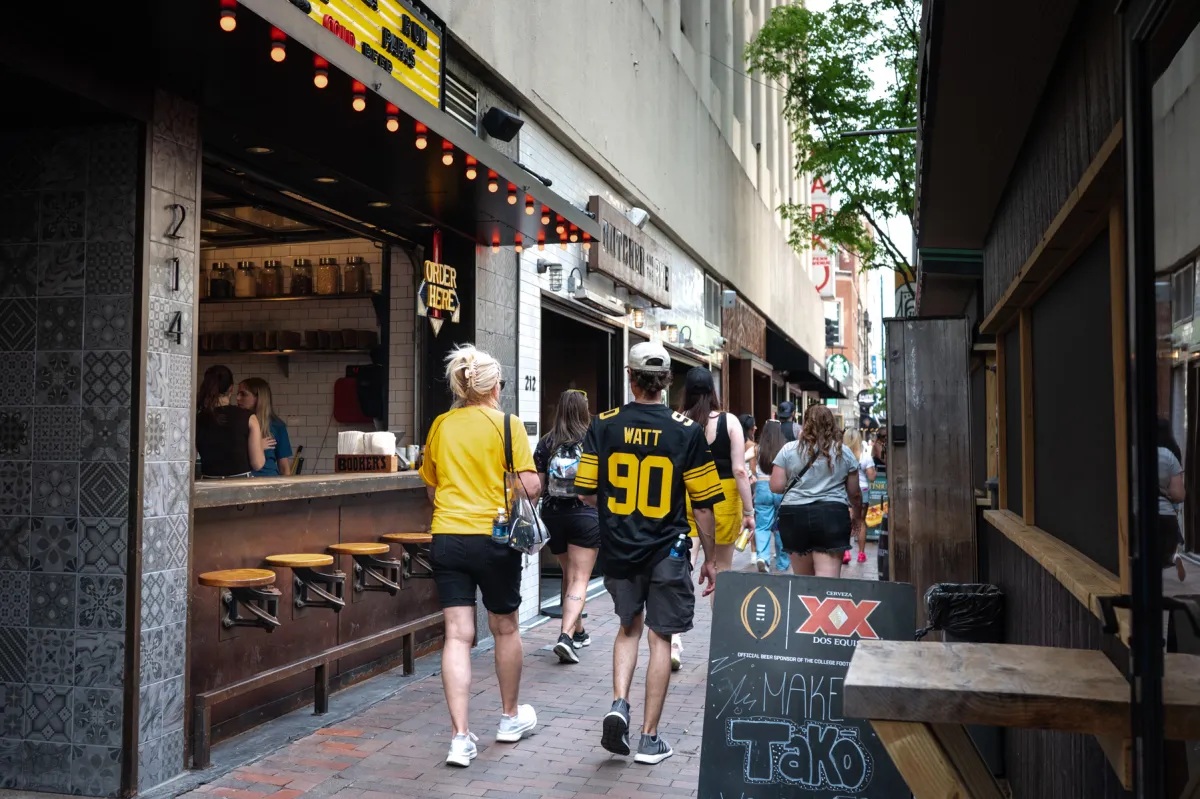
Angel Zambrano paced around PGH Sports on the first day of the draft, organizing goods around the store as she waited for customers to arrive. Zambrano had been helping prepare the Strip District-based, Steelers-themed store for at least three weeks running up to the event. But on day one, the store was empty.
“The city didn’t really include the Strip District, which is a part of the city’s history,” she said in a follow-up interview on August 14. By day three, “it was still a loss.”
Just over 160 businesses participated in the NFL Draft Source Procurement Program and earned roughly $17.7 million during draft weekend, according to the report released by VisitPITTSBURGH, the county’s designated tourism agency.
Typically, economic impact reports include a broader, “direct spend” estimate that includes expenditures visitors and corporations make throughout a metropolitan statistical area — which, for Pittsburgh, includes several counties that surround the city. Analytics firm SportsImpacts, for instance, estimated that Brown County, Wisconsin, generated $43.3 million in direct spending when Green Bay hosted the NFL Draft last year.
In Pittsburgh, SportsImpacts used the responses of 3,577 visitor surveys and statistical software to determine how much direct, indirect and induced spending took place within the Pittsburgh region during the draft — which together make up $177 million in total economic impact.
VisitPITTSBURGH, however, did not share SportsImpacts’ study in full, nor the results of a study conducted by Chicago-based analytics firm Trajektory, which estimated the NFL Draft generated $1.4 billion in “PR publicity value” for the Pittsburgh region. Instead, the nonprofit shared only “key performance metrics” from both, which include the draft’s total economic impact, media value, hotel occupancy rates and attendance.
Withholding the information “is consistent with standard practice among destinations hosting major sporting events,” said Emily Hatfield, the nonprofit’s vice president of marketing and communications. Neither company could be reached ahead of publication.
Lissa Brennan, a freelance writer who worked as a server during the NFL Draft, said she’d like to see a breakdown of which businesses were on the other side of figures shared by the tourism agency. They likely aren’t the small or locally-owned businesses that dot Pittsburgh, she said.
While elected officials said Pittsburgh’s handling of the draft demonstrated the city’s ability to host large-scale events, Brennan said a future event akin to the draft would likely be a harder sell to the city’s small business community.
“I think people would really need something more concrete, as far as how it’s going to impact them financially, rather than this idealistic, hopeful idea,” she said.
Tax payments up, but draft impact unclear
Ahead of the draft, experts said hotel, alcohol and vehicle rental tax revenue collected by Allegheny County could see a bump due to the event.
It’s not possible for the county treasurer’s office to exclude late payments or penalty fees from its estimation of monthly tax revenue, said the office’s Public Affairs Manager Maria Montaño. In any case, the office estimates that it brought in just over $10 million in special tax revenue during the month of April — an increase of $1.5 million, or 18%, compared to last year.
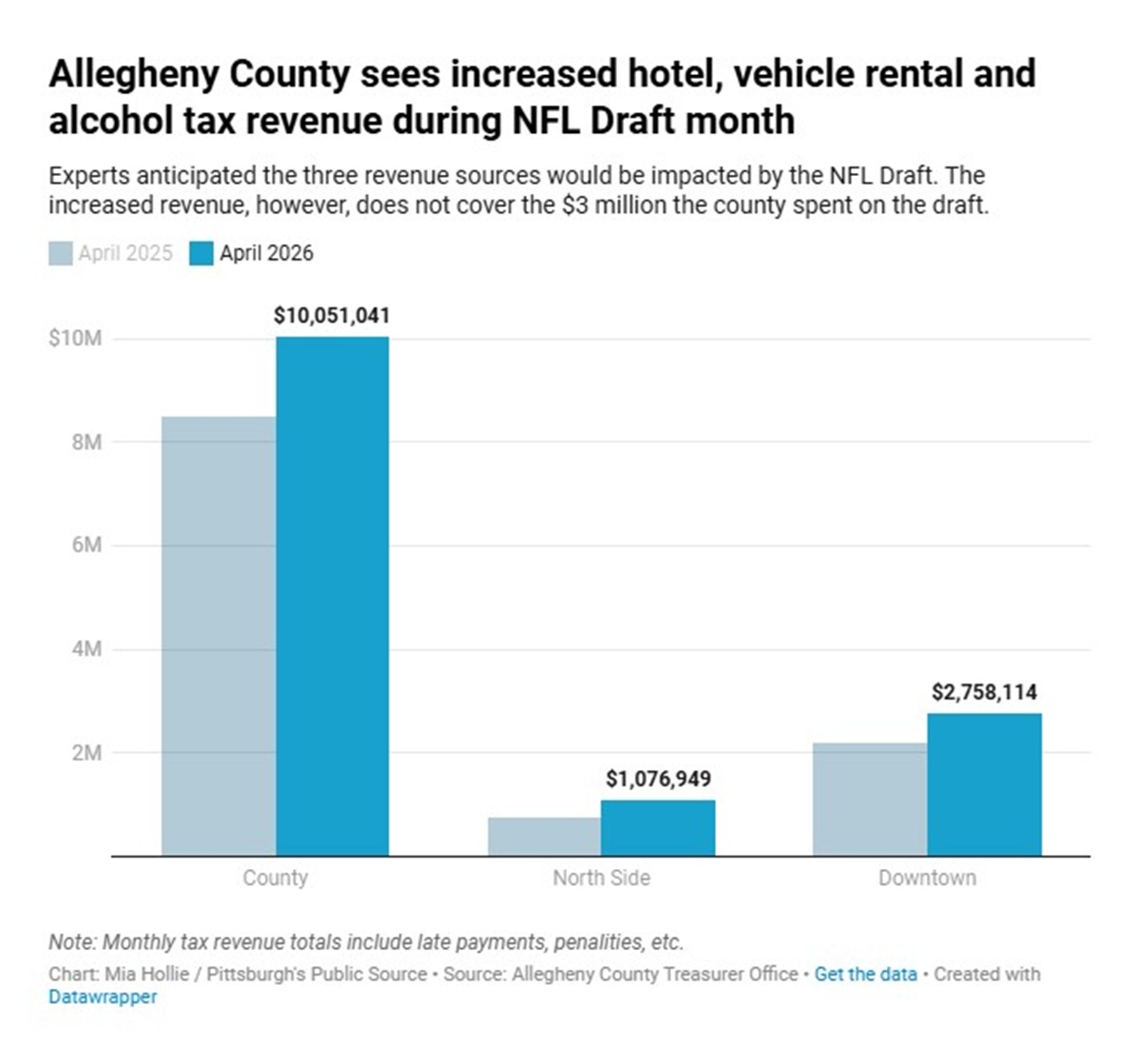
The county brought in $4.8 million in hotel tax revenue alone, an increase of roughly $966,000 compared to last April. The additional revenue, however, doesn’t cover the $3 million in hotel tax funds that the county directed toward VisitPITTSBURGH’s draft-planning expenses.
“Hosting the NFL Draft was an investment in Allegheny County’s future,” said Allegheny County Executive Sara Innamorato in VisitPITTSBURGH’s release. “It supported local businesses, showcased our neighborhoods and hospitality and demonstrated that our region can deliver events of global significance. The benefits will continue to be felt for years to come.”
During the first two quarters of the year, the city collected $23.5 million in parking tax revenue — about $5 million less than during the same period in 2025. City of Pittsburgh Controller Rachael Heisler attributed the decrease to the NFL Draft.
Many lots were largely vacant during parts of the draft.

It’s also possible for host cities to experience increased earned income and payroll tax revenue during events, according to experts, as businesses bring in additional workers or schedule their existing staff for longer hours.
Pittsburgh collected $128.5 million in earned income and payroll taxes during the first two quarters of this year — an increase of $13.7 million compared to the same period last year. Factors other than the NFL Draft could’ve influenced the increase, the controller’s spokesperson, Coleman Lamb, wrote in an email.
“It’s possible that EIT and payroll prep [revenue] could have gotten a bump from the draft, but due to the timing of when we receive those payments, we can’t say for sure yet,” he said. “But in general, EIT and payroll prep being up reflects a healthy economy and labor market.”
The City of Pittsburgh contributed $1 million toward VisitPITTSBURGH’s planning efforts and another roughly $100,000 on other costs, such as traffic signal upgrades and public safety equipment. The city also provided “in-kind” staffing resources for the event. Dan Gilman, Mayor Corey O’Connor’s chief of staff, said $2 million provided by the state helped offset some of those costs.
“It brought thousands of visitors to town and millions of people saw on TV the beauty of our city. It showed the world that the city hosts world-class events, and this will pay dividends for years to come,” Gilman said.
Mia Hollie is the economic development and housing reporter for Pittsburgh’s Public Source. She can be reached at mia@publicsource.org.
This story was fact checked by Feixu Chen.
Related: Sara Innamorato: We used the NFL Draft to fund Pittsburgh’s future