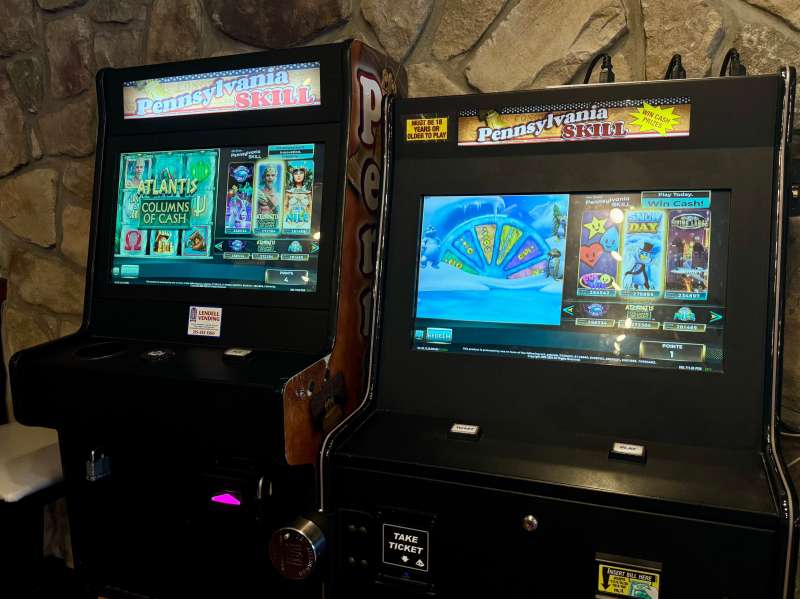
With a week to go before more than 70,000 skill games become illegal, legislators have asked the Pennsylvania Supreme Court for a four-month extension to determine how to regulate the machines and prevent them from being seized from scores of bars, gas stations, fraternal clubs and storefronts throughout the state.
Both Republican and Democratic members of the General Assembly on Oct. 6 asked the court to extend an existing moratorium until Feb. 10, which would allow them more time to consider how to regulate and tax these so-called skill games. The request was withdrawn and refiled a day later, on Oct. 7.
In June, the court ruled that skill games meet the state’s legal definition of a slot machine and therefore are operating illegally since slot machines are only permitted in the state’s 17 licensed casinos. However, the court stayed its order until Oct. 13 so that lawmakers would have time to address the matter through legislation.
Attorney General Dave Sunday had warned establishments in possession of skill games that it was not enough for the machines to simply be turned off, and they needed to be removed from the premises by the vendor who supplied them to avoid being confiscated by law enforcement. While some skill game operators were in the process of having the games removed, lawmakers stalled in their discussions on how to oversee them.
“Petitioners conservatively estimate that 40,000 Pennsylvanians will be adversely affected when enforcement begins,” the court filing says. “Many of them will lose their jobs, adding significantly to the commonwealth’s unemployment rolls. Nothing that has occurred since the decision had reduced the disturbance that enforcement would cause. What has changed in the legislative posture.”
The court filing also notes that legislation titled “Investing in Pennsylvania through the Regulation of Skill Games” has the backing of 104 House members, including the primary sponsor, which is two more votes than it needs to pass.
A similar bill is being considered in the Senate. The legislation would charge a $500 monthly fee for every skill game terminal, which would generate $300 million annually for the state coffers, and give local governments “the power to set their own health and safety standards for the businesses where these games are played.”
The Skill Games Business Consortium has also asked the court for the 120-day extension.
“In addition to that financial impact, if this court’s order goes into effect, but then the legislature acts shortly thereafter, in the interim, law-abiding citizens and businesses might find themselves subject to criminal citations simply for having skill games on their premises, even if not in use, as it will be a herculean task for the vendors of these skill games to recover and store all of the skill games that are currently being utilized throughout the Commonwealth,” attorneys for the Skill Games Business Consortium wrote. “The ensuing litigation, both civil and criminal, would be extensive.”