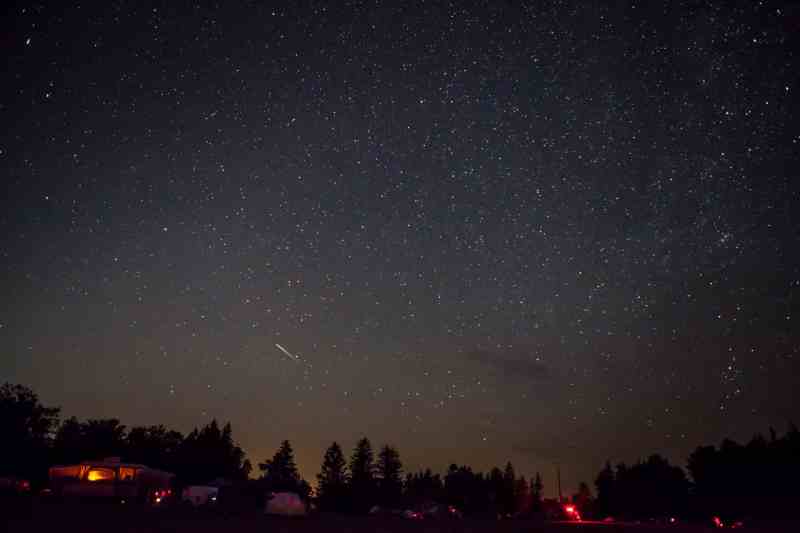
This summer, a magical evening show may be found just outside your door by looking upward to the night sky. While the full moon reliably lights up the sky each month, Pennsylvanians will also be able to witness meteor showers, Venus as the “evening star,” a partial lunar eclipse, and—if you know where to go—the dazzling Milky Way galaxy. Here are the celestial events to expect in Pennsylvania this summer, and how you can experience each one.
Summer full moons
You’re already familiar with the full moon, which rises roughly once a month when the Earth moves directly between the sun and the moon, causing the moon’s surface to be fully illuminated by the sun.
Each month’s full moon has a name associated with it, derived mostly from Native American folklore. Here are the names and dates of this summer’s full moons.
June: Strawberry Moon
Date: Monday, June 29
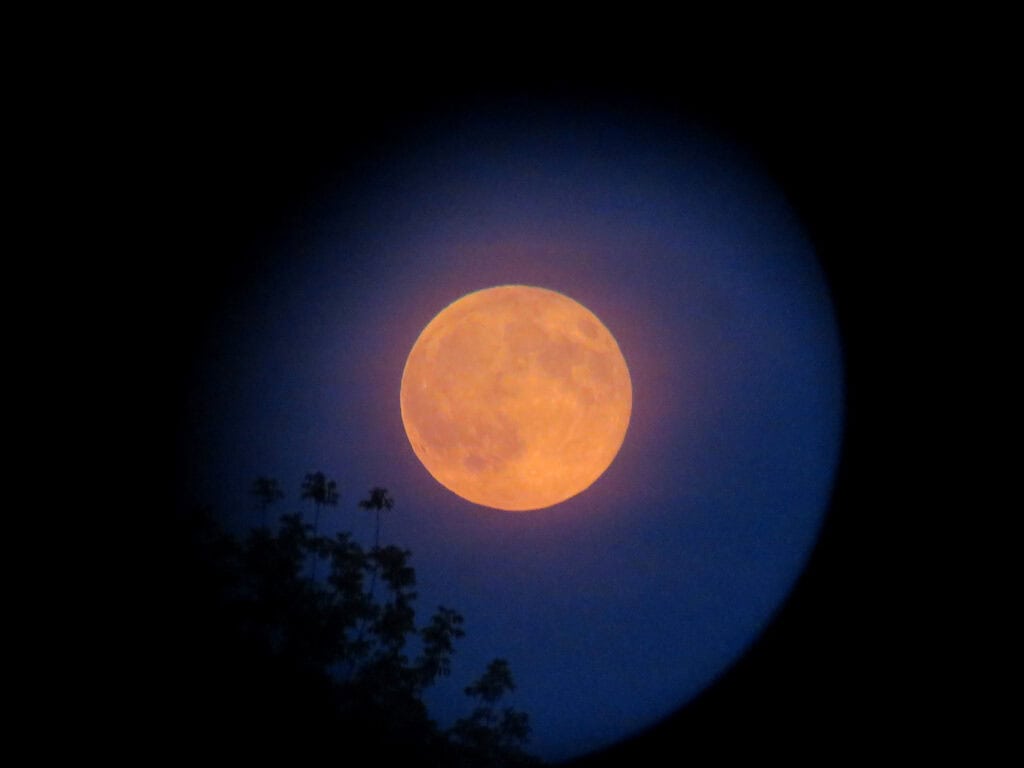
June’s Strawberry Moon is the first full moon of summer, and it marks the height of the wild strawberry season in the northern hemisphere. The full moon will appear low in the sky the evening of June 29.
July: Buck Moon
Date: Wednesday, July 29
The Buck Moon will peak mid-morning on Wednesday, July 29. The best time to see it will be after sunset that evening.
The Buck Moon is so named because July marks when the antlers of bucks—male deer—are most rapidly growing, sometimes as much as a half inch a day.
August: Sturgeon Moon
Date: Friday, Aug. 28
August’s Sturgeon Moon peaks not long after midnight on Aug. 28, meaning the best time to see it is late in the evening on Thursday, Aug. 27.
The Sturgeon Moon is named for the lake sturgeon, one of North America’s largest fish. Before the prehistoric freshwater fish’s population became threatened, it was most abundant in late summer. Lake sturgeon can be found in the Great Lakes—including Lake Erie—and other surrounding watersheds.
Delta Aquariid meteor shower
Dates: July 12-Aug. 23; Peak: July 30-31
The Delta Aquariid meteor shower occurs between July 12 and Aug. 23, though most of the meteor activity will take place in late July and early August, likely peaking on July 30 and 31.
These meteors are usually fainter than the popular Perseids, which peak in mid-August (mixing with the Delta Aquariid), so the best time to view the Delta Aquariid shower is when the sky is dark, with no moon to compete.
Since the bright Buck Moon will interfere with darker skies near the meteor shower’s peak, you’ll likely get the best views of the Delta Aquariid meteor shower the week before the full moon. In the darkest conditions, you may be able to see more than a dozen meteors per hour in the mid-evening through the dawn.
Perseid meteor shower
Dates: July 17-Aug. 24; Peak: Aug. 12-13
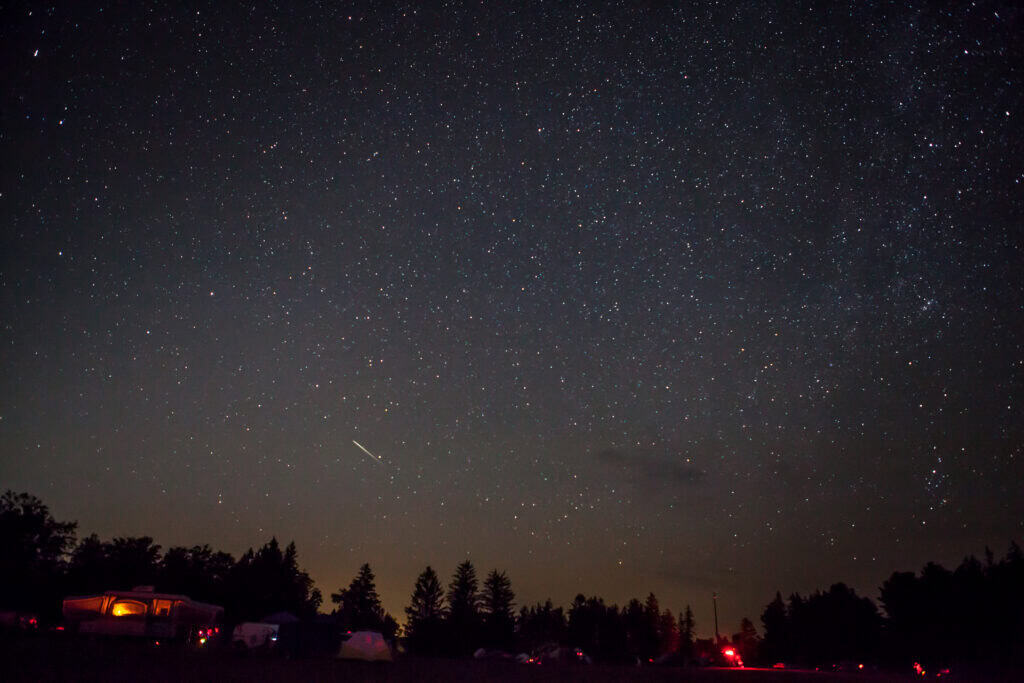
The Perseid meteor shower is one of the most reliably stunning of the annual meteor showers—at its peak, you may see as many as 100 meteors an hour streaking through the sky. The Perseids shower begins in mid-July and ends in late August, but its peak will occur between Aug. 12 and 13.
The best time to spot these meteors is after midnight through the darkest hours of the night.
To get an idea of what it might look like, check out this time lapse of 2015’s Perseid meteor shower at north-central Pennsylvania’s Cherry Springs State Park.
Venus at greatest eastern elongation
Date: Aug. 15
This summer, Venus will reach its greatest eastern elongation—when the planet is as far as possible from the sun, and it’s easiest to see it in the sky. Without the sun’s glare to interfere, Venus earns its title as the “evening star,” shining bright in the western sky shortly after sunset—brighter than any other star—and remaining visible for hours.
To see the planet, look to the west after sunset on Aug. 15. (While that date is Venus’ greatest eastern elongation, you’ll be able to see it for several weeks afterward.)
Partial lunar eclipse
Dates: Aug. 27-28
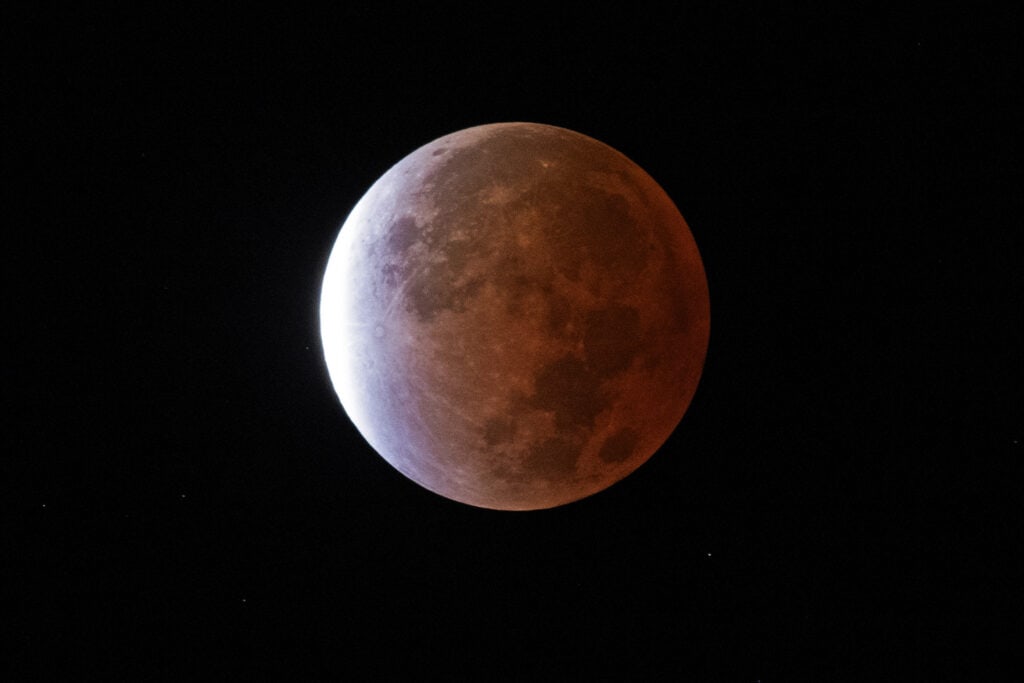
A lunar eclipse occurs when the Earth moves between the sun and the full moon, which casts a shadow on the moon that, in a total lunar eclipse, makes it appear to turn red, a la a “blood moon.” When only a partial lunar eclipse occurs, the Earth, sun, and moon are not fully aligned, so only part of the moon will appear in shadow, and the rest remains illuminated. (By contrast, a solar eclipse—which is much rarer to experience—involves the moon passing between the Earth and the sun, obscuring the sun. April 2024’s total solar eclipse was visible from Erie, but a total solar eclipse won’t be visible from Pennsylvania again until 2079.)
On the evening of Aug. 27 and into the early morning of Aug. 28, Pennsylvanians will be able to view a partial lunar eclipse in the night sky. It will be nearly total: Just over 96% of the moon will move into the Earth’s “umbra”—the darkest part of our planet’s shadow.
In Pennsylvania, the partial eclipse will begin around 10:30 at night on Aug. 27, with the maximum eclipse occurring just after midnight Aug. 28.
Unlike solar eclipses, lunar eclipses are safe to view without eye protection.
Milky Way viewing season
Dates: July and August
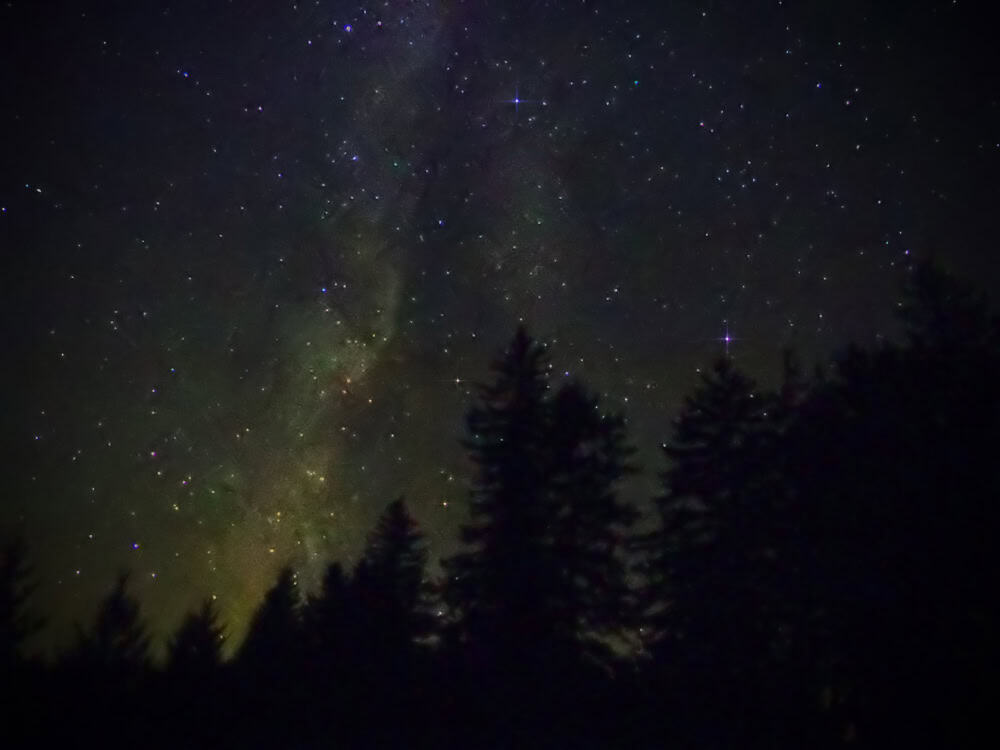
The Milky Way isn’t exactly a celestial event, since it’s always in the sky—rather, summer itself is the event, as it offers the best time to see the banded collection of stars, dust, and dark matter from the darkest skies.
Our solar system is part of the Milky Way galaxy, which is a flat, spiral galaxy shaped like a disc. The Earth is located roughly halfway between the center and the outer edge of the Milky Way, so we can see part of the rest of the galaxy as a hazy (“milky”) band.
In the summer, the Milky Way is higher in the sky, so that means you can see it earlier in the night than other parts of the year (and thus avoid severely early morning wakeups). Summer is also when the Earth faces the brilliant core of the Milky Way—in winter, our planet looks toward the fainter outer rim of the galaxy.
Of course, we can’t usually see the Milky Way because of urban light pollution that obscures the stars. Fortunately, Pennsylvania is home to a number of places far enough away from bright city lights to allow spectacular views of the night sky.
The commonwealth is even home to a certified International Dark Sky Park! Cherry Springs State Park, located in rural, remote Potter County, explicitly limits light pollution to benefit stargazing.
Other areas with some of the darkest skies in the state include much of north-central Pennsylvania, including parts of Elk State Forest, Kettle Creek State Park, Sinnemahoning State Park, Sproul State Forest, and Susquehannock State Forest.
To have the best chance of seeing the Milky Way, you’ll want to aim to view it when the sky is darkest—so when the moon isn’t full or is absent from the sky entirely. In July and August, the new moon (when the moon isn’t visible in the sky) will occur on Tuesday, July 14, and Wednesday, Aug. 12.
This article first appeared on Good Info News Wire and is republished here under a Creative Commons license.
Related: Discover the magic of the night sky: 7 great places to stargaze in Pennsylvania