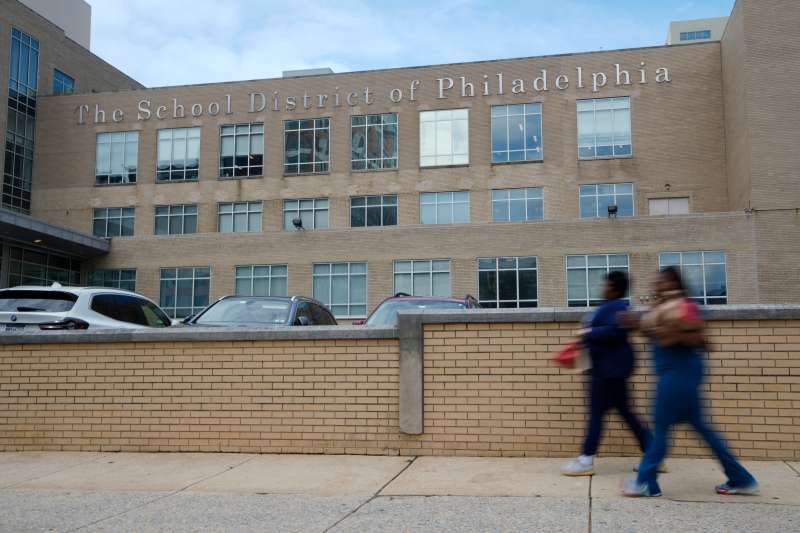
Public schools in Michigan, Pennsylvania, Virginia, and Wisconsin are dealing with the same pressures. Districts are short on money, special education costs keep rising, and voters keep getting asked to pass referendums just to keep schools open.
Meanwhile, Trump and congressional Republicans have been pushing school vouchers by way of a new federal tax credit, which takes effect Jan. 1 and leaves states with almost no say in how the money is spent. Voters in the midterm elections gave Democrats full control of state government in Michigan, Pennsylvania, and Wisconsin—changing who gets to decide what happens next when it comes to school vouchers.
What are school vouchers, and how did Trump take them national?
School vouchers move money that could support public schools toward private school tuition and other private education costs. Until recently, school voucher programs were almost entirely created and run by state legislators and agencies, and Republican-led legislatures passed them one state at a time. Trump’s One Big Beautiful Bill Act created the first nationwide version, a tax credit any state can join if its governor opts in.
Under the law, people who donate up to $1,700 to certain scholarship groups get every dollar back by paying that much less in federal income taxes. To qualify, scholarship groups must be a public charity on their state’s approved list, and Treasury rules require them to spend at least 90% of donations on scholarships. The groups then hand out the money as scholarships. Those scholarships can cover private school tuition, but they can also pay for tutoring, therapies, and other costs for students who stay in public schools. The catch is that each governors decide whether their state participates, and the program begins Jan. 1, 2027.
Once a state opts in, it has very little say over how the program works. Treasury Department and IRS rules proposed in October note that states who join would not be allowed to impose requirements stricter than federal law, including limits on which kinds of schools students attend or what scholarships can pay for.
States also can’t use their own standards to block qualifying scholarship groups. In March, when Wisconsin Gov. Tony Evers rejected a Republican bill that would have forced the state to join, he noted that the program has no student achievement metrics, no school accountability measures, and no cap on federal spending.
“Republicans in Washington have given private voucher expansion carte blanche to run roughshod over public education in this country—and a blank check to do so at taxpayer expense, clearly without any regard for whether it actually does what is best for kids,” Gov. Evers said in his veto message.
How is the federal tax credit different from school vouchers?
Josh Cowen, a professor of education policy at Michigan State University, has spent years studying voucher programs and is one of their best-known critics. However, he sees the federal credit differently. “This tax credit differs meaningfully from state vouchers, many of the criticisms of which I helped develop nationally,” Cowen said. “Unlike those voucher systems, this is available for public school students to use without leaving public schools, and public schools are named providers under the law.”
Cowen pointed to what he called “an affordability issue” for families who pay out of pocket for tutoring, afterschool programs, and other expenses at their public schools. Those costs “could be covered,” he said.
READ MORE FROM THE KEYSTONE ON AFFORDABILITY
He also noted that the version Trump signed is “meaningfully different” from the one Republicans first proposed in Congress. “It removes the wealthy tax shelter piece, and strengthens the public school offerings.”
As of Nov. 2, 31 states had opted in, 2 governors had vetoed opt-in bills, 2 states had declined, and 16 had not yet decided. Most of the states already in are led by Republicans.
The Nov. 3 midterms put the program’s future in doubt, as Democrats took control of the US Senate and House and flipped governors’ races in Iowa, Texas, Ohio, and Georgia. In Texas, Gina Hinojosa beat Gov. Greg Abbott after attacking his new voucher program as a “voucher scam.”
In Iowa, Rob Sand won after campaigning for income limits and an annual audit of that state’s universal voucher program. In Washington, the incoming Democratic majority has pledged to protect theDepartment of Education, block efforts to dismantle it, and hold Secretary of Education Linda McMahon accountable for cuts to the agency.
A bill introduced this year, the Keep Public Funds in Schools Act, would repeal the federal tax credit, but it hasn’t moved yet. With Democrats about to run both chambers, that could change, and so could the future of school vouchers in four key states.
Will Pennsylvania join the federal school voucher tax credit?
Pennsylvania’s schools are still waiting on money the courts say they are owed. A Commonwealth Court judge ruled the state’s school funding system unconstitutional in 2023, and advocates say districts are still short an estimated $3.3 billion. Republicans have resisted the funding formula that targets the poorest districts, pushing vouchers and school choice programs instead.
The Nov. 3 election gave Democrats the votes to break that standoff. Gov. Josh Shapiro won reelection, Democrats expanded their state House majority, and they took the state Senate for the first time since 1993.
“The message from Pennsylvanians is simple: finish the job and fully fund our schools,” the PA Schools Work coalition said in a statement after the election.
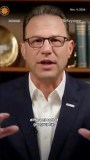
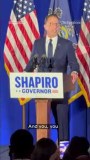
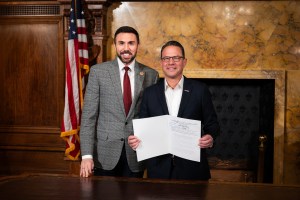
Shapiro still hasn’t decided whether Pennsylvania will join the federal tax credit program. He has called himself “very open” to opting in to the Trump-backed program, but hinted he might wait until after the election to decide. Stacy Garrity, the Republican state treasurer who ran against him for governor, had promised to opt in on day one. Shapiro has supported both school choice programs and public school funding. He has boosted funding for Pennsylvania’s existing tax credit scholarship programs while also steering millions more to public schools.
He’s also backed away from supporting school vouchers before. In 2023, after campaigning in support of Lifeline Scholarships, Shapiro used a line-item veto to strike $100 million for the program from the state budget. The plan would have given students in the state’s lowest-performing 15% of schools between $2,500 and $15,000 in taxpayer money to attend private schools. Shapiro cut it to end a budget standoff with House Democrats, who refused to pass it.
A coalition of 17 civic and education groups urged Shapiro to reject the program, warning it would fuel discrimination against students and leave the state little power to stop misuse of funds. Meanwhile, Sen. Dave McCormick (R-PA) has campaigned for Pennsylvania to opt in. National advocacy organization Democrats for Education Reform praised Shapiro as someone who can back public schools and school choice at the same time.
Pennsylvania’s existing private school scholarship programs are also up for debate. The state’s two tax credit programs have been flat-funded at $575 million after Democrats pushed to cut them, and Democratic lawmakers have called for more accountability over how the money is spent. With control of both chambers, they now have the power to act on it.
Will Michigan opt in to Trump’s federal voucher program?
Michigan has a long record of rejecting vouchers. The state constitution bars public money, credits, or tax benefits from going to private schools. In 2000, voters rejected a voucher amendment that would have reversed the constitutional ban, which was introduced in 1970. That means Michigan cannot create its own voucher program unless voters amend the constitution, which makes the federal credit the only route to anything like one.
Voters seem to see the federal credit the same way: a poll cited by the K-12 Alliance of Michigan found 61% of Michiganders polled want the state to stay out of the federal tax credit program. Public school leaders have also urged the state to stay out. The state’s Board of Education passed a resolution opposing Michigan’s participation, and the Michigan Department of Education publicly backed that resolution.
The Trump administration has urged Michigan to join. McMahon traveled to Hamtramck in March and co-wrote a Detroit Free Press op-ed with Republican Rep. Tim Walberg encouraging Whitmer to opt in. Republican House Speaker Matt Hall backed the push, warning that if Michigan stays out, the money “will go to kids in other states.”
The two candidates for governor took opposite positions on the program. Republican John James, who voted for the megabill in Congress, pledged to opt in on “day one.” Democrat Jocelyn Benson said no. “As governor, I can’t commit taxpayer dollars to a program under Trump’s control with zero transparency or assurance it will deliver for Michigan students,” Benson said in a written statement.
Benson won. Democrats also flipped the state House and held the Senate, restoring the full control of state government they lost in 2024. Down the ballot, Rep. Tom Barrett lost his seat in the 7th Congressional District. Barrett also voted for the bill that created the federal credit.
The first decision still sits with Whitmer. She has until Jan. 1 to opt Michigan in for 2027, and her administration says it is still reviewing the new federal rules. After that, the call belongs to Benson.
Will Virginia stay in Trump’s federal school tax credit program?
Virginia is the only state of the four already in the program. Former Republican Gov. Glenn Youngkin filed the opt-in days before leaving office in January, making Virginia the first state to join.
Under Treasury’s rules, Youngkin’s opt-in only counts for 2027 if the state sends the IRS a list of approved scholarship groups by Feb. 15, 2027. If Gov. Abigail Spanberger doesn’t send it, Virginia is effectively out. She has not announced a decision. “I think the current status of where we are remains in question,” she said during an Oct. 9, 2026, appearance in Henrico County regarding the state’s potential participation in the Federal Scholarship Tax Credit.
The state’s largest teachers union wants her to stay out. The Virginia Education Association urged Spanberger not to file the list. The Chesapeake Education Association estimated the program could cost Chesapeake schools $22 million a year and drain close to $1 billion from public schools statewide.
Cowen disputes that the program touches state budgets at all. The final law “would also have no bearing on the state budget (unlike the bill the GOP wanted),” he said. Not every local board sides with the union, either. The Chesapeake School Board voted 7-2 to back the federal credit instead of adopting the union’s resolution.
The General Assembly could step in, too. A bill that would have effectively barred participation, HB 359, was carried over to the 2027 session. The timing matters because the federal program launches around the same time Virginia’s own state tax credit for private school scholarships.
Virginia’s own school choice program also faces a deadline. The state’s Education Improvement Scholarships Tax Credits program, created in 2012, gives donors a state tax credit for funding private school scholarships for lower-income students and students with disabilities. A bill to extend the program died in the 2025 session and is set to expire after 2027 as the federal credit gets underway—leaving Spanberger and the General Assembly deciding the future of both school choice programs at once.
What happens to school vouchers in Wisconsin under Gov. Elect Crowley?
Wisconsin created the nation’s first modern voucher program in Milwaukee in 1990 under former Republican Governor Tommy Thompson. The Milwaukee Parental Choice Program started in the 1990s, and a Republican legislature expanded it statewide in 2011. Meanwhile, public school districts say state aid hasn’t kept up with their costs, so they have repeatedly asked local voters to raise property taxes through school referendums.
“People really care about their community schools,” Senate Democratic Leader Diane Hesselbein said at a WisPolitics forum this summer. “They are sick and tired of these school boards… having to go to referendum over and over because they want to keep the lights on.”
Gov. Evers refused to join the federal program. In March, he vetoed a Republican bill written by Rep. Jessie Rodriguez and Senate President Mary Felzkowski that would have forced Wisconsin to opt in. Tom Tiffany joined the entire Wisconsin Republican congressional delegation in a letter pressing Evers to drop his opposition. In Washington, Democratic Reps. Gwen Moore and Mark Pocan introduced legislation to repeal the federal credit.
The midterm results put the next decision in Democratic hands. Democrat David Crowley beat Tiffany, a Republican with close ties to Trump, to become Wisconsin’s first Black governor. Democrats also won both chambers of the Legislature, which they last controlled in 2009-2010. Among the Republicans voters removed were Sen. Howard Marklein, ousted by Rep. Jenna Jacobson, and Assembly incumbents, including Shannon Zimmerman.
Crowley wants to stop Wisconsin’s own voucher program from growing without shutting it down entirely. During his debate with Tiffany, he said the state-funded voucher system “cannot” be expanded, but shouldn’t be ended. Incoming leaders Greta Neubauer and Hesselbein have made more money for public schools a top priority, and some Democrats are exploring alternatives to the state’s school funding formula.
READ MORE: Report: Pennsylvania’s richest billionaire profits from school voucher program