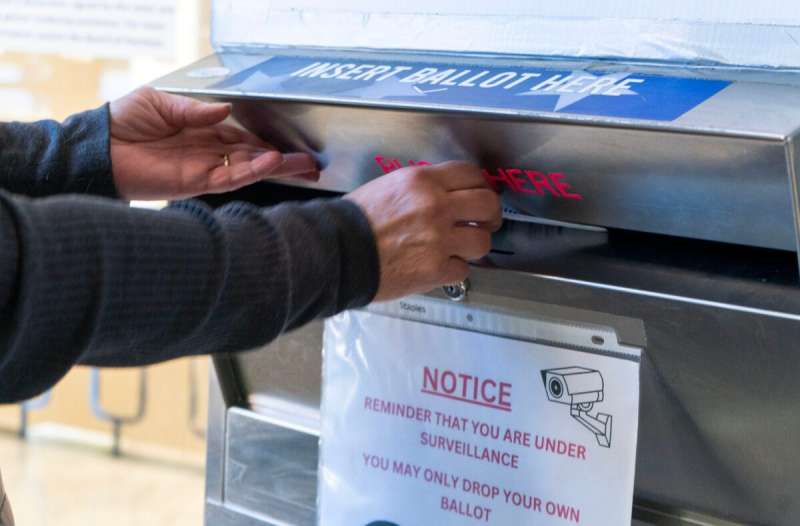
Monday’s Supreme Court decision giving preliminary approval for President Donald Trump’s order restricting mail voting may not lead to a single election procedure changing during the November midterms, but it has already thrown into uncertainty the method that nearly one-third of the country uses to vote.
Rather than saying that Trump’s order is legal, the high court said Monday it was too early for Democratic-run states, including Pennsylvania, to challenge it in June, when they convinced a federal judge in Boston to freeze the order for November’s election. That effectively restarts the legal fight over the order in an incredibly compressed timeline, with initial ballots scheduled to be sent to North Carolina’s overseas and military voters in just over a week, on Sept. 4.
The runway is a little longer in Pennsylvania, where counties don’t have to start sending out mail ballots this year until Oct. 20, though most start as soon as ballots are ready to go—usually early in October.
A second injunction barring the US Postal Service from making changes to comply with Trump’s mail voting directive remains in effect. Still, the administration late Monday filed a motion asking that the second hold be removed, and has posted new regulations from the Postal Service that would go into effect Tuesday if the legal pathway is fully cleared.
That new rule requires specific formatting for envelopes containing mail ballots—which may force some jurisdictions to completely revise theirs—and makes states use an electronic system to identify to the Postal Service who is voting by mail. If states don’t comply with the rule, their mail ballots won’t get sent.
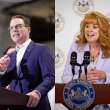
Shortly after Monday’s SCOTUS order, Pennsylvania Gov. Josh Shapiro took to social media to remind voters that the decision “does not deal with the substance of Trump’s Executive Order and does not mean his illegal attempt to restrict mail-in voting will go forward.”
Shapiro followed up Tuesday by blasting Trump for “once again trying to sow chaos and doubt in our election system.”
“Nothing has changed here in Pennsylvania for November’s election,” Shapiro posted. “Despite the President’s repeated attempts to undermine our Constitution, eligible voters in Pennsylvania can safely and securely vote by mail—and I’ll keep fighting in court to protect our state election laws.”
Of the more than 7 million Pennsylvanians who voted in the 2024 presidential election, 27.3% of them voted by mail.
According to a 2025 report from the Election Assistance Commission, nearly a third of Americans—30.3%—voted by mail in the 2024 election. Nationally, more than 66 million mail ballots were sent to voters, with about 72% returned and nearly 99% of returned ballots were ultimately counted.
During a prime time speech in July to drum up support for his SAVE America Act—which critics say would create unnecessary barriers to voting for low-income individuals, rural residents, people of color, young voters, and those who lack easy access to physical citizenship documents—Trump claimed that Pennsylvania has tens of thousands of noncitizens on its voter rolls.
Both Shapiro and Republican Secretary of State Al Schmidt invited the Trump administration to share concrete evidence to back up Trump’s claims, with Shapiro reminding voters of Trump’s previous failed attempts to prove voter fraud in Pennsylvania.
“Back in 2020, when Donald Trump lost the election here in Pennsylvania, he and his enablers went to court and sued [Pennsylvania] 43 different times…to try and throw out your votes, to try and thwart the will of the people here in Pennsylvania. Trump went 0 and 43. I went 43 and 0, and we defended your right to vote, and we will again,” Shapiro said.
Trump has long sought to make voting by mail largely impossible, though he himself has repeatedly cast his ballots by mail.
Trump falsely blamed his 2020 loss on mail voting and spun up baroque conspiracy theories that he’s tried to prove while back in office. Judges blocked him from creating new voting restrictions by executive order last year, and he only issued his latest order after the SAVE America Act stalled in the Senate amidst Democratic opposition.
Keystone senior newsletter editor Patrick Berkery contributed to this report.