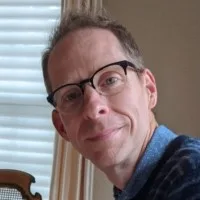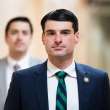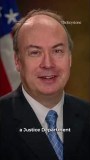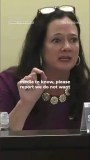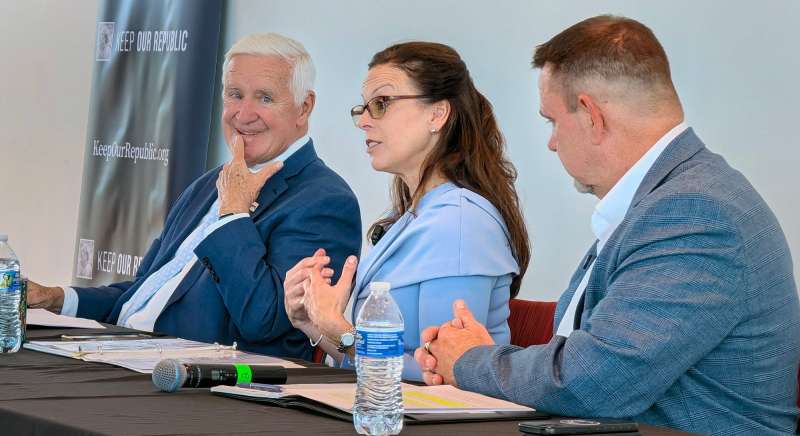
On Monday afternoon, former Pennsylvania Gov. Tom Corbett, York County President Commissioner Julie Wheeler and state’s deputy secretary of state for elections and commissions Jonathan Marks gathered at York College to discuss how the upcoming midterm election would be administered in a manner that would ensure its accuracy and security.
A decade ago, such a meeting would have seemed unnecessary.
But, as Bob Dylan once sang, things have changed.
In 2016, Donald Trump and his campaign surrogates relentlessly suggested that the only way he could lose the election would be through cheating by the Democrats and widespread fraud. None of that happened and Trump won.
In 2020, Trump once again suggested that he could only lose if the other side cheated. After he lost, he continued to declare that he had won.
Election conspiracy theories continue to circulate.
The subject came up just last week in the debate between the candidates for Pennsylvania’s 10th Congressional District, with incumbent Republican Scott Perry saying he voted against certifying the 2020 election because thousands of his constituents had raised questions about the results and they hadn’t been investigated. He also cited an Italian satellite theory, saying he was merely passing it on to the White House. Those and other concerns, by the time Congress voted to certify the election on Jan. 6, 2021, had been the subject of 62 lawsuits filed by Trump and others challenging the election. Judges, including federal judges appointed by Trump, dismissed nearly all of them for lack of evidence.
But that has led to the seeming widespread belief that our elections are rigged and that cheating and fraud are commonplace.
What causes mistrust in elections?
Nicolas Anspach, associate professor of political science and director of the Arthur J. Glatfelter Institute for Public Policy at York College, who moderated Monday’s discussion, cited Gallup polls that 51 percent of the country lacks confidence in the honesty of elections.
He asked the panel what caused that depth of mistrust.
Corbett held up his phone and said, “This.”
Corbett recalled that there was a time when information was vetted and fact-checked and that rumors and conspiracy theories traveled on the back roads of the media landscape and rarely ventured into the mainstream.
It’s different now.
“The phone amplified it a hundred-fold,” he said. Smart phones “can be a useful tool, but they can also be very destructive because (they) have no filter. Anybody can post anything they want” and people believe that if something is on the internet, it must be true. “It’s not,” Corbett said.
Corbett, a Republican who before being elected governor served as a U.S. attorney and as the state’s attorney general, said he is “a prosecutor by nature,” and if someone makes an assertion about the law being broken, “show me the proof.”
He said, “How many prosecutions have we seen? Very little.” There have been instances of voter fraud, he said, “but not to the size of scope people would lead you to believe” and certainly not enough to change the results of an election.
For such a widespread conspiracy to take control of an election, he said, it would have to include “vast numbers” of co-conspirators, given that counties and local election boards run elections in the state.
Wheeler said one such conspiracy circulated on social media just last weekend, a post that asserted that the writer had heard from someone “on the inside” that the county was instructing “elections managers” to mark ballots. The county immediately debunked the assertion. Wheeler said. For one thing, the county does not have “election managers,” and for another, the only time election workers mark a ballot is to void it if a voter makes a mistake marking it and requests a new ballot. The voided ballot, she said, is retained so it can be accounted for.
The role of rhetoric
Political rhetoric, Wheeler said, also fuels the mistrust, the notion that the only way a candidate could lose is because the other side cheated, that it has nothing to do with policies or the character of the candidate. “There is no accountability for the stories that are made up and repeated and repeated and repeated,” she said.
Marks echoed the concern that distrust in the voting process is fueled by misinformation, that unfriendly foreign powers and people he described as “bad actors” use social media to post preposterous theories about “some vast conspiracy” to sow distrust in the democratic process.
In Pennsylvania, he said, elections are run by the counties. “Our elections are run by your friends and neighbors,” he said. “I couldn’t rig an election even if I wanted to. We are not running elections at the Department of State.”
York County’s election process is complicated, but Wheeler said the bottom line was to make sure that elections run efficiently, smoothly and legally.
If county elections officials catch wind of any irregularities, Wheeler said, they are referred to the district attorney’s office for investigation. She said she is concerned about the integrity of local elections. “If I weren’t concerned,” she said, “I wouldn’t be doing my job.”
The county, she said, essentially administers three elections – counting votes cast during traditional in-person voting on election day, processing mail-in and absentee ballots and accepting ballots over the counter at the elections offices at the old courthouse in downtown York or the county offices on Pleasant Valley Road in Springettsbury Township.
The county has worked to streamline the process and make it more efficient, Wheeler said, noting that over-the-counter voting is the least efficient means of casting a ballot, requiring processing the application for a ballot on the spot.
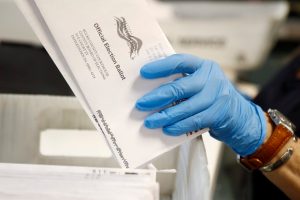
Mail-in ballots are handled in a secure manner, she said. One county employee opens the outer security envelope; another opens the inner envelope and yet a third places it in a bin to be stored in a secure area under 24-hour surveillance. Ballots are tracked during every step of the process to the point that the county can tell which bin individual ballots are stored in. The tracking of the ballots is uploaded to the Department of State and voters can track their ballots on the department’s website. (As of Monday, Wheeler said, the county received 36,929 requests for mail-in ballots and of those, has received 13,225.)
Under state law, she said, the county cannot begin counting the ballots until 7 a.m. election day. The ballots are scanned and the vote recorded, but the results are not compiled until after the polls close at 8 p.m. And after all the votes are counted, Wheeler said, the county is obligated under law to perform an audit.
‘They’ll want proof’
Of course, after the process, Anspach asked whether litigation challenging results could cast doubts on results.
Corbett predicted there would be less litigation during this election cycle. “I don’t think judges will have much patience with some wild scheme,” he said. “They’ll want proof.”
People in leadership positions, Marks said, should be obligated to provide credible sources of information – information that has been fact-checked – to combat misinformation erodes trust in elections. The Department of State does that on its website, he said, separating “fact from fiction” by citing credible sources to debunk wild conspiracy theories about election fraud.
“We’ll probably have to do it for the rest of time,” he said. “I hope I’m wrong.”