Early in 2026, Pennridge School District leaders delivered the news that they were increasing property taxes for a second straight year to deal with budget holes that persisted despite cutback attempts.
Several usual suspects were driving the Bucks County district’s financial strain, they explained, including rising special education costs and cyber charter tuitions. But as officials crunched the numbers, they kept stumbling over a new financial millstone: A boom in use of GLP-1 weight-loss drugs among their staff.
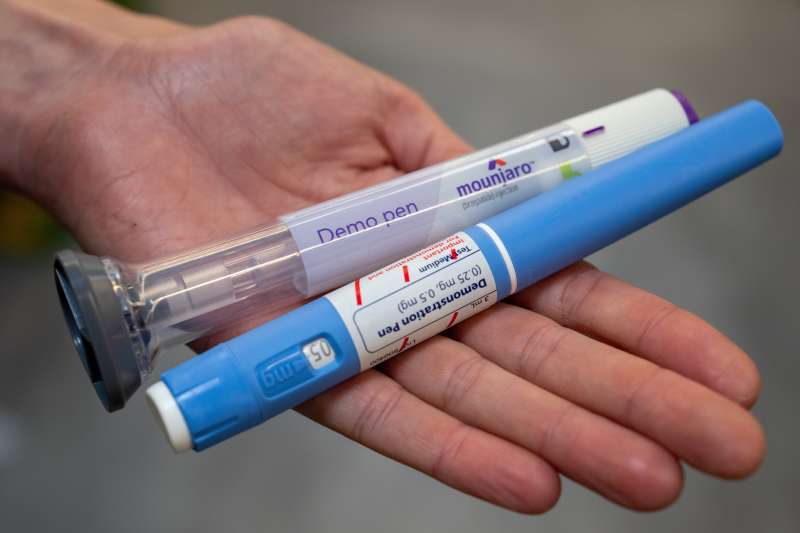
As medications like Wegovy and Zepbound shift obesity management in the U.S., educators and staff at Pennridge have increasingly turned to them along with everyone else. While just about 10 or 15 district employees were on anti-obesity drugs in 2023, that total rocketed to 120 three years later, according to an analysis reviewed by district officials.
Costs have followed a similar trajectory in Pennridge, which covers the medications in their health plan and has seen spending rise from about $86,000 in 2023 to nearly $1.3 million by 2026.
“Folks are getting Wegovy left and right,” Superintendent Angelo Berrios said during an April 2026 board meeting. “We need to have some controls put in place.”
Existing coverage options are baked into the district’s teachers union contract, but once that expires in 2028, Berrios said officials might look at tweaks.
All over Pennsylvania, other school district officials are having similar conversations, experts say, caught between the promise of a potentially transformative drug and the sizable price tag that comes with it.
Some health advocates see insurance coverage of these transformative drugs as an obvious choice. Obesity can elevate a person’s risk of developing diabetes, heart disease and other life-threatening conditions and can also make it harder to function in daily life, bringing problems like aching joints and shortness of breath.
Averting these long-term health problems could save untold sums of money in the long run and add years to people’s lives, these advocates say.
But the short-term costs are the sticking point for employers — and perhaps especially for public school districts that answer to taxpayers for their spending.
“I’ve never seen anything like this,” Seth Friedman, who’s spent about three decades in pharmacy benefit management, said of the impacts of GLP-1s. “I’m talking about this every day.”
Jim Pyne, a consultant whose firm works with Pennridge, said clients are seeing year-over-year cost increases of about 10%, the highest jumps in a decade or more. Part of that comes from post-COVID healthcare trends, but weight-loss drugs are also a major factor, he explained.
Amid these climbing costs, some districts that initially embraced coverage of weight-loss drugs are now looking to backtrack, alarmed by a rapid takeoff in pharmaceutical spending.
Officials have explored adding safeguards. For instance, Berrios suggested the district could require employees to sit down with a nutritionist or meet certain body mass index criteria before they’re eligible for weight-loss coverage. Others want to eliminate it entirely.
But clawing back a benefit isn’t always easy and can lead district leaders into clashes with their employees.
Cristy Gallagher, associate director for research and policy at the STOP Obesity Alliance at George Washington University’s Milken Institute School of Public Health, said vacillating on coverage can harm patients who need stable medication.
Many of these people have battled obesity for years, she said, unsuccessfully experimenting with a battery of diet and exercise plans before trying a GLP-1.
“And then to have that taken away from them, I think is really frustrating,” she said.
In one case, a Westmoreland County teachers union even filed a grievance over their healthcare organization’s mid-year decision to scale back GLP-1 coverage.
In July 2025, Mount Pleasant Area School District officials agreed to reimburse affected employees with lump-sum payments of $1,200 annually for three years. These amounts are meant to cover staff members’ prescription costs for the remainder of their union contract, which expires in 2028.
In exchange for this concession, which resulted in a total payout of $30,000 in the first year, the education association dropped its grievance against the district.
A seismic change
Before 2020, many school districts tucked coverage of weight-loss drugs into their list of health plan benefits, but the provision didn’t get much attention because few people took advantage of it, said Pyne, whose firm, Conrad Siegel, consults for about 150 school systems in the commonwealth.
“It wasn’t that big of an issue because there just weren’t a lot of clinically efficient or great options out in the market,” he said.
Then, GLP-1s burst onto the scene.
While Pyne has seen many new drugs debut over the years, the number of potential patients for GLP-1s puts them in a tier of their own. Polling shows about one in eight U.S. adults is taking these drugs, and with roughly 40% of Americans age 20 and over considered obese, the medications’ reach could extend much further.
Pyne said for many of his clients, between 4% and 8% of their health plan members are on the prescriptions.
So, unlike five years ago, the question of covering weight-loss drugs is no longer hypothetical.
These coverage decisions can be complicated, balancing the immediate expense with the potential payoffs of having healthier employees and fewer obesity-related health conditions down the road.
The strength of the labor market also plays into these conversations, experts say, especially in the private sector, where businesses eager to fill vacancies use benefits to attract talent. Prospective employees are increasingly asking about GLP-1 coverage during the interview process, said Friedman, pharmacy and health plans practice leader for Gallagher, a benefits consultant that works with a number of school districts in Pennsylvania.
But public employers have another set of considerations: How to justify ballooning prescription costs to taxpayers.
As school districts began wrestling with these competing priorities, they’ve been falling into roughly three different camps, Friedman said.
Some have opted for full coverage, and Pyne estimates that more than a third of the school districts his firm advises have taken this route. A second group — he estimates up to a quarter of his school district clients — offers no coverage.
The rest, he said, fall somewhere in the middle: Giving employees access to the drugs as a health benefit but adding rules meant to curb runaway costs.
One safeguard might involve limiting these medications to adults with more severe obesity.
Though the FDA has approved Wegovy and Zepbound for adults with a body mass index of 30 and higher, a district might require a BMI of 40 or above to qualify.
Other districts in this category might hire third-party vendors who provide virtual consultations to GLP-1 users, make sure they’re taking the medication as prescribed and work with them to change their diet and exercise habits in conjunction with the treatment. Some of these outside vendors have the express goal of weaning people off the drugs over time, Friedman said.
But some of these cost-containment measures are concerning to Gallagher, who said she favors lifestyle support but is wary about vendors who try to taper people off the drugs.
“I think it would be hard to find another type of disease where the goal was to get the person off the medication if they saw success,” she said.
How are school boards making these decisions?
These difficult decisions about whether and how to cover these drugs draw on the way district officials view the medications in the first place.
Weight-loss prescriptions fall into a contested space, with some people considering them essential treatments for the disease of obesity. Others think of them as “lifestyle” drugs more comparable to treatments for hair loss or erectile dysfunction, Pyne says.
Accordingly, many insurers have chosen to exclude these drugs as a benefit, and Pennsylvania recently decided to slash coverage from its Medicaid program in an effort to rein in budget growth.
Gallagher says she’s shocked at the use of the term “lifestyle drug” to refer to weight-loss medications, arguing that this wording points to misperceptions and stereotypes around obesity.
Advocates have battled the perception that people are primarily using the drugs to get swimsuit-ready for the summer or fit into a wedding dress, she said. This viewpoint, she said, trivializes the experiences of GLP-1 users who are now able to move without pain again, improve their heart health and decrease their risk of diabetes.
At this point, however, there are many unknowns about the long-term benefits of covering these drugs for employees. One modeling study completed by the University of Southern California estimated that taking the drugs could yield more than $193,000 in lifetime net social benefits and health cost savings for adults between the ages of 40 and 50.
However, Friedman points to a study that linked GLP-1 use to a short-term rise in medical spending, on top of the expense of the drugs themselves.
Gallagher said that’s not unlike findings related to bariatric surgery and could mean these weight-loss patients have begun seeking other health care they’d been putting off. Maybe they finally get the knee or hip replacement they’d needed, she said.
Still, for some employers, the chance of downstream health savings doesn’t offset the prescription costs of today, especially taking turnover into account.
Since many people change jobs more during their careers, employers worry that they’ll pay the immediate costs of the GLP-1 medication without capturing any of the long-term gain, experts say.
“We’re going to pay all this money for these products … for people that are going to be out of here within five years?” Friedman said. “Swallowing that is a bit of a — no pun intended — tough pill.”
Once again, Gallagher believes employers and policymakers are holding GLP-1s to a different standard. Cancer treatments and therapies for a wide range of other diseases have a high price, yet employers don’t demand proof of a return on investment, she argues.
And medical spending isn’t the only way to measure a benefit, she added, saying employers should also consider that people might be more focused and engaged in their work as their overall wellness improves.
Cash-strapped districts, though, might be willing to forgo these benefits to preserve others, Pyne said.
When he sits down with district officials to strategize over prescription cost spikes, he explains they can eliminate GLP-1 coverage or cut health plan spending in other ways, like raising the deductible or excluding certain spouses from coverage.
Then, they let unions and employers plot the best way forward, he said.
Often, he said both sides conclude the weight-loss drugs are the easiest sacrifice to make.
What happens when districts backtrack
Some districts that jumped on the GLP-1 bandwagon early are already looking to backpedal, consultants say.
Chambersburg Area School District is no longer covering GLP-1s for weight loss as of July 1, according to its latest four-year contract with the teachers union. Easton Area School District is gradually decreasing the benefit and will pay just a quarter of the cost by the middle of 2027, while employees will shoulder the rest.
“Those early adopters are now like, whoa, our costs are going through the roof here, we can’t continue to sustain this,” Friedman said. “We now need to pivot and do one of two things: Drop coverage or put in some significant restrictions around who is actually getting access to these products.”
Friedman said his firm’s guidance can vary based on a client’s specific situation but that it’s hard not to recommend dropping coverage when manufacturers are selling drugs to individuals at a fraction of the price insurers pay.
People can buy a month’s supply of Wegovy pills for as little as $149 through Trump Rx, the president’s direct-to-consumer platform, while the manufacturer’s sticker price for the same drug tops $1,300.
Pyne said drugmakers do offer rebates that bring the per-person cost down to about $500 to $800 each month, but that still exceeds what individuals would shell out by buying straight from the manufacturer.
Christopher Bigger, superintendent at the Chambersburg Area School District, said frustration over the perceived drug industry cash grab contributed to their decision to scale back coverage. Before this step, the drugs had been costing the district upward of $1.5 million per year, he said.
Employees with comorbidities can still access the drugs through their insurance plan, he noted.
Pennridge School District board members also expressed frustration over the drug markets but differ about how to confront these realities.
In one June meeting, board member Leah Foster Rash expressed concern that dropping coverage could have a disproportionate effect on lower-earning employees who might already struggle to pay for preventive health care.
“That’s not a Pennridge issue,” a colleague responded. “Big Pharma needs to stop taking advantage of the U.S. citizen with these outrageous drug costs.”
“We can’t change Big Pharma,” Foster Rash continued. “But we can speak about how we want to treat our staff.”
In some cases, employers might furnish GLP-1 users with money in their health-savings or flexible spending accounts so they can buy their own prescriptions at the lower prices, Gallagher said.
Still, she supports covering the drugs in an employee’s basic plan so the spending contributes toward a deductible and is managed along with the rest of their health care.
In the Mount Pleasant Area School District case, the suspension of weight-loss benefits brought the district into conflict with their teachers union. And in Westmoreland County, district officials who withdrew coverage agreed to reimburse employees for six months of drug costs to settle concerns.
But even if employers opt against keeping weight-loss drugs in their health plans, a growing number of workers will probably qualify for GLP-1s for other reasons, as the medications are approved to treat more and more diseases, Pyne predicted.
Others are hopeful that more robust competition in the GLP-1 market will curb costs and make the drugs more affordable for insurance plans and consumers alike. Gallagher said Medicare’s recent move to cover the weight-loss prescriptions could prod more companies to launch their own versions and push prices down.
Pyne is more skeptical that commercial costs for the drugs will sink anytime soon, pointing out that commercial insurance prices have remained relatively level over time.
“Unfortunately with health insurance sometimes, and especially prescription drugs,” he said, “there’s the idea that manufactures and (pharmacy benefit managers) will charge what market can bear.”