If you suspect that you, your children, or any other loved one has measles, there is a chance that when you take them to see a healthcare professional, you might be taking them to one who has never seen a case.
The measles was considered eradicated in the United States in 2000, which means that a new generation of healthcare professionals has never treated someone with the virus.
Dr. Eugene Curley, WellSpan Health’s medical director of infectious disease, said that has meant having to retrain many providers in their system who have had no experience with diagnosing or treating the disease.
“We’ve re-educated them on measles because you have to remember that measles was once eradicated, and many physicians and providers have never seen a case,” Curley said. “We had to educate our providers on what to look for, what the hallmark signs are, what testing to order and how to manage these patients.”
Getting healthcare professionals up to speed on measles has become necessary as cases have ticked upward in Pennsylvania since April, especially in counties that surround York County.
York County has added four more measles cases in the last month as cases in surrounding counties continue to grow.
According to the Pennsylvania Department of Health (DOH) data released Wednesday, July 29, York County has had a total of six measles cases since mid-June reported to the state.
Nearby Lancaster County continues to be the epicenter of the disease in Pennsylvania, with 92 cases reported to the DOH since January, with 84 cases reported since April. Nearby Chester County has had 15 new cases reported since April after having only one reported during the first three months of the year.
Overall, 146 of the 158 cases reported to the health department have come since April, and 35 of those cases have come within the last week. Of those cases since April, 58 cases are among those between the ages of 0 and 18, while 81 cases are among those between the ages of 19 and 45.
Curley said most patients will generally get a mild or moderate disease and recover without receiving medical attention, but measles is far from harmless.
“It can lead to complications like ear infections, bacterial pneumonia, and there is a potentially fatal complication, a brain disease called encephalitis, which can be fatal in individuals,” Curley said. “It’s fairly rare, but it can happen. That’s another reason you don’t want to take chances and get measles. We would recommend any of our community members who are not fully vaccinated to get vaccinated given the current outbreak in Pennsylvania.”
Many in the commonwealth seem to be heeding that advice. According to the DOH, the majority of measles vaccinations given by the health department,1,212 of the 2,024 administered, have come in June and July.
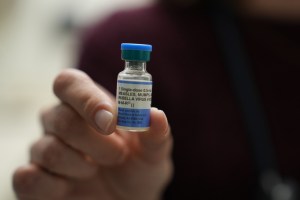
“The best way to prevent getting measles is to get vaccinations, and we continue to promote vaccination in individuals who are not up to date,” Curley said.
One shot is 93% effective in preventing you from getting measles. A second shot makes it 97%-plus effective, Curley said.
Based on vaccination data from Pennsylvania schools, nearly 94% of kindergarten students during the 2024-2025 school year had received the two doses of the MMR vaccine to prevent measles.
Anyone who is unsure if they have immunity or not, Curley recommends they check in with their family doctor or their primary care physician to see if they have it in their records.
“We can also do a blood test to check for immunity, also,” Curley said. “If the medical record wasn’t clear or if the patient couldn’t remember if they had been vaccinated or not, there is a simple blood test that could be performed that would show if the patient is immune to measles.”
He said WellSpan has also tried to increase awareness about measles in the community with signage outside their facilities as well as screening to make sure patients don’t show symptoms before they walk into one of those facilities.
“What we know about these outbreaks we’ve been experiencing is that people who are unvaccinated are at highest risk for getting measles,” Curley said.
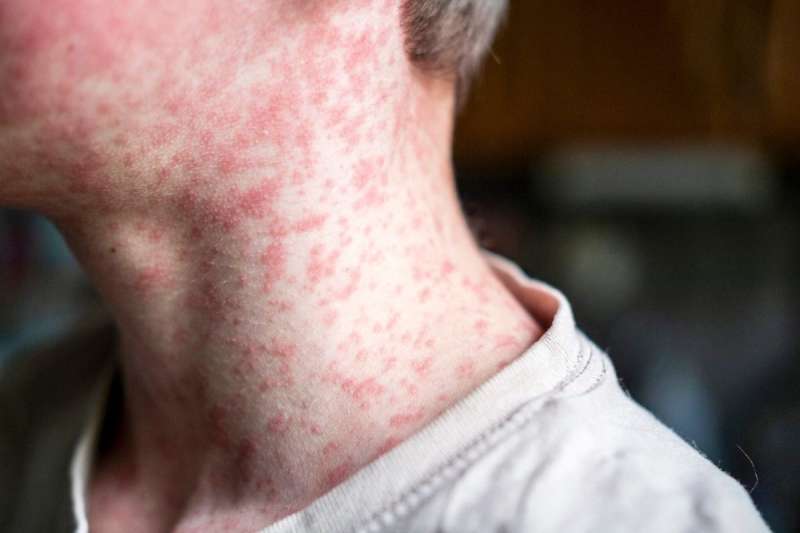
A measles case might start out with high fever, cough, runny nose, and watery eyes, which mimics symptoms for many sicknesses.
“As things progress, you can get the hallmark sign of measles called Koplik spots or white spots that can be on the inside of the mouth,” Curley said. “Then the characteristic rash that can also occur with measles, and that generally starts on the head and the face and spreads downward.”
CDC data from the outbreak in Texas last year showed that 93% of cases occurred in unvaccinated individuals, he said.
“We have seen nationwide a slight downtrend in measles vaccinations from about 95-plus percent in 2019 before the COVID pandemic hit to around 92% in 2024,” Curley said
Although it is a drop of just 3 percentage points, once you are below 95%, which is considered herd immunity, that is when you will see nationwide outbreaks in measles, he said.
“This is a completely preventable disease,” Curley said. “We’ve proven that with previously having this virus eradicated nationally.”
Misinformation disseminated through various sources has made it difficult to persuade people to get vaccinated, but Curley said physicians and healthcare professionals are always glad to discuss concerns patients may have about the measles vaccine.
“I don’t think there are any dumb questions out there,” he said. “I am always happy when my patients are asking me questions about if this vaccine is safe, or do I need to get this vaccine, or what’s my risk or what are the side effects.”