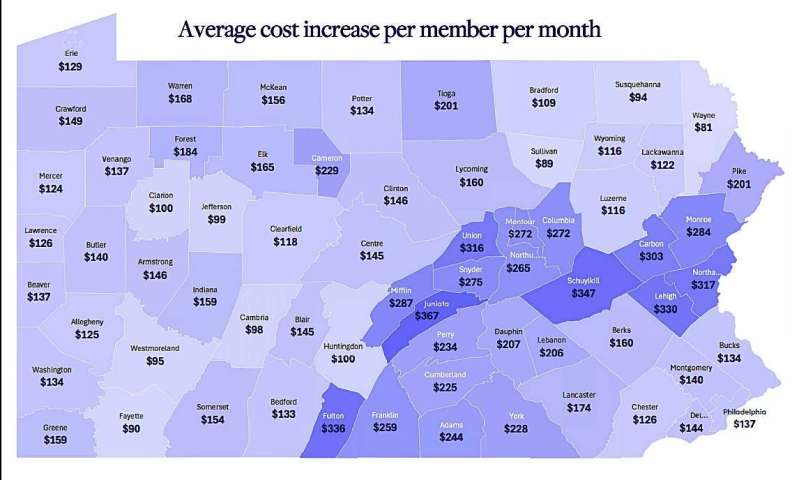
A wave of Pennie enrollees are downgrading their health plans after the expiration of tax subsidies that made monthly insurance payments more affordable for millions of Americans, according to a new analysis.
Many others are canceling their coverage altogether, the Independent Fiscal Office’s July 2026 report showed. Overall participation in the commonwealth’s Affordable Care Act marketplace has shrunk by about 8% compared to the previous year.
Health advocates had predicted these shifts in response to the recent lapse in federal tax credits that had reduced the cost of monthly premiums. They’ve expressed concern that the developments will leave more people uninsured or under-insured and unable to afford their health care.
The number of Pennie enrollees jumped by 20% in 2024 and 13% in 2025, increases that state analysts attribute in part to the tax subsidies, which expired at the end of 2025 because congressional representatives did not renew them.
This year, enrollment has been on a steady decline, and the June numbers fell about 39,000 people short of the previous year’s total.
The IFO analysts also noticed that people appear to be reducing their health benefits to save money. Enrollment in Pennie’s “silver” plans has dropped by about 34,000, while the number of people using the lower-cost “bronze” plans has gone up by about 38,000.
Nationwide, ACA enrollment decreased by about 2½ million people from February 2025 to February 2026, with a number of states seeing higher drop-off rates than Pennsylvania, according to the Associated Press. Ohio and Oklahoma led the way, seeing their plan participation fall by nearly a third.