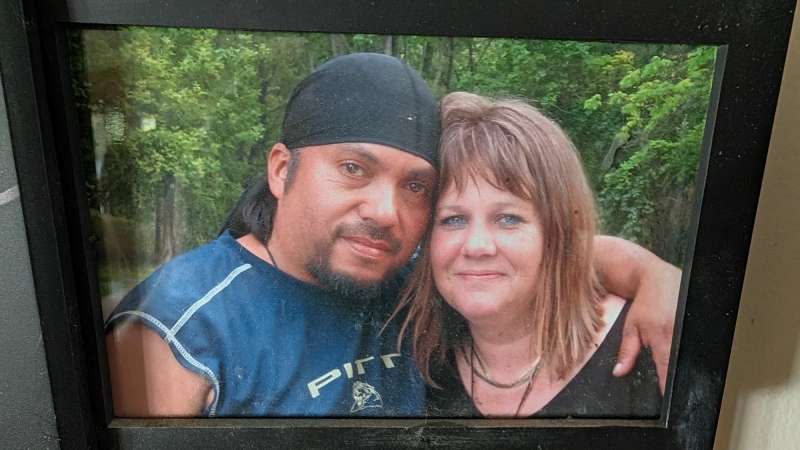
It wasn’t looking good for Carol Molina.
Her husband, Maximo Garcia, after spending nearly a month in U.S. Immigration and Customs detention, appeared to be on a fast-track to being deported to Mexico.
He had been pulled over by West York police for a minor traffic violation on Oct. 15, and after the officer found that ICE had issued a warrant for his detention, he was handed over the agency and placed in detention — even though he had been in this country for nearly 26 years, had no criminal record and was married to an American citizen.
Initially, he was sent to the ICE detention center in Moshannon, in Clearfield County, a three-hour drive from his home, before being transferred first to another detention center in Louisiana and then to one in Calexico, in the southern California desert just across the border from Mexicali in Baja California. The detention center is regarded as the last stop for Mexican immigrants before being sent back home.
He had a bond hearing scheduled for Nov. 9, but it was postponed to Nov. 13, Friday the Thirteenth. If he was denied bond, or if that hearing was postponed again, he faced another court date that would have likely resulted in him being deported.
Molina, who has had health problems and is on disability, was sick, the anxiety of losing her husband and primary caregiver exacerbating her poor health. She said she was prepared to sell her home in a rural subdivision just south of York New Salem; close her cat rescue, Feline Solutions; and move to Mexico to be with her husband. “I’m a mess, an absolute mess,” Molina said.
Bond granted
The hearing went as scheduled on the 13th. The judge reviewed Garcia’s case, noting that he had been in the United States for more than a quarter century, set down roots, started his own auto body shop and was primary caregiver to his ailing wife. He also had in his possession some 80 letters from family, friends and acquaintances attesting to his good character and his connection to the community. Garcia’s attorney also provided pledges from family members and friends to post his bond, should it be granted.
The argument against bond was a seeming Catch-22. Government attorneys often argue that a person who hasn’t been in the United States for long and hasn’t settled down is a flight risk and should be denied bond, according to immigration lawyers. And a person who has been in the country for a long time should be denied bond because that person demonstrated skill at avoiding detection, despite having an established home and steady employment.
Being granted bond was a long shot. According to the U.S. Department of Justice’s Executive Office for Immigration Review, bond is granted in only about a third of the cases brought before immigration judges.
The judge considered Garcia’s case and, citing his wife’s poor health and his role as her primary caretaker, set Garcia’s bond at $3,000. The legal minimum is $1,500 and in some cases can be more than $25,000.
“He’s coming home,” Molina said. “It’s like a dark cloud has been lifted off my entire body.”
A minor traffic violation
Garcia’s journey into the Kafka-esque immigration system began on the morning of Oct. 15 when he was stopped for a minor traffic violation in West York. He had gone to buy an acetylene torch he found on Facebook Marketplace, and on the way home he was stopped by a police officer because the tailgate of the box truck he was driving was ajar.
The police department has an agreement with ICE to assist enforcing federal immigration law, and when the officer ran his name through the computerized database, found that Garcia had an outstanding warrant issued by the agency. West York Police Chief Matthew Millsaps has defended the ICE agreement, saying the department entered into the agreement so it could maintain some degree of control over ICE operations in the borough.
Garcia knew about the warrant. On Oct. 4, he was stopped by a police officer in another jurisdiction that also had an agreement with ICE, known as the 287(g) program, for having a burned-out taillight. He also had failed to change the address on his driver’s license.
That officer told him he could have detained him and called ICE, but for some reason decided not to. He told Garcia other police officers “might not be so nice,” Garcia said from detention, and the officer warned him to drive carefully and to limit his driving because the next cop who pulled him over might not be so generous. Garcia paid the ticket’s $178.25 fine, according to court records.
Molina said the West York police officer “ruined our life, and it’s so not necessary.”
After being detained in York, Garcia was sent to the ICE detention facility in Moshannon, about a three-hour drive away from his home in Clearfield County. Not long after that, he was cuffed and shackled and sent to a facility in Louisiana. And then, in the middle of the night, he was moved to the Imperial Regional ICE Detention Facility, about 120 miles east of San Diego in Calexico, California, right across the Mexican border from Mexicali. (Ironically, Calexico was the site of a refugee camp called Camp Salvation, established in 1849 to assist Mexicans who emigrated north to take part in the California Gold Rush.)
Online comments by ‘bigots’
While in custody, Molina said, Garcia contracted a respiratory virus and had to be put on oxygen. Molina, who saw him during a Zoom call before his bond hearing, said, “He’s lost weight. He looks broken. He looks horrible.”
Molina was heartened by the support she received from the community. A GoFundMe page set up to help pay his legal expenses has raised more than $9,000 from 124 donors, as of this week. People Molina knows in the cat rescue community have rallied to help her, she said.
But she has also had to deal with comments online from people she describes as “filled with hate” and “bigots.” They included some who typed that Garcia “must be a criminal, or they wouldn’t have taken him” and that Molina “deserves to be deported with him” and that ICE should “deport the cats too.” Others contained racial slurs and worse, she said.
“It’s disgusting,” she said.
Coming home
On the bright side, Molina said the attention from the court may make Garcia’s request for permanent status move faster. He and Molina have been married since 2017, but his previous requests for a so-called green card were derailed when the lawyer handling the case did not file required paperwork, Molina said. His latest petition before the U.S. Citizenship and Immigration Services to gain legal status as an “eligible alien relative” was pending when he was stopped by police and taken into custody.
Molina is aware of the irony of the situation.
“This terrible thing might work to our advantage,” she said. “It has been horrible, but it’s going to work out.”
Details of how Garcia will get home from southern California – whether Molina will have to pay for his transportation – have yet to be worked out. If all goes well, Molina said, he could return home this week.