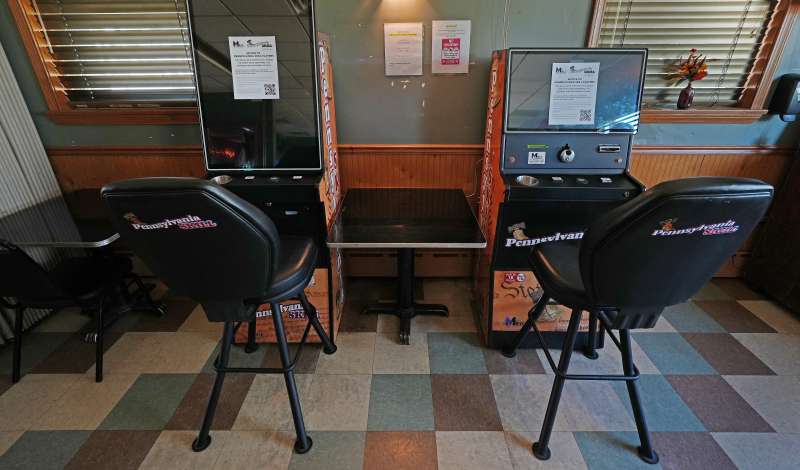
Social clubs, convenience stores and other businesses that operated skill games until they became illegal in October are almost entirely in compliance with the law, Pennsylvania State Police reported this week.
Of the 12,202 establishments state police have visited since Oct. 14, when a Pennsylvania Supreme Court ruling took effect, they reported that 99.4%, or 12,134 establishments, had removed skill games and were in compliance with state law. State police had seized only 14 machines and $1,913 to date.
So is this the end of skill games in Pennsylvania?
That’s highly unlikely, said state Rep. Patrick Harkins, of Erie, D-1st Dist., who is chairman of the House Gaming Committee.
“I really do think we will do something,” Harkins told the USA TODAY Network-Pennsylvania, noting the adverse financial impact the court ruling has had on social clubs, taverns and VFWs. “We were close to an agreement a couple weeks ago and I’m still talking with a number of the stakeholders. There is a way to do it. It’s just finding the votes to get it over the goal line.”
The Pennsylvania Supreme Court ruled in June that skill games meet the definition of slot machines under state law and were therefore operating illegally since the state only permits slot machines in its 17 licensed casinos. The court, however, placed a four-month moratorium before the ruling took effect, which gave lawmakers time to create a new law to regulate and tax the games. But lawmakers were unable to reach an agreement by the Oct. 13 deadline and the court denied a request for an additional four-month extension.
It’s unlikely that lawmakers will deal with the issue before the end of 2026. It will be up to the next session of the General Assembly to handle the matter. Democrats won control of the Pennsylvania Senate and expanded their majority in the Nov. 3 election.
Harkins expects skill games to be dealt with during the budget process because revenue from a tax on skill games could be needed to plug a deficit.
Mike Barley, chief public affairs officer for skill games manufacturer Pace-O-Matic, said the affect of the ban has been widespread.
“None of the outcomes have been particularly good,” Barley said. “You have some businesses and clubs that have been forced to shut down. You have some that have been forced to curtail or even eliminate their charitable giving plans. And you have some that have had to lay off workers. It’s had a major impact. You can’t take that kind of revenue away from businesses and clubs that they’ve been depending on for 10 years. It wasn’t like a one-year windfall.”
Barley, however, is hopeful that skill games will make a return.
Higher costs of groceries and gasoline, among other items, have been particularly hurtful to the hospitality industry. Skill game revenue has allowed some of those businesses to stay afloat, he said.
With one party now controlling the governorship, the state House and Senate, it could help more pieces of legislation advance in Harrisburg, Barley said.
“It cleans up the gridlock that potentially was occurring, at least I think it does,” he said. “I’m not naive enough to say that it will, because I’ve seen how Harrisburg can work and not work sometimes.”