With less than a week before the June 30 state budget deadline, lawmakers in the state House passed a suite of bills that would regulate what one legislator called a “speculative gold rush” of data center development.
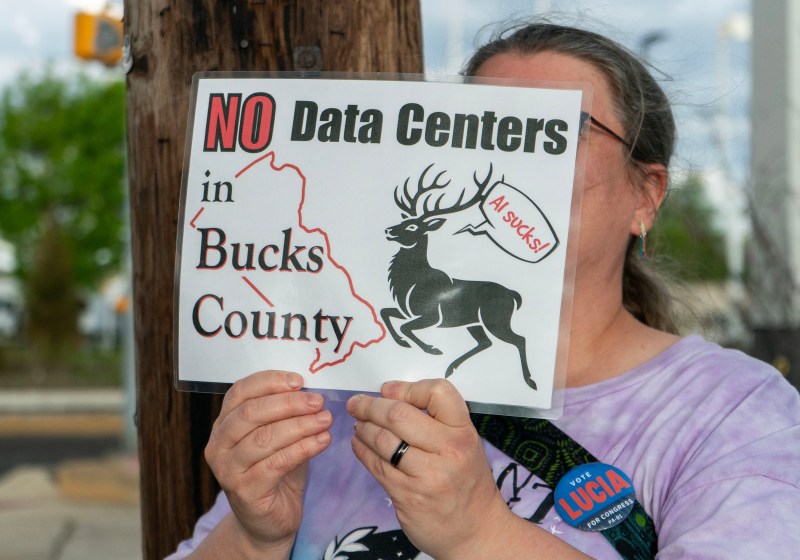
Since the dawn of the internet, data centers have housed the computers that power e-commerce, streaming, communications and other online services. But the race to develop artificial intelligence gave rise to hyperscale data centers that can contain thousands or millions of computers.
Such facilities can change the character of the land and communities surrounding them, with significant impacts on water resources, energy infrastructure and public services. Local officials across the commonwealth are grappling with dozens of applications for hyperscale projects.
Legislation passed Wednesday would give township leaders the option to pause new applications, while another bill sets up Gov. Josh Shapiro’s package of voluntary guidelines and incentives for developers to become law if the state Senate agrees.
Under the Governor’s Responsible Infrastructure Development (GRID) Standards, data center developers could access a sales tax exemption and expedited permitting if they agree to follow the guidelines.
But on Thursday, the House passed legislation that, in the words of one representative, would “pull out the rug” from underneath the GRID Standards, by eliminating the exemption on the state’s 6% sales and use tax on computer equipment for data centers.
All three proposals are now in the hands of the Republican-led Senate, where they could be approved and head to Shapiro’s desk or linger without being considered.
Here’s a rundown of the three bills and what House lawmakers had to say about them:
House Bill 2496
Municipalities would have the option to enact a 180-day pause on considering applications for data center developments under the existing land use ordinance.
During the pause, the local government could adopt, amend or repeal parts of its land use ordinance pertaining to data centers. Any applications for data centers received during the pause would be deemed received the day after the pause ends, according to a fiscal note on the bill.
Rep. Paul Friel (D-Chester) said many rural municipalities do not have zoning ordinances and those that do may not have the provisions or planning tools to deal with the unique aspects for data center development.
“This bill is about protecting that local control,” Friel said. “It is about ensuring that local decisions affecting our neighborhoods are made thoughtfully, transparently, and with meaningful input from the residents who will have to live with the consequences.”
Rep. Charity Grimm Krupa (R-Fayette) said the data center boom has put Pennsylvania on the doorstep of a new industrial revolution.
“Before we throw that door wide open, we need to make certain that local communities have had the opportunity to understand and weigh the consequences,” Krupa said “Artificial intelligence is changing the world faster than almost any technology in modern history. We must pause and ask, at what cost?”
The bill passed with a 201-1 vote. Rep. Eric Nelson (R-Westmoreland) cast the lone “no” vote.
H.B. 2650
Shapiro broadly outlined his plan for guiding data center development during his February budget address and released details of the proposal last month. Legislation introduced by Rep. Joe Webster to codify the plan in law passed Wednesday with a bipartisan 134-68 vote.
It would make an existing exemption to the state’s 6% sales and use tax for data center computer equipment contingent on obtaining certification from the state Department of Revenue by submitting an application with detailed information on the facility.
The application must include details of the ownership structure, energy procurement strategy, community engagement commitments, workforce development plans, environmental protections, sustainability measures, and water usage plans, according to a fiscal note on the bill.
“The wealthiest companies on the planet get all the free stuff, and Pennsylvania’s local municipalities carry all the risk,” the bill’s prime sponsor, Rep. Joe Webster (D-Montgomery) said. “This bill changes that calculation a lot.”
Requirements include:
- Incremental increases in clean energy use from sources in Pennsylvania rising to 32% by 2035;
- Economic development commitments including at least $250 million in cumulative new investment;
- At least 200 prevailing wage construction jobs;
- Fifty permanent jobs paying at least 125% of the statewide average wage within four years;
- And annual compensation of at least $1.5 million to full-time employees thereafter.
Criticism of the measure centered on the voluntary nature of the requirements to obtain the tax benefits.
The world’s wealthiest companies, such as Google and the parent company of Elon Musk’s X, don’t care about Pennsylvania’s sales tax exemption, Rep. Craig Williams (R-Delaware) said.
“They will come right in and say you can keep your 6% sales tax, and we’re going to do exactly what we want to, and tear up this agreement,” Williams said, adding that the requirements would also need to be codified in other areas of state law.
H.B. 2198
Legislation to repeal the exemption passed in the House with a 197-5 vote Thursday morning. The Senate adopted the language as an amendment to another tax code bill Thursday afternoon.
The data center equipment tax exemption was passed during an era when lawmakers were trying to attract them to the commonwealth, House Environmental Resources Committee Chairperson Greg Vitali (D-Delaware) said during debate Thursday.
“Now we are in a situation where we’re working on moratorium legislation with regard to data centers, we’re trying to put the brakes on, so clearly this sales tax exemption is no longer needed,” said Vitali, who is the bill’s prime sponsor.
The five-year-old tax exemption is projected to cost the commonwealth $517 million annually by 2030.
“We’re giving these sales tax exemptions to companies like Amazon, Microsoft, Alphabet companies that have net incomes in excess of $100 billion a year,” he said. “This is not right. This is not needed. This is not what our constituents want.”
Williams noted the GRID Standards legislation the House passed a day earlier depends on the data center tax exemption.
“Today, like Lucy holding the football for Charlie Brown, we’re going to pull that football away,” he said.
But Rep. Kyle Mullins (D-Lackawanna) said that repealing the exemption is the first step toward “true corporate accountability.”
“The choice is very simple: the data center industry is no longer an emerging sector looking for a foothold,” he said, noting that one borough in Lackawanna County faces 16 data center applications. “It is a massive billion dollar global powerhouse, and this costly tax credit is no longer appropriate. As everyday costs continue to rise, our neighbors deserve relief to their pocketbooks, not billionaires.”