A proposal to tax digital ads on some of the largest social media platforms and close budget shortfalls created by President Donald Trump’s One Big Beautiful Bill Act was the subject of a Pennsylvania House Finance Committee hearing on Wednesday.
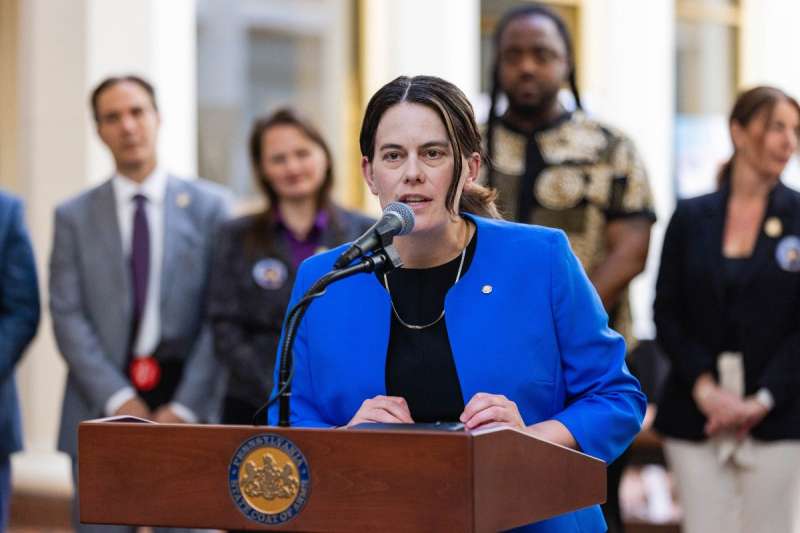
“We are here today to talk about some of the biggest tech companies in the world, Google, Meta, Amazon, Microsoft, and calling on them to simply pay their fair share for doing business in our Commonwealth,” State Rep. Elizabeth Fiedler said in support of House Bill 1678.
She added, ”this legislation doesn’t cost working people in our districts a penny. It just calls on those huge for-profit corporations to pay their fair share. Their funds will go to important things that our constituents all use – roads, bridges, schools, and mass transit.”
HB 1678 is part of the Tax Billionaires. Fund PA’s legislative goal, and according to her office, it is projected to raise between $329 million to $624 million in 2027.
“Tax Billionaires, Fund Pa” is a campaign led by the Pennsylvanians for Accountability from Yass, Billionaires and Corporate Politicians (PAYBAC) Table, and along with Fiedler’s legislation, they are pushing to close corporate tax loopholes, such as what is known as the Delaware Loophole, which allows companies to file their corporate paperwork in Delaware to avoid paying Pennsylvania taxes, and tax passive income, such as income from stocks or real estate.
Support within the Pennsylvania House Democratic Caucus continues to grow with more than 40 lawmakers signing onto the campaign, according to advocates.
Pennsylvania lawmakers will need to find $2.16 billion for the 2026-27 budget, and $4.79 billion for the 2027-28 budget to backfill Medicaid and Supplemental Nutrition Assistance Program (SNAP) cuts from Trump’s budget, the campaign explained in a report, and they believe their proposals could raise $6 billion to cover the cuts.
“Big tech corporations are standing shoulder-to-shoulder with the Trump administration as they eliminate funding for essentials that help every single person in Pennsylvania,” Gabriela Noa Betancourt, senior director of research for the Action Center on Race and the Economy, said in a statement.
Global ad revenue reached over $1 trillion in 2024, with Big Tech receiving more than half of it. HB 1678 would raise revenues via a digital ad tax and charge a small percentage of revenues derived from advertising in Pennsylvania.
Betancourt added, “Now Pennsylvania is joining a growing list of states from New York to Illinois to Tennessee that are advancing digital ad taxes recognizing that there is a way to generate revenue to help families and hold tech corporations to account. A fair and direct way for the state to protect residents is to close corporate tax loopholes and make Big Tech pay for digital ads cluttering our screens.”