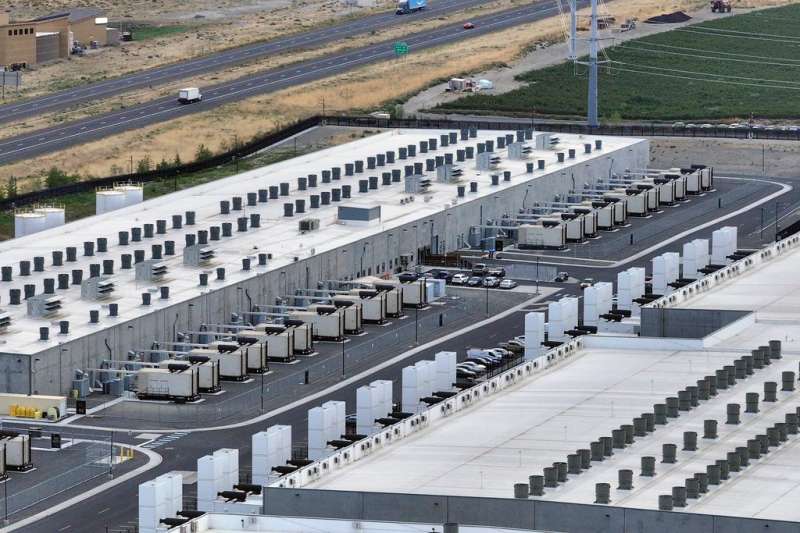
A proposed amendment to Erie County’s subdivision and land development ordinance would set some regulations for data center development in municipalities with no land development regulations of their own.
The Erie County Planning Commission is expected to review the draft ordinance during its meeting at the Girard Borough Municipal Building on June 11 at 6 p.m.
If recommended by planners, the data center regulations will be presented at a public hearing and considered by Erie County Council this summer.
Where the rules would apply
If approved, the county data center regulations will go into effect only in municipalities without local land development regulations.
“Areas without guidelines are at risk of things like data centers being located outside of, for example, industrial zones and data centers not having to go through things like special exception processes,” according to information prepared by the Erie County Department of Planning and Community Development.
Townships with no land development regulations are Amity, Concord, Conneaut, Elk Creek, LeBoeuf, Union and Wayne townships.
Five boroughs have no land development regulations: Cranesville, Elgin, Mill Village, Platea and Wattsburg boroughs.
Ordinance highlights
The proposed amendment to the county’s subdivision and land development ordinance addresses a variety of regulations for data centers and related facilities, including:
- Maximum building height: 60 feet, including HVAC systems and other roof-mounted equipment.
- Setback from any residential area: 200 feet.
- Landscape buffers: Required between data centers and residential areas, public roads, schools, parks, nursing homes and other public-use facilities.
- Noise: Requires studies and documentation before construction to show that noise generated will be less than 67 decibels weekdays and 57 decibels evenings and weekends, as measured from the property line.
- Water supply: Requires studies and documentation before construction to show that there is enough water available from a public water authority or non-public water supply for data center operations, with no adverse effects on nearby wells, surface waters and groundwater.
- Power supply: Requires studies and documentation to show that the electrical grid can provide the power needed.
- Emergency response plan: Required prior to construction, along with first responder training.
- Decommissioning: Requires a bond, cash or other acceptable form of payment equal to 110% of the estimated cost to remove contents and all hazardous materials and perform other tasks after the facility closes.