Pennsylvanians are losing trust in the nation’s largest food assistance program. That’s according to people working in hunger programs across the commonwealth, and it could be a serious problem for hungry kids.
Nearly 2 million Pennsylvanians rely on the Supplemental Nutrition Assistance Program, commonly known as SNAP, including 650,000 children. Since the One Big Beautiful Bill Act (OBBBA) was signed into law by President Donald Trump in 2025, there has been an 11% decrease in SNAP enrollment due to new restrictions that make it harder for low-income Pennsylvanians to stay on the program.
“One of the trends that our food banks have seen is that there’s just been a bit of a loss of trust in the program since last spring, with all of the rhetoric around SNAP,” said Lauren Duff, chief public affairs officer for Feeding Pennsylvania, a group working to end hunger in the commonwealth. “It’s added to some of the stigma that folks feel.”
Reduced enrollment poses concerns that could become the start of lifelong problems in the fall when hungry children return to the classroom.
“Nutrition for kids is a big one, because folks that aren’t able to re-up their SNAP participation, or are hesitant to join because of all of the new paperwork requirements and the hoops they have to jump through, are not just missing out on those SNAP dollars, but they’re missing out on that additional Sun Bucks money that would help feed their kids in the summer when there are no school meals,” said Duff.
Sun Bucks is a program that helps families buy groceries during the summer, when free or reduced-price lunches aren’t available. If they’re already enrolled in SNAP, families automatically qualify for Sun Bucks.
The loss of food assistance leaves children hungry, which research shows affects their ability to learn. A study by the National Library of Medicine found that food insecurity and poverty can result in poor math and reading test scores and higher dropout rates.
Pennsylvania has one of the highest participation rates for the SNAP program in the country. In 2022, roughly 88% of eligible citizens were enrolled in the program, and half of them were families with children.
The federal SNAP and Medicaid cuts included in the OBBBA could jeopardize 1,066,725 students’ access to free meals in Pennsylvania. During the 2024-25 school year, those students qualified for free or low-priced lunch through the USDA’s Community Eligibility Provision.
The average Pennsylvania family with two children could have to find an additional $1,062 a year to pay for their children’s school meals if these benefits are lost.
“We’re hearing a lot from our food banks about people who would still meet the requirements or qualify for exemptions, but now are so overwhelmed by the process and all of the paperwork they’re trying to figure out if it’s worth it,” Duff said.
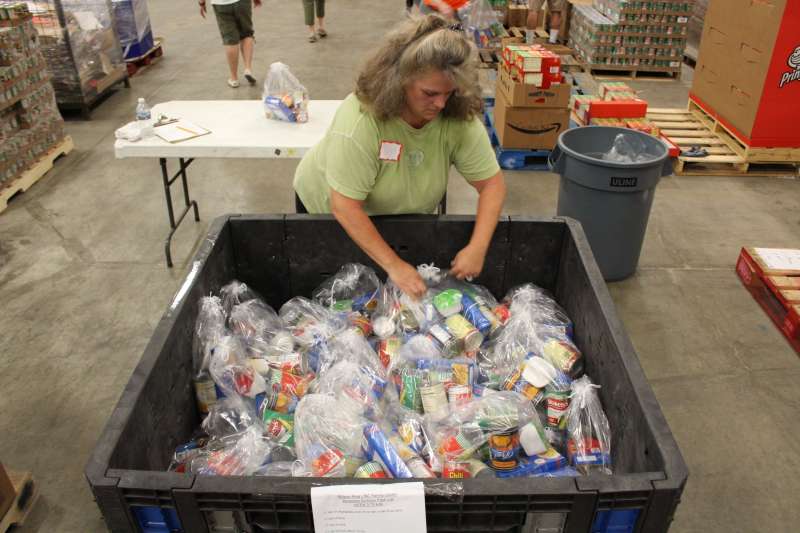
As more families lose—or lose faith in—food assistance benefits, food banks in Pennsylvania are seeing increased demand.
“There has been an uptick in folks utilizing the food banks as either they fall off of SNAP and don’t have the bandwidth to jump through all of the new hoops, even if they do qualify under the new work requirements, or people who are falling off because of the new age restrictions and work requirements,” Duff said.
Duff explained that while the food banks are working hard to meet the increased need, they are not capable of replacing the role SNAP plays to feed families.
“SNAP provides nine meals for every one meal that our food banks help neighbors with,” Duff said.
She added that the OBBBA has put SNAP—a program from which millions of people benefit—into a sometimes negative light.
“We just want to help shift the narrative about what SNAP is and who benefits from it,” Duff said. “It’s often a bridge that just helps people who are going through a difficult time be able to get back up on their feet and regain financial stability.”