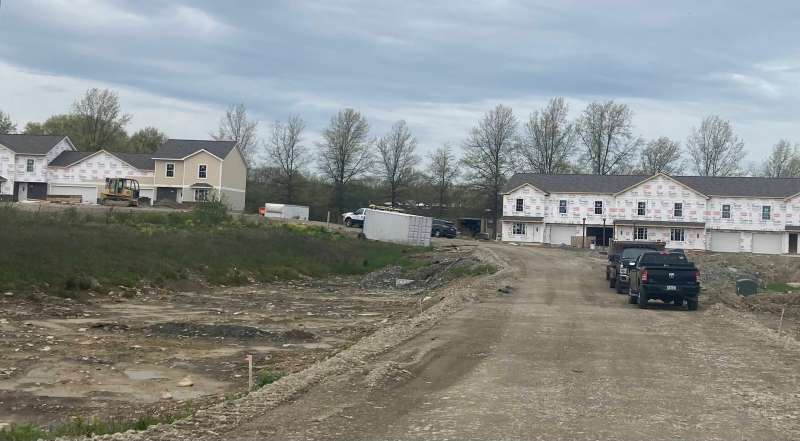
The next governor of Pennsylvania will have to address a housing shortage that has reached crisis levels.
Pennsylvania built fewer homes per capita than all but five other states in 2025.
According to the US Census Bureau’s Building Permits Survey, which tracks new, privately-owned residential construction, only two new homes were built for every 1,000 people in the Keystone State, ranking it 46th out of the 50 states and Washington, D.C. Only New York, Massachusetts, Rhode Island, Illinois and Alaska ranked lower.
Pennsylvania needs 450,000 new housing units by 2035, officials have said. At current building rates, the state is expected to miss that by nearly 185,000 homes.
Making matters more difficult, Pennsylvania’s median home sale price has climbed to $340,000.
The surge in real estate prices indicates housing availability has not kept up with demand, underscoring the state’s housing shortage that dovetails with challenges surrounding affordability and cost of living.
Another component of the state’s housing crisis: More than half of existing homes in the state are at least 50 years old. Only 6.1% of the homes in Pennsylvania were built in the past decade.
Worse, more than a million homeowners spend 30% of their income on housing, which might explain why homeownership itself is declining. Since 2010, the number of households that rent has gone from 1.47 million to 1.64 million.
“It’s not just the cost to heat our homes that is stressing folks out right now,” Shapiro said during his Feb. 3 budget presentation after talking about his energy policies. “Housing prices and rent are also too high. A lot of people are worried about whether they can afford a house at all. Home prices and rents are rising faster than wages. Over half of all homes are more than 50 years old, making them more expensive to repair.
“That’s why I am proposing bold new steps to reform our zoning laws, build more housing and protect renters and homeowners,” he continued. “Like energy, one of the most effective ways we can lower costs is by simply building more housing.”
Shapiro’s plan
Gov. Josh Shapiro’s proposal to use $1 billion in bonds for new housing and home upgrades did not make it into this year’s budget.
The Democrat, seeking a second term, could offer something similar if he keeps his job. Passage, however, would hinge on the Legislature’s partisan composition since a Republican House or Senate will likely deny it.
On the campaign trail, Shapiro has talked about Democrats winning a trifecta—the governorship and a majority in the House, which the party has a slim hold of now, and retaking the state Senate. Doing so, he has argued, would allow him to enact several priorities he’s been unable to push through the Republican-held Senate, including housing investments.
“Governor Shapiro believes that every Pennsylvanian should have the opportunity to live the American dream of owning their own home,” Shapiro for Pennsylvania spokesperson Sam Reposa said. “That’s why he has taken Pennsylvania’s housing challenges head on, launching the commonwealth’s first-ever Housing Action Plan and protecting renters and homeowners from predatory practices from corporations.
“Governor Shapiro is committed to electing strong Democrats these midterms to expand the majority in the state House and flip the state Senate to deliver even more for Pennsylvanians, like raising the minimum wage and building more affordable housing,” she added.
“We need to take bold action to build more affordable housing and strengthen protections for renters and homeowners,” Shapiro wrote in an X post in May. “As governor, I’m fighting to make it easier to put down roots and own a home here in the commonwealth—and I’m running for reelection because we have a lot more work to do.”
Shapiro has successfully sought more funding for the Pennsylvania Housing Affordability and Rehabilitation Enhancement Fund, which was created in 2010 with the mission of creating, rehabilitating and preserving affordable homes in the state.
In 2024, Shapiro pushed for annual $10 million increases to the PHARE fund until it receives $100 million annually in 2027 and thereafter. A bill that passed the House in 2026 would further raise PHARE’s funding cap to $110 million in the 2028-2029 fiscal year. It’s been referred to the state Senate.
PHARE supports a variety of initiatives, including the building of rental developments that qualify for low-income housing tax credits; the preservation of rental units that are not eligible for those tax credits; construction of single-family homes; down-payment and closing-cost assistance for first-time homebuyers; financial literacy education, housing counseling, and direct assistance to pay the rent, utility bills or transportation costs for people at risk of losing their homes and who face homelessness.
It also funds housing initiatives for older Pennsylvanians and those who are disabled, as well as community-specific projects such as helping land banks rehabilitate existing homes.
Garrity’s plan
If Stacy Garrity were to earn the governor’s office in November, the Republican state treasurer would implement her HOPE for PA plan.
Homeownership and Opportunity for People Everywhere would aim to make housing more attainable for first-time homebuyers, make homes affordable through cutting property taxes and try to drive more home construction through faster permitting for builders.
“State government puts up roadblock after roadblock to building new homes, resulting in delays and added costs,” Garrity wrote in a statement to USA TODAY Network Pennsylvania.
Having state agencies review applications simultaneously could help clear up deadlines, Garrity suggested.
“Every new state housing regulation will face a public dollars and days test, showing what it adds to the price of a home, the monthly mortgage payment and the time needed to build,” Garrity wrote in her statement.
Still, municipalities have their own permitting reviews. And local land use laws that are maintained by cities, boroughs, villages and townships can inhibit the state from implementing blanket building and development regulations.
Garrity was critical of Shapiro’s housing plans, calling his solution “a new government agency to enforce new regulations and mandates that will only drive home prices higher.”
The Republican nominee’s plan to help first-time homebuyers would make qualified people eligible for assistance covering up to 3 percentage points of mortgage interest.
“We will coordinate that support with down-payment and closing-cost assistance so families who can afford a monthly payment have a path to homeownership,” Garrity’s statement read.
Keystone senior newsletter editor Patrick Berkery contributed to this report.