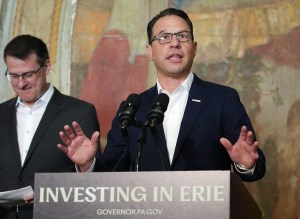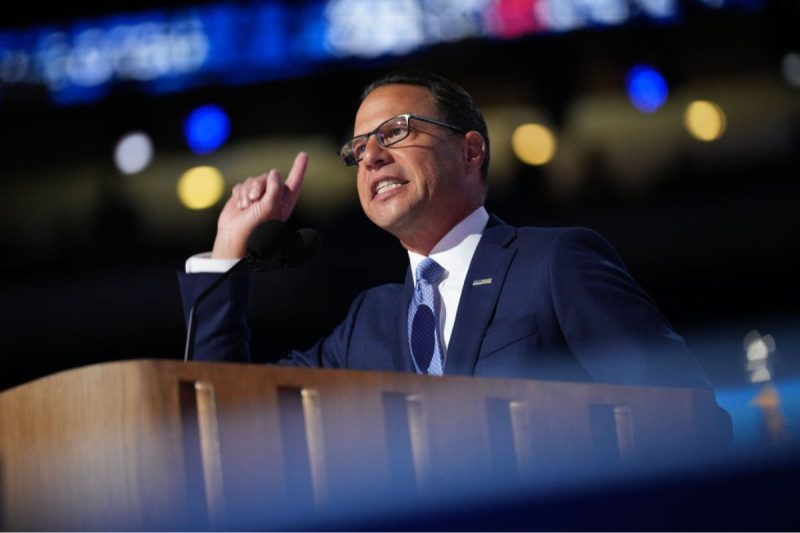
HARRISBURG, Pa. (AP) — Gov. Josh Shapiro said Thursday that he wants to fast-track big energy projects in Pennsylvania and offer hundreds of millions of dollars in tax breaks for projects that provide electricity to the grid and make hydrogen.
Shapiro’s announcement comes a few days before he delivers his third budget proposal to lawmakers amid an energy crunch that threatens to raise electricity bills across Pennsylvania, the nation’s second-biggest natural gas-producing state.
Shapiro, a Democrat, said he wants to start the “next chapter in Pennsylvania’s long history of energy leadership” and keep pace with other states that are attracting big projects, such as data centers and electric vehicle factories.
“Pennsylvania, it’s time for us to be more competitive, it’s time for us to act, we need to take some big and decisive steps right now, build new sources of power so Pennsylvania doesn’t miss out,” Shapiro said at a news conference at Pittsburgh International Airport.
Shapiro said Pennsylvania is one of just 12 states that doesn’t have an entity to fast-track siting decisions for energy projects. He wants to change that by creating the Pennsylvania Reliable Energy Siting and Electric Transition Board to streamline permitting and support for new energy projects.
“We need shovels in the ground now, not in the years to come,” Shapiro said.
The tax credits Shapiro is proposing are aimed at large projects producing electricity, hydrogen and sustainable aviation fuel.
A power plant could qualify for up to $100 million per year for three years, under Shapiro’s plan. The Shapiro administration did not immediately say what sort of power plants would qualify.
In addition, a hydrogen producer could qualify for up to $49 million a year and an aviation fuel producer could qualify for up to $15 million a year, under Shapiro’s plan.
The plans would likely require approval from lawmakers. Republican lawmakers have been critical of Shapiro’s energy policy, saying it is a major hurdle for Pennsylvania to attract companies that want to build big new natural gas-fired power plants.
One project Shapiro said he wants to help is a proposal by natural gas producer CNX Resources to build a $1.5 billion facility at Pittsburgh’s airport to make hydrogen-based fuels.
However, CNX has said it would only go through with it if the federal government allows coal mine methane to qualify for tax credits that were central to former President Joe Biden’s plan to fight climate change.
The rapid growth of cloud computing and artificial intelligence has fueled demand for energy-hungry data centers that need power to run servers, storage systems, networking equipment and cooling systems.
That’s spurred proposals to bring nuclear power plants out of retirement, develop small modular nuclear reactors and build utility-scale renewable installations or new natural gas plants.
However, the growth in energy demand comes at a time when the power supply is already strained by efforts to shift away from planet-warming fossil fuels and the closure of aging nuclear power plants.
In recent months, governors including Shapiro and state ratepayer advocates have pressured the operator of the mid-Atlantic electricity grid to reduce the amount of money it offers to power plant owners, warning that it will unjustifiably raise electricity bills across the region.