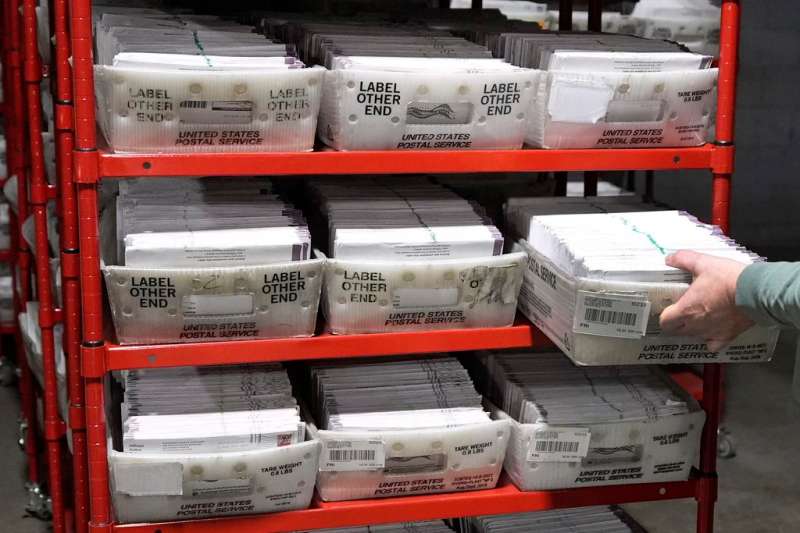
HARRISBURG, Pa. (AP) — County elections officials in Pennsylvania rejected more than 11,000 mail-in ballots for technical reasons in the November election, including thousands that were determined to violate the much litigated requirement that voters provide accurate, handwritten dates on the return envelopes.
Data from the Department of State released this week shows about 2,600 were turned down for having the wrong date and nearly 2,100 for having no date at all.
The Pennsylvania Supreme Court said in mid-January it will rule on whether the envelope date requirement violates a state constitutional mandate that elections be free and equal, the latest development in a string of court cases since mail-in voting was widely expanded under a 2019 law.
The elections agency also said about 3,000 votes didn’t count because the voters failed to put their ballot into a secrecy envelope and more than 3,500 were thrown out for lacking a signature. In addition, nearly 7,000 mail-in ballots that counties rejected in November had arrived to be counted after the cut-off time of 8 p.m. on Election Day, when polls closed.
The county workers who run the nuts and bolts of Pennsylvania elections do not use the outer envelope date for any practical purpose — they time stamp ballots when they arrive and know when they were sent out. Republicans who have advocated for the dates consider them an added layer of security.
The 11,000-plus votes rejected for wrong dates, no dates, no signatures or no security envelopes is a jump from the comparable figure in the November 2023 election, when about 8,000 votes were rejected for at least one of those four categories. However, 2024 was a high-turnout presidential election with a contested U.S. Senate race, while 2023 had less voter participation and only statewide judicial contests at the top of the ballot.
“Every vote is precious — a single vote being rejected is intolerable,” Secretary of State Al Schmidt said Friday. “So that’s why we have done all that we can to minimize the opportunity for voters to make mistakes.”
The Department of State redesigned mail-in ballot envelopes twice last year and engaged in a voter education effort, aiming to reduce the rejection rate. The percentage of returned mail ballots that were rejected fell from about 2.4% in the April primary to about 1% in November, the agency announced.
“We wanted to minimize opportunities for voters to make mistakes, whether they’re elderly or whether they’re filling this out when they’re sending their kids off to school in the morning,” Schmidt said.
There has been progress but there is more that counties can do to further reduce the rate of rejected mail ballots, said ACLU of Pennsylvania lawyer Vic Walczak.
“It’s 11,000 too many, so it’s better than the rejection rate before that,” said Walczak, who is involved in the pending state Supreme Court case. “It’s welcome and should be celebrated, but we shouldn’t be declaring victory yet.”
Some 2 million Pennsylvanians cast votes by mail this fall, and about 88% of the mail ballots that were sent out were returned by voters.
“Voter education isn’t something you do once, it’s something you always have to do,” Schmidt said. “And any ballot that is rejected — a single ballot in Pennsylvania that’s been rejected — feels like a failure to anyone who really cares about democracy.”