In Pennsylvania, more than 4,000 scam-related complaints were filed in 2025 as residents lost more than $76 million to scammers.
Kate Kleinert wasn’t looking for love.
Widowed for 11 years and isolated during the COVID-19 lockdown, she rarely accepted social media friend requests from strangers. But one day, she clicked “accept” on a request from a handsome man in a white medical coat. He called himself Tony.
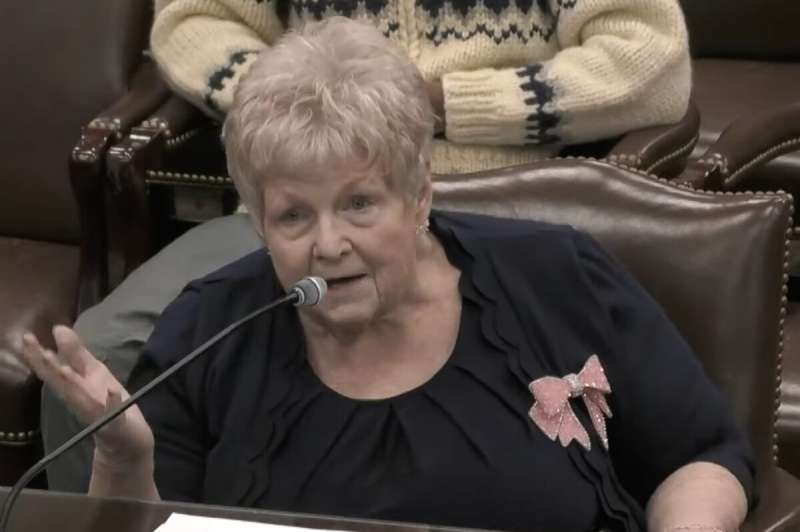
“He had studied my profile on Facebook and he knew a great deal about me,” Kleinert said during a recent meeting of the Pennsylvania House Democratic Policy Committee. “Every single night he called and would ask, ‘How was your day, honey?’ No one had asked me that since my husband had passed away.”
Over several months, Tony gained Kleinert’s trust and love. He learned the names of her six hospice dogs. He recognized their barks in the background when they talked. He always called her “honey,” “sweetheart,” or “babe.”
Then he started asking for money. Small requests at first, Kleinert said, a $50 or $100 gift card here and there. Then Tony asked for airfare to come see her. She bought him a ticket.
“And of course, he never showed,” she said. “Once I realized I was being scammed, my heart shattered. Losing the money is devastating. Losing the love and the life I thought I was gonna have, that was more than I could handle, and I cried for days.”
Kleinert’s story is painfully personal. But it is not rare.
A fast-growing crisis in Pennsylvania and beyond
Scams targeting seniors have increased significantly thanks to social media platforms like Facebook.
“Fraud is not new and older adults have long been targeted,” said Mike Crossey, president of the Pennsylvania Alliance for Retired Americans. “But the scale, speed, and sophistication of scams today is unlike anything we have ever seen before.”
Federal data shows that in 2024, nationwide, seniors reported $12.5 billion in losses from online scams, a 25% increase from the year before. Social media is now the leading contact method for fraud targeting older users, both in number of cases and total amount lost.
In Pennsylvania, more than 4,000 scam-related complaints were filed in 2025 as residents lost more than $76 million to scammers.
And those numbers likely undercount the damage.
“The FBI says that many scams go underreported because victims feel embarrassed, ashamed, or unsure of where to turn,” Crossey said.
Kleinert understands that shame. When she worked up the courage to call the police, she said she was met with indifference.
“I called the state police and a woman answered, and I was so relieved,” Kleinert said. “And when I started to tell her what was going on, she stopped me and said, ‘Why are you calling here? There’s no crime here. You willingly gave him that money, hun.’ And she hung up.”
Kleinert’s relief quickly turned to embarrassment.
“You have no idea how much courage it takes to make those phone calls.”
Social media is a ‘playground for scammers’
Yosef Getachew, senior policy counsel at Reset Tech, a nonprofit organization that aims to protect democratic societies by countering digital threats, said that today’s scam epidemic is calculated.
“Tech-enabled scams are not accidental,” Getachew said. “They are design choices and business decisions that specifically prioritize profit and engagement over user safety.”
Since 2021, US consumers have reported $2.7 billion in scam losses originating on social media platforms, according to the Federal Trade Commission.
“It’s become a playground for scammers,” Getachew said, pointing to unsolicited friend requests, direct messages, ad targeting tools, algorithmic recommendations, phony groups, and fake pages.
Kleinert’s experience began with a single unsolicited friend request. Others have been tricked by fake online storefronts impersonating real companies. Crossey described a Philadelphia retiree, Kathy, who received a phone call that appeared to come from her bank. The caller, using a spoofed phone number, convinced her to read aloud security codes sent to her phone. Within minutes, $1,500 was transferred out of her account.
Crossey said Kathy immediately contacted her bank and was able to be reimbursed.
“That story has a positive ending,” Crossey said. “Most do not.”
AI tools are making things even worse, experts say. AI can clone voices, generate “deepfake” videos, and scrape public profile data to craft hyper-personalized scams, Getachew said. Social media platforms provide both the personal material and the distribution network to target seniors all over the country.
“It’s incredibly alarming and dangerous,” Getachew said.
Pennsylvania safeguards struggle to keep up with online schemes
Pennsylvania has consumer protection tools, but new digital threats arise every day that are not addressed by those protections.
The state’s Unfair Trade Practices and Consumer Protection Law allows the Attorney General’s Office to investigate deceptive practices and bring enforcement actions. There is also a Bureau of Consumer Protection where residents can file complaints online or by phone.
The state’s Older Adults Protective Services Act provides avenues to report financial exploitation of seniors, and local Agencies on Aging offer assistance and referrals.
At the federal level, certain electronic fund transfer protections can require banks to reimburse consumers for unauthorized transactions if reported quickly, as in Kathy’s case. But reimbursement is not guaranteed, especially in cases where victims are manipulated into authorizing payments themselves.
Digital literacy is also a barrier to consumer protection. Kleinert said she didn’t even know she could report the scam she’d been targeted by to the social media platform where it began.
“I didn’t know where to report what was happening or whether anyone would respond,” Kleinert said.
Advocates call for stronger safeguards from lawmakers
Getachew said lawmakers should require platforms to prioritize safety by default, with stronger privacy settings, data minimization to limit how much personal information is publicly accessible, and more robust identity verification to prevent scam ads and fake accounts.
He believes platforms should be required to respond meaningfully when users report scams.
“We’ve heard from so many scam victims that either they don’t know they can report scams on social media, or if they do, they never get a response back,” Getachew explained.
Crossey said that education campaigns are important but insufficient.
“Education alone cannot solve a problem that is operating at industrial scales,” Crossey said. “We need legislators and regulators to create stronger safeguards, stronger enforcement tools, and to demand greater accountability from the technology platforms.”
Crossey’s organization has launched a yearlong “Stop the Scam” campaign to educate Pennsylvania seniors about warning signs and digital safety. But he emphasized that “protecting retirement security in the modern world requires more than helping avoid scams. It requires building a digital world that is safer by design.”
Wrapping victims in support
After being scammed by Tony, Kleinert didn’t have money to make repairs on her home. In July 2022, she lost everything in a house fire. Kleinert suffered burns and had to be taken to the hospital. Her six dogs did not make it out.
Determined to help others, Kleinert founded Kate’s Hug, a project that provides blankets and resources to victims of romance scams.
“It’s something warm to wrap around themselves when this has happened, and for them to know that they’re not alone,” Kleinert said. “The catch is I give these kits to law enforcement free of charge so they can give the kit to the victim. And law enforcement and the victim look at each other differently after that.”
Kleinert said she shares her story “not to embarrass myself, but to shine a light on how social media can be used by scammers to target victims and build trust.”
“With just a few clicks, a stranger can identify that I was a widow, view my interests, learn enough about my life to craft a believable story tailored specifically to me,” Kleinert said. “These people are tremendously good at what they do, and the platforms make it easier for them.”