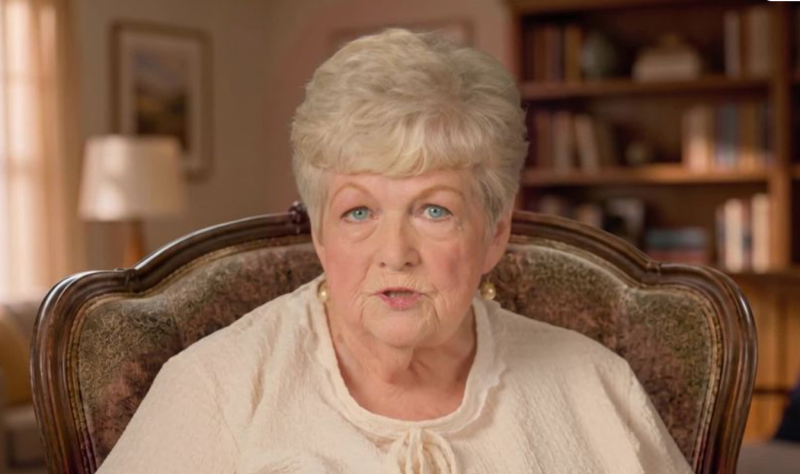
When Kate Kleinert got a Facebook friend request during the COVID-19 lockdown, she almost ignored it. She never accepted requests from people she didn’t know.
But then she saw his pictures, a handsome man in a white coat and scrubs. A doctor. And she thought, what the heck. During a time when the world had suddenly become smaller and lonelier, the attention was flattering and having someone to talk to was comforting.
“I think being caught up in the lockdown of the pandemic, even though I had been living alone, because I was widowed at that point, I still think that the lockdown had an effect on us that we don’t even realize,” Kleinert, who lives outside of Philadelphia, said.
Over the next several months, ‘Tony’ became a part of Kleinert’s daily life. Conversations took place on WhatsApp. He called her five or six times a day. Sometimes the conversations lasted an hour. Other times it would be a short 30 second call just for Tony to tell her he loved her.
Yet it wasn’t always romantic. They would talk about their days. What they had for lunch. Books. Movies.
“It honestly was great just talking to a man every day and having someone ask me how my day was,” Kleinert said. “I think I forgot how much I missed that.”
What Kleinert didn’t know was that the man she was falling in love with was building a carefully constructed lie with the goal of scamming her out of her money. But to steal her money, Kleinert said, he had to learn all about her. And he did very well, she said. He was using everything he learned to make her believe that she was loved.
As technology evolves, online scams are becoming more and more prevalent. AI is making them faster, more convincing, and harder to detect. Billions of dollars are lost each year to online scams, according to the FBI’s Internet Crime Complaint Center.
Many scams begin on social media platforms through false advertisements, marketplace listings, friend requests, or direct messages. AI is supercharging those scams, giving criminals powerful tools to create convincing fake images, videos and voices, impersonate real people, and target potential victims, according to United to Stop Online Scams
Finding her vulnerabilities
Kleinert had been widowed for nearly a decade. She and her husband had never been able to have children, something she had always wanted. Tony seemed to understand that and he used it to his advantage.
He told Kleinert he had two children of his own from a previous marriage with a younger woman. He said his children knew about their relationship. Soon, his supposed son and daughter were emailing her. They called her “Mom.”
“I waited all my life for somebody to call me Mom,” she said.
They emailed her about their father. They talked about a future together. Tony told her he wanted to come to Philadelphia, marry her, and spend his life with her.
He was supposedly an orthopedic surgeon working in Iraq on a United Nations contract. He couldn’t video chat because, he claimed, it would be dangerous.
There was always an explanation. And that was part of what made the deception work.
“There was always that little kernel of plausibility in everything he said, and it would stop me,” Kleinert said. “It’s like, well, you know, it could be.”
Tony also paid attention to the small things.
Kleinert had taken in hospice dogs after her husband died. She frequently posted pictures of them on Facebook. Tony learned their names. He would ask about them when they were on the phone.
“‘Is that Duffy in the background whining?’ he would ask. ‘Is that Trixie barking at the door?’ He took the time to know that about the dogs who were in my heart,” Kleinert said.
About four or five months into the relationship, Tony started asking Kleinert for money. The first request involved his daughter.
The girl, supposedly 15 and attending boarding school in England, had gotten her first period and didn’t know what was happening. Her mother had died of leukemia, Tony said, and the children were stranded in England while he worked in Iraq. The daughter emailed Kleinert in distress. Tony asked her to buy a gift card.
Kleinert said she didn’t think it was a scam. She thought it was a frightened teenager who needed help.
“I always wanted to be a mother,” she said. “Of course I wanted to help her. Of course I would have done anything to make that easier.”
She bought a gift card for $100 and sent a photograph of it to Tony. Then, the next day, the son asked for a gift card, saying it wasn’t fair his sister got one and he didn’t.
Then Tony needed something. He needed better food. He needed help bribing a guard. He needed a better phone signal. Kleinert said there was always a reason for yet another gift card. And because each request was relatively small, the danger was easier to overlook.
“It was $100 or $200 at a time,” Kleinert said. “But it got to be every day.”
But then, Tony said he was coming to Philadelphia. Kleinert paid $1,500 for his airfare. He even asked her to write a letter to his “boss” supporting Tony’s request for leave. Kleinert did and got a letter back from Tony’s “boss” saying Tony talked about her constantly and he was approving his request for leave. In fact, the “boss” even said he wanted to be invited to the wedding when they got married.
“It made it real for me,” Kleinert said.
Kleinert believed she was going to finally meet the man she loved. She waited for a phone call saying he had arrived in Philadelphia, but it never came. Instead, she received a call from his “lawyer” saying Tony had supposedly been arrested at the airport after a drug-sniffing dog alerted on his luggage. Tony needed $20,000 for bail.
By then, Kleinert had given him $39,000 in gift cards. It was everything she had. She didn’t have the money to bail him out.
“I couldn’t even pay my own bills,” Kleinert said. “At one point, my cellphone had been shut off and I was trying to scrape together money just to get it turned back on.”
But, the man she loved was in Philadelphia. She wanted to see him. Kleinert requested to be put on Tony’s visitor list. The “lawyer” said it was impossible. So Kleinert said she would pay the $20,000 if she could visit him. Suddenly, Tony had been transferred to a prison in Oklahoma.
That was the detail that finally broke the spell.
“Who would be in prison in Philadelphia and get transferred to Oklahoma?” Kleinert said. “That’s what unraveled the whole thing.”
Tony continued to call her for weeks. Sometimes she answered.
“I would cry and say ‘How could you do this to me?” Kleinert said. “When I said I love you, it was from the depths of my soul. When I opened up, I opened up. When he said I love you, it was just a box on a chart, a to-do list that he was checking off for the day.”
Pennsylvania’s scam problem
Kleinert’s experience is just one of many in Pennsylvania.
Online scams cost Pennsylvanians about $3.82 billion every year, according to the National Council on Aging. Elderly people are particularly vulnerable to the growing problem, with 77% of older adults having reported at least one scam attempt during the past year. And reported losses among people over the age of 60 increased 59% in 2025, with an average reported loss of $38,500 per complaint, according to the FBI’s Internet Crime Complaint Center.
According to Kleinert, those numbers don’t capture the full cost. They don’t measure the shame someone feels when they have to tell their family and friends. They don’t measure the loneliness that can follow the loss of a relationship. And they don’t measure the people who never report what happened at all because of the embarrassment.
For Kleinert, that’s one of the biggest problems with how society talks about scams. She believes too much attention is placed on whether someone was “smart enough” to recognize the deception. But, she said, the scammers aren’t looking for stupid people. They’re looking for human beings.
“They’re manipulators,” Kleinert said. “They learn how to manipulate.”
The money was only part of what she lost
For years afterward, Kleinert would wrestle with a question that many scam victims know painfully well: How could I have let this happen?
“If anybody had said to me 10 years ago, ‘Would you fall in love with a man you’ve never met and send him all your money?’” Kleinert said, “I would have laughed myself silly over that.”
But the scammers had been patient. They learned what mattered to her. They learned what she wanted. They learned where she was vulnerable. And they didn’t start by asking for thousands of dollars. They started by asking for trust.
Kleinert said the scammers used the children, the supposed boss, and the lawyer to make the relationship feel increasingly real.
“They were willing to take their time, put all those pieces in place,” she said.
And that is why simply telling people to “watch out for scams” can miss something important.
“When you lose your spouse or your partner, you are no longer the most important person in the world to anyone,” Kleinert said. “Scammers understand that. They’re listening when you talk. They’re taking notes because they want to be able to make that connection with you, bring you in further.”
Today, Kleinert speaks to groups about scams and meets people who recognize pieces of themselves in her story. Some approach her afterward to tell her they are involved in a scam themselves and don’t know what to do. She spends time with some of them and their families, trying to help them understand what happened without adding another layer of shame. She says sharing her story has helped her heal.
Kleinert knows what it takes to admit that you fell victim to a scam. She knows what it feels like to lose money. But more than that, she knows what it feels like to lose something you thought was love. And she wants people to understand that the two losses are not separate.
“They get in your head, they get in your heart,” she said. “And this is what they do.”
For Kleinert, that understanding is key: The most effective scams don’t begin with money. They begin with a feeling.
For Kate, it was the feeling that after years of loss, someone had finally come along and asked her a simple question: How was your day? And, for a while, she believed someone genuinely wanted to know.