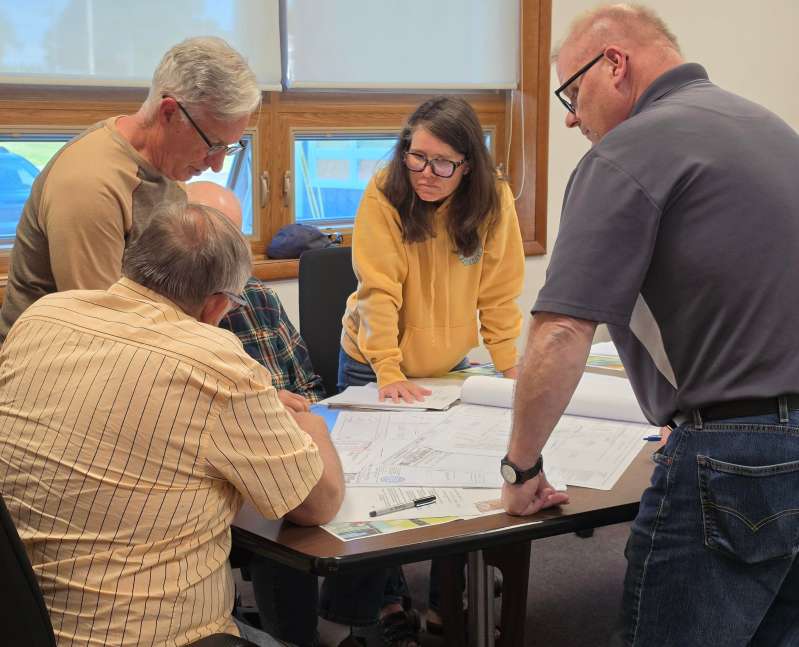
Trying to suss out exactly what’s happening in local development can be a confounding mission.
Knowing what happens at a planning commission meeting, and what role the public plays in the commission’s role, can go a long way toward helping residents understand their local government, and play a key role in making decisions that impact one’s world.
Often, the biggest projects you see coming up across the Poconos – including data centers – start the journey at a local planning commission.
In simple terms, a municipality’s planning commission is intended to advise local elected officials on land use decisions. This can include reviewing land development plans, potential zoning amendments, subdivision and land development ordinance amendments and various other projects.
Individual municipalities will often have their own planning commission, in addition to county-level planning commissions.
What do planning commissions do?
“They’re kind of the advisors to the supervisors in a township or the council in a borough. That’s basically what the planning commissions do,” said Monroe County Lead Senior Planner Eric Koopman.
“At the county level, we are a recommending body to all the elected officials, so it’s kind of a double planning commission report on any projects going on, such as amendments or land development plans. But it’s an advisory capacity to help have the elected officials make informed decisions when it comes to land use.”
Koopman said these are strictly advisory positions, as any actual votes must be conducted by elected officials such as supervisors, council members or commissioners.
Those who want to get a more detailed view of how planning and other entities operate can check out the Pennsylvania Municipal Planning Code, which is available online.
Monroe County Planning Commission Assistant Director Nate Staruch said a planning commission meeting, which is usually held on a scheduled basis at least once a month, serves to keep the gears of the land development process moving forward.
“The state law provides a 30-day review period, and then it provides planning commissions an opportunity to vote on recommendations and comments,” Staruch said.
According to Koopman, these meetings aren’t usually packed with attendees unless the project is substantial or newsworthy – say, for a data center or a warehouse.
The public has a right to be heard, usually during a public comment period at the start or end of the meeting – but, it’s helpful to keep a few things in mind when making comments.
Municipalities can’t ban data centers (or other types of projects)
As Koopman said, a municipality can’t simply ban a particular type of project, though it can exercise some control over where a certain type of structure can go.
“We’re required by law to provide at least one area in your municipality to accommodate any land use,” Koopman said.
“So, you can’t outright ban data centers, but you could confine them to your industrial district, and you could have additional conditions on that: minimum lot size, setbacks, buffers, landscaping.”
Those regulations can’t be too restrictive, though. Requiring something like 100,000 acres and mile-long setbacks from all property lines for a data center won’t work, as that could constitute a “de facto ban,” and potentially spur a developer to take legal action against a municipality.
Making your public comment count
It also helps to understand the process for planning commission meetings, Koopman said. For instance, a municipality’s ordinance may require a ceremonial or formal review just to accept a plan, with the intent to review comments and recommendations at the next meeting.
“Sometimes, because [members of the public] see an item on the agenda, they will have a packed house just to consider accepting the paperwork to start the review, regardless of its merits or theme,” Koopman said.
Once a plan is accepted – meaning it has been received – review, formal discussion, and recommendations usually occur at the next meeting, which tends to happen about 30 days later. These meetings serve as a good time for input from residents.
Keep in mind, though, public comment isn’t the time to utilize a “not in my backyard” strategy: It’s best to come prepared to contest a project based on how it adheres to the zoning code, or if a variance or special exception would be detrimental to the properties adjoining the development, for example. Broad speculation about how a certain business would ruin the character of a township or borough won’t cut it.
How else can residents get involved?
The public can also play an integral role in the process by volunteering for other commissions which may weigh in on planning.
“A lot of municipalities have various boards and committees, like an open space committee, or an environmental advisory committee,” Koopman said.
“There’s a lot that the average citizen can do to get involved in their municipality, and the best way to start that is just to attend a public meeting, and then you have an idea of what various boards and committees are out there.”
Koopman said that while these roles are unpaid volunteer positions, “it’s a good way for the public to have their input given in the community.”
Curious about what other local government entities do and how you can get involved? Reach out to the Pocono Record with questions for future explainers about how committees, commissions, boards and other groups work.