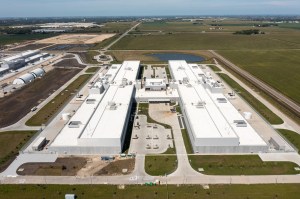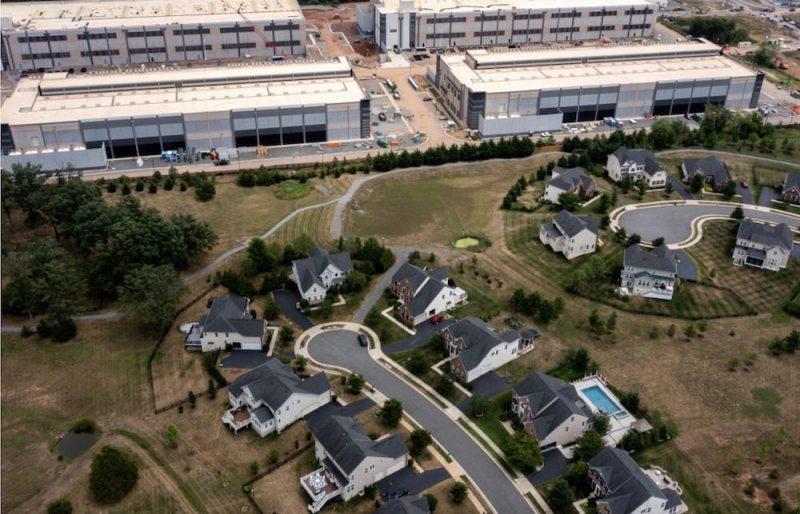
Several townships in Franklin County that lack zoning are looking into or moving ahead with proposed ordinances to regulate data centers.
The developments come as the county commissioners this week adopted an amendment to the county’s subdivision and land development ordinances, collectively known as SALDO, meant to help municipalities set rules for companies that may seek to develop data centers in the area. No data centers have been proposed in Franklin County, yet.
Non-zoning communities comprise the western half of Franklin County, which is more rural and sparsely populated than the eastern half. About 20% of the county’s population of approximately 160,000 people live in the area, which includes Tuscarora, Fannett-Metal and parts of Chambersburg school districts.
St. Thomas, Fannett townships considering data center laws
In Fannett Township, at the northern tip of the county, the board of supervisors will host a special meeting on May 28 to consider adopting a data center ordinance. While the document appears to be modeled on the county’s, which is posted on the township’s website alongside the township’s own ordinance, there are some significant differences:
- Data centers must generate all of their own electricity on site. A similar but far more limited item was removed from the county’s ordinance. The original text included a rule that data centers must generate renewable energy to offset 25% of the power they use. Commissioners Dean Horst and John Flannery voted to cut that language over concerns about too much land being needed to support the number of solar panels that would be required to generate that amount of power.
- There is a process for owners of residential properties within a 4,000-foot radius of a data center to obtain compensation from the company if they can prove the data center has negatively affected their property value.
- Fannett Township also wants to require that any company applying to develop a data center put $50,000 in an escrow account to “fully fund the Township’s independent engineering, acoustic, water study, geotechnical environmental, fire protection, legal review, and other Township fees; construction inspections; and annual compliance monitoring.” The proposed ordinance also states that when the account hits $10,000, the company must pay another $50,000 to replenish it within 15 days of receiving notice from the township. The escrow account would need to be established before an application is considered compete and replenishment would continue in perpetuity.
- In addition to data centers, the proposed ordinance applies to “battery energy storage systems,” or BESS. This is defined as “a use involving a building, structure, or area that uses batteries to store electrical energy at one time for use at another time, whether or not the energy stored on site is stored for use on-site or off-site.” A data center is defined as a building or area occupied by computers or other telecommunication, where information is processed, transferred or stored for an off-site location.
In the area west of Chambersburg, St. Thomas Township’s Board of Supervisors voted May 20 to advertise an ordinance regulating data center development, a township representative told the Public Opinion.
Montgomery, Lurgan township supervisors express support
Supervisors for Montgomery Township and Lurgan Township have also expressed support for the county’s ordinance.
Gregory Weller, a Montgomery Township supervisor, told the Public Opinion that the township supported data center regulation and was reviewing the county’s ordinance.
“As a non-zoned township, Montgomery is working closely with our engineers and solicitor to develop a specific data center ordinance. Our objective is to preserve the integrity of our farming operations and support water management conservation efforts for our residents,” he wrote in an email in late April.
Speaking at the April 29 public hearing on the county’s data center ordinance, Lurgan Township Supervisor Brian Zimmerman thanked the commissioners and county staff for helping out the “forgotten townships.”
“I appreciate the guidance you’re going to provide to townships like ours without zoning. … We will be able to take this ordinance and adopt it as-is, maybe tweak it,” he said, adding that he would like to require on-site water testing to ensure water flowing back out is safe.
In Pennsylvania, municipalities have authority over land use and zoning. About half of communities in the county — all are in the west half and represent about 20% of the population — do not have zoning to limit where different types of developments can build, leaving them vulnerable to a tech company coming in, buying up land and building a sprawling data center with heavy needs for power and water.