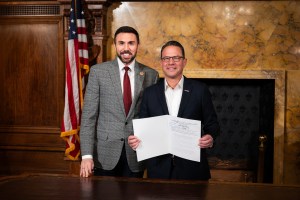
Mayor Michael Helfrich said the city’s data suggests that the Latino community may have been more affected by COVID-19 because of where they work.
Racial disparities in the rates of infection of the novel coronavirus are prevalent throughout the country, and Pennsylvania is no different.
Latinos, for example, represent 33% of the population in York City and 71% of confirmed cases of COVID-19, according to the York Daily Record. Out of the 109 confirmed cases reported in York City earlier this week, 78 of them were in the Latino community.
Latino and African-American communities nationwide are seeing alarming rates of infection: New York, Oregon, Illinois, Delaware, and Utah have among the highest death rates.
The infection rate with African Americans in York City is lower than that of Latinos: African Americans make up 26% of the city’s population and 17% of confirmed cases. By contrast, the white community has the lowest rate of infection at just 7% of confirmed cases out of 38% of its population.
York City Councilman Lou Rivera told the York Daily Record that the high number of Latinos being affected by the virus is “very disappointing.”
This week, state Secretary of Health Rachel Levine addressed the issue of the disproportionate effect of the pandemic on minority communities. She said demographic data has not been consistently reported by healthcare providers despite the fact that it’s required by the state of Pennsylvania.
“This is required information that will help us gather a complete picture of the pandemic in Pennsylvania,” Levine said, adding the state is reminding laboratories that the information on race is required, as that data is essential in gauging the scope of the virus.
In response, Gov. Tom Wolf announced the formation of a task force headed by Lt. Gov. John Fetterman to analyze and report such data.
York City, however, is one of the few comparable cities in the state that has its own health department, allowing the collection of reports of infections and demographic information other cities don’t have the capability to do.
Mayor Michael Helfrich said York City’s data suggests that the Latino community may have been more affected by COVID-19 because of where they work. The Department of Health has ordered safety measures at larger workplaces that remain open in the state, he added.
“Unfortunately, the businesses are the ones responsible for their own oversight,” the mayor wrote on Facebook earlier this week. “If an employee feels that the orders are not being followed, they’re supposed to call the local police. Well, how many people that really need their paycheck are going to call the cops on their bosses?”
With many employers located outside York City’s borders, the city doesn’t have the jurisdiction to take legal action. The onus is then on the workers to contact the city and report unsafe conditions. Among these workplaces are poultry and meat processing plants, large warehouses, and distribution centers in York County. Each of these operations employ large numbers of Latinos.
York City is working with CASA, an organization that advocates for Latino and immigrant communities in Pennsylvania, Maryland, and Virginia, to help spread the word about workers’ rights and inform people of the proper precautions to take to stay safe and healthy during the pandemic.
Councilman Rivera also said he feels that cultural and language barriers are major contributors to the disparity of COVID-19 cases in the local Latino community. He told the York Daily Record that when the federal government issued guidelines to slow the spread of the virus, these directives were only available in English. Though York City regularly shares information translated into Spanish on social media, it may not be enough. Infection rates are also directly affected by socioeconomics, Rivera said.
“Lack of health insurance and the jobs that are essential to the community and filled by minorities … put them at greater risk,” Rivera said. “This pandemic has taught us a lot of things. The people who are most vulnerable and most at risk mostly come from the black and brown communities. It’s a sad state of affairs.”