An end to the longest government shutdown in history appears on track after seven Senate Democrats—including Pennsylvania’s John Fetterman—and one Independent joined with Republicans late Sunday to break the impasse in what has become a deepening disruption of federal programs and services.
A legislative package cleared a procedural hurdle, 60-40, Sunday, and the Senate could wrap up formal passage as soon as today. It would next go to the House for a vote, where lawmakers have been away since September but were being told to prepare to return to Washington this week. It would then go to President Donald Trump’s desk to be signed into law.
Here’s a quick look at what is, and what isn’t in the bill, and what it means for Pennsylvania.
The bill does not address extending health care subsidies.
Sunday’s legislation lacks a clear resolution to expiring health care subsidies that Democrats have been fighting for as millions of Americans stare down rising insurance premiums. That includes the 500,000 Pennsylvanians who purchase health insurance through Pennie, the state’s official state-based health insurance marketplace, many of whom use the tax credits to lower their monthly premium costs. Without those subsidies, monthly premiums could increase by an average of 102%, and rise significantly higher in more rural parts of the state. The debate over extending the subsidies was pushed off for a vote next month, weeks before the subsidies are set to expire.
The bill guarantees that all federal employees who were furloughed or worked without pay during the shutdown will receive the wages they are owed retroactively.
Included is funding to keep much of the federal government running for the next couple of months, to Jan. 30. The stopgap measure would provide back pay for federal workers who were furloughed or working without pay during the shutdown—something that’s traditionally provided but that the Trump administration had threatened was not guaranteed. An estimated 42,000 federal workers in the commonwealth are currently furloughed due to the shutdown, and have not been receiving a paycheck.
Food assistance benefits would be reinstated.
The measure provides full-year funding for Supplemental Nutrition Assistance Program (SNAP) food benefits and the Women, Infants and Children (WIC) program. That means those programs wouldn’t be vulnerable to being cut off in another shutdown if lawmakers reach an impasse on Jan. 30. About $100 million in SNAP benefits have already been restored to Pennsylvanians, according to Gov. Josh Shapiro. The package would ensure states would be reimbursed for money they spent to keep the SNAP and WIC programs running during the shutdown.
We’ve got more below on where things stand with the potential end to the government shutdown. Be sure to check our website and social media accounts for the latest developments.
|
|
|
Last week, we asked readers affected by the government shutdown to share their experiences, so others can see the real impact behind the headlines and better understand what’s at stake.
We’ve been receiving some very thoughtful and detailed responses, which we will run throughout the week, and we invite readers impacted by the shutdown to continue sharing their experiences. Your stories could help others in similar situations know they’re not alone.
Here’s one Pennsylvanian’s experience facing significantly higher health care premiums:
“I’m exhausted, discouraged, and scared. I am a 59-year-old, self-employed Chester County woman working 60-70 hours a week. My main source of income is as a private piano teacher. I’m also employed part time as a piano accompanist working with children who have intellectual disabilities. I live a modest life. Vacations are for other people.
When I received confirmation that my healthcare policy would double to $1,100/mo, I wanted to cry. How can I possibly make more income to cover this when I work 12-hour days already? The answer is that I can’t. I don’t know what I’m going to do. I can only hope that I can bring my cost down by choosing a high-deductible plan and hope I don’t have any health issues—not likely at 59.
Many people have it worse than I do. I’m grateful for what I have and give back when I can. I do feel, though, that people like me go largely forgotten by the general public. Friends, neighbors, piano parents, and others will often say to me, ‘At least you don’t work at McDonald’s or Walmart.’ While I completely agree with them, it does not change the fact that this increase puts me in danger of losing my home as well as my health.
How can my country think this is ok? Am I of so little value?
I’m committed to the children I work with but it’s very hard to be positive at the moment. Thank you for listening to my story.”
— Melissa McVaugh, Glenmoore
|
|
|
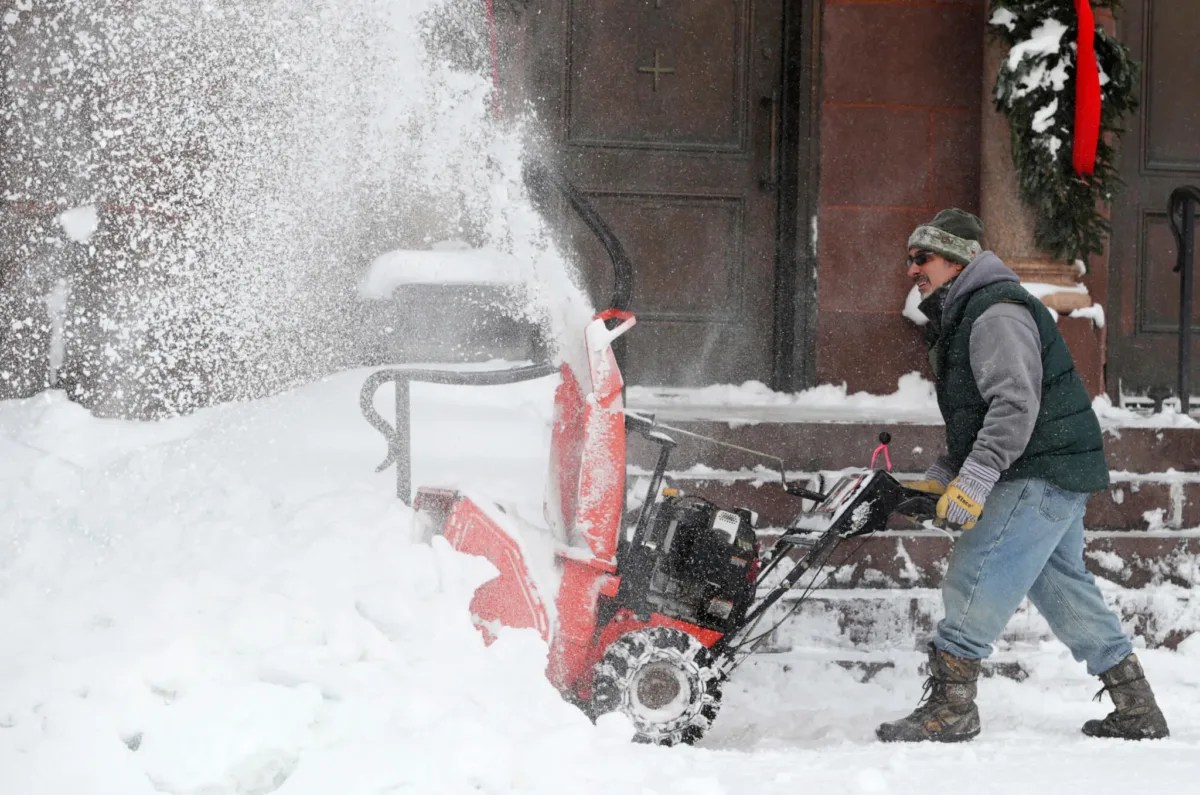
Frank Necci clears snow from St. Andrews Catholic Church, Friday, Dec. 29, 2017, in Erie, when the region saw 65.1 inches of snowfall in three days. (AP Photo/Tony Dejak)
|
It’s Nov. 10, and there’s already a lake-effect snow warning in place for Erie County.
Erie is one of the snowiest cities in the country. Last winter, Erie saw almost 112 inches of snow—second only to Syracuse, New York, which got 115. Yet the city isn’t among the coldest places in the US, with that distinction going to cities in Alaska and the upper Midwest, where the temperature rarely crawls above freezing for months at a time.
So if it’s not constantly, bitterly cold, why does Erie get so much snow? The answer lies in the lake effect, which western Pennsylvanians often invoke when shrugging off blizzard conditions.
But what does it actually mean for a place to get “lake effect snow?” We’ve broken it down so that the next time someone marvels at all of Erie’s snow, you can wow them with your meteorological skills.
|
|
|
• Religious and philosophical vaccine exemptions are on the rise in Southwestern Pennsylvania, where vaccination rates among children in several counties are below herd immunity. Get more details here.
• Preliminary tests showed that a baby formula contained the type of bacteria that produces the toxin linked to a botulism outbreak, which has sickened at least 13 infants in 10 states, including Pennsylvania. Find out more here.
• While Pennsylvania trails behind some states in energy efficiency, new investments and financial incentives could indicate a shift toward prioritizing clean energy in the commonwealth. Our Ashley Adams has the story here.
• Starbucks baristas across Pennsylvania are kicking off the coffee chain’s holiday season with a one-day strike on Thursday. Keystone politics and labor reporter Sean Kitchen has the details behind the effort in this story.
|
|
|
We’ll be off Tuesday in honor of Veterans Day. To those who have served our country, including the approximately 650,000 Pennsylvania vets, we salute you. We’ll be back in your inbox Wednesday.
|
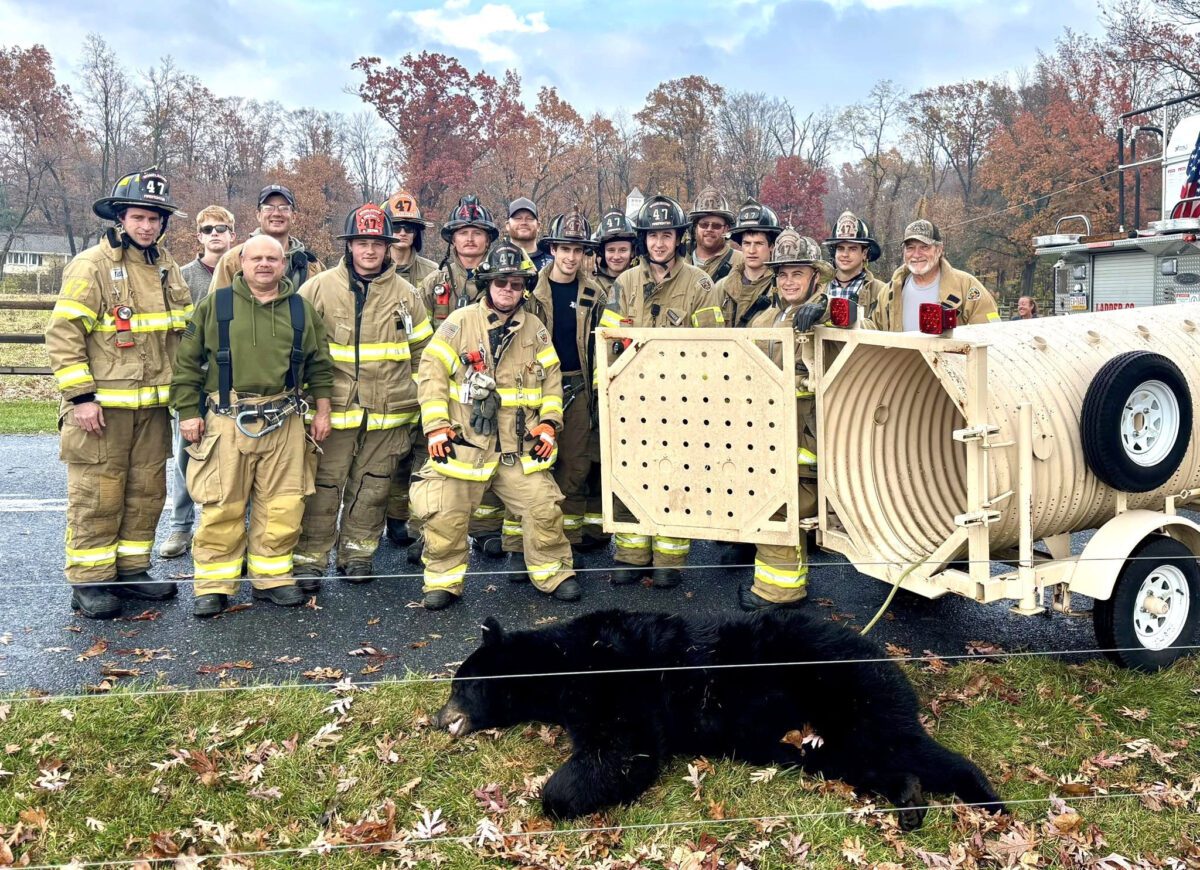
Lebanon County fire crews assisted the Pennsylvania Game Commission in rescuing a 385-pound male black bear from a tree in Millcreek Twp. over the weekend. Officials said they were able to sedate the bear, and it was safely relocated to another area. (USA Today Network)
|
Lebanon County fire crews assisted the Pennsylvania Game Commission in rescuing a male black bear from a tree in Millcreek Twp. over the weekend, according to officials.
The Womelsdorf Volunteer Fire Company reported that emergency crews responded to Round Barn Road for a report of a 385-pound bear climbing the trees. Crews said their ladder truck was requested to help with efforts to get the bear down.
“While a few creative ideas—like using honey, picnic baskets, marmalade, or porridge—were reportedly tossed around to lure the bear down, officers ultimately decided that sticking with more traditional methods was the way to go,” the fire company reported on its Facebook page.
|
|
|
Would you recommend this newsletter to your friends and family?
|
|
|
Reach 230,000+ Pennsylvanians who care about their communities! Sponsor The Keystone’s Dec. 6 Special Edition, “How to Get Involved and Give Back this Holiday Season.” Book by Nov. 21, 2025, and save 20% off your placement.
Click here to get started.
|
|
|
You are receiving this email because you opted in via our website.
Our mailing address is:
The Keystone / COURIER Newsroom
611 Pennsylvania Ave. SE
Washington, DC 20003-4303
Want to change how you receive these emails?
You can update your preferences or from this list.
|
|
|
|