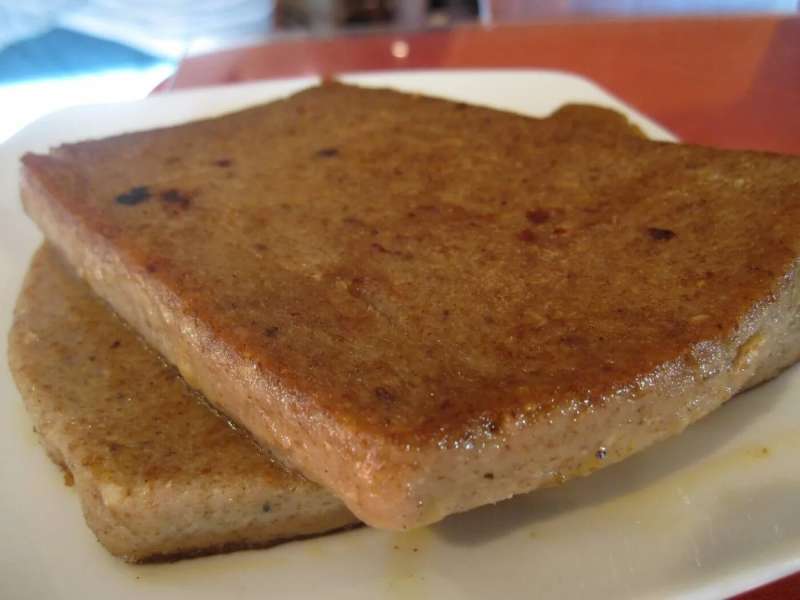
As local specialties go, it’s hard to top scrapple in the weird department. Even those who love the gray jelly-like cube joke that it’s made from every part of the pig except the oink. But Pennsylvanians love eating it probably more than any other region in the US.
Here are five fun facts about the popular breakfast meat:
Scrapple’s roots go way back
Scrapple originated from pre-Roman Europe and later from Germany with a dish known as ‘panhas’ in German, which was traditionally made with rabbit. When the Pennsylvania Dutch settlers brought the culinary tradition to Pennsylvania, the recipe was adapted to use pork, which was more readily available in the region. Early German settlers in the Philadelphia region created the first American scrapple recipes during the 17th and 18th centuries.
Scrapple didn’t get its name because it’s made with scraps
While traditionally the method of cooking scrapple was used to avoid wasting scraps of meat that were leftover after butchering, that’s not where the delicacy got its name. The name “scrapple” most likely originated as a shortened version of panhaskröppel, which stems from words panhaas or panaas (“pan rabbit”) and skröppel (”a slice of”). Translated, panhaskröppel is a slice of panhaas. Since that’s both gross and hard to pronounce, over time it was simplified to scrapple.
Scrapple became available commercially in 1863
Originally located in Media, Habbersett Pork Products first started selling scrapple to the masses in 1863, and you can still get that same product — with some minor recipe tweaks — in stores today.
If your scrapple is gray, you’re a-ok
A dull gray isn’t normally the most appetizing color you’d want in a meat product, but that’s the color a proper piece of scrapple should be. The buckwheat flour used in scrapple to help thicken the meat mixture and add flavor and nutritional value is responsible for the gray color.
You can thank scrapple for Labor Day (possibly)
Probably an urban legend, but the story goes that in 1879, a man named Rasher Liverburg, a union member at Philadelphia’s Panhas Packers, proposed a day in September where all the company’s workers get the day off to enjoy the scrapple they were producing. “Enjoy Your Scrapple Labor Day” soon became a yearly tradition at the plant. Eventually, the idea of a yearly day off of work spread, and Labor Day became an official US holiday in 1894.