Five animals are being considered for the threatened and endangered species list in Pennsylvania, one fish is anticipated to be removed from the listings and there are new concerns about an invasive eel and mussel.
The Pennsylvania Fish and Boat Commission reviewed the state’s threatened and endangered species lists during its Sept. 25 Habitat Committee meeting.
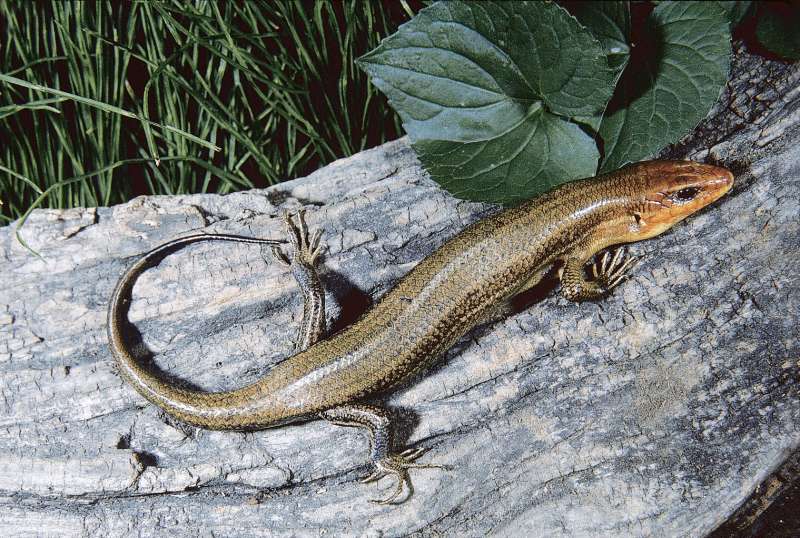
Chris Urban, natural diversity section chief for the agency, presented five species, including three for the endangered list — the devil crayfish, Eastern smooth earthsnake and the upland chorus frog. He also spoke about having the mountain chorus frog and broad-headed skink, a lizard, added to the threatened species list.
The skink has been a candidate for the list for more than 30 years and Urban said they haven’t been receiving any new records of them.
“They’re still in a couple of places, but really not doing well,” he said.
An endangered species is one that is in danger of extirpation or extinction, and a threatened species is one that may become endangered.
Urban said they want to delist warmouth, a species of sunfish from the Ohio River drainage, from the endangered listing.
“The warmouth is our happy story for this package. It’s going to come off the list from endangered,” Urban said. “We’re seeing population increases, it’s stability and even range expansion, so we’re pretty excited about this one that’s coming off the endangered list as proposed.”
Tim Schaeffer, executive director of the PFBC, said the plans for these listing changes will be presented to the agency’s board of commissioners in January.
It’s part of an ongoing package of work to lead the agency’s conservation work in the future.
“For the commission to receive the state wildlife grant funding annually, you’re required to have a statewide action plan that needs to get updated every 10 years, and we’re about to have ours finalized,” Schaeffer said.
“That’s our blueprint for us and our partners on what are the species of the greatest conservation concern, what are the threats? What are the potential remedies? And how can we proactively work to keep species off the endangered species lists and remove species from the list that are currently there,” Schaeffer said.
If approved by the PFBC’s board of commissioners in early 2027, the updated threatened and endangered listing can be published in the Pennsylvania Bulletin in the summer or fall of 2027.
The agency monitors species for being endangered, threatened with extirpation or a candidate for a list.
“We have 48 currently, 27 fish, 10 amphibians and reptiles, and 11 aquatic invertebrates,” Urban said about Pennsylvania’s endangered species list.
“We have 10 species currently listed as threatened, five fish, three reptiles and amphibians, and two aquatic vertebrates,” he said. These are species that are determined to be low enough in number that they need some level of protection to maintain them in the Commonwealth.
When a species is recommended for a listing, the Pennsylvania Biological Survey (PABS) reviews the documentation and then the information is advanced to the PFBC’s Natural Diversity Section. The agency’s management team and executive director make the final ruling.
The researchers look at four criteria, including possible population reduction, distribution and trends in extent of occurrence and area of occupancy of the species, population estimates and quantitative analysis for probability of extinction or extirpation from Pennsylvania.
The agency also has a candidate species of concern list that indicates those species that may soon be in trouble.
“They are in some study status, and this allows us to do some control of the collections of them with the season size and creel limit. A good example of that is the timber rattlesnake when it used to be listed as a candidate. It had a size limit and bag limit and things like that,” Urban said. “Folks are encouraged through some soft language to release them if they do encounter one.”
There are presently two species on the candidates list, including the broad-headed skink and the Blanding’s turtle, that may move to the threatened species list.
Aquatic invasives species
Sean Hartzell, aquatic invasive species coordinator for the PFBC, reported his concerns for two aquatic invasive species in particular, the golden mussel and the Asian swamp eel.
Last year, the PFBC formed an Aquatic Invasive Species Listing Workgroup (AIS Workgroup) with external partners, including the Pennsylvania Department of Environmental Protection, Pennsylvania Department of Conservation and Natural Resources U.S. Fish and Wildlife Service, the Western Pennsylvania Conservancy and the Pennsylvania Sea Grant for listing prohibited species.
The group, which Hartzell chairs, selected 10 species for an initial round of evaluations. The highest impact scorers were the golden mussel and the Asian swamp eel, and they are now proposed for the listing process.
He said the golden mussel has a high risk of being transported by watercraft, fishing gear and aquacultural products to new areas.
Hartzell said they are similar to invasive zebra mussels that have been here for decades and have caused significant impacts on waterways.
“This species is considered by many invasive species biologists to be kind of the zebra mussel 2.0, so to speak. There’s a been a lot of concern over the past few years of this emerging invasive species in North America,” Hartzell said.
With it being discovered in California about two years ago, Hartzell said, “That has caused a huge stir among invasive species professionals. There’s a very high risk of transport by this species on watercraft, similar to zebra mussels.”
Zebra mussels are known to compete and displace or potentially eliminate some of the native mussels in a waterway. They can also cause damage to structures and clog pipes. Invasive mussels also eat the small particles of organic matter and plankton in the water that is usually eaten by small bait fish. With fewer small fish, that creates less food for larger fish.
“So there are potential impacts to sport fish as well,” he said. “Stealing that food resource could potentially diminish the quality and quantity of the sport fish population.”
The other species, the Asian swamp eel, grows to be about 20 inches long and doesn’t have fins. They are predators that feed on insects, crayfish and small fish.
They’re present in the aquarium and live food trades and there are concerns about them escaping or being intentionally released into a waterway.
“We have a population of these close to Pennsylvania that’s established just across the Delaware River in Camden, New Jersey. So they’re knocking on the door, so to speak, with Pennsylvania,” Hartzell said. He added they are already prohibited or regulated in some capacity in New York, New Jersey and Maryland.
The request to place these two species on the aquatic invasive species list will be presented to the PFBC’s board during its October meeting.