Third Circuit Court of Appeals Judge Thomas Hardiman denied a request from the city of Philadelphia’s lawyers to rehear arguments in its case against the U.S. Department of the Interior and the National Park Service last month.
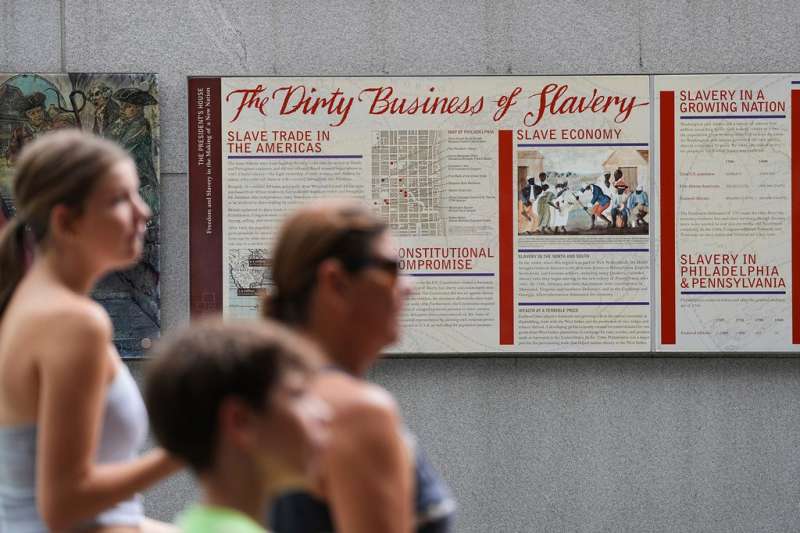
The city sued after National Park Service workers quietly removed exhibits on slavery from the President’s House historical site in Philadelphia in January.
The signs were reinstalled following a ruling from District Court Judge Cynthia Rufe in February, who issued an injunction ordering the Trump administration not to tamper with them.
But a panel of judges at the Third Circuit Court of Appeals reversed the injunction, unanimously siding with the federal government and finding the city had no standing to block the move. New exhibits were installed weeks ahead of the July 4 holiday and America250 celebrations.
While the request for what’s called an en banc review of that decision — essentially a request for a do-over before the full court — was denied on August 18, the case will continue in District Court. The city could also appeal to the conservative-majority U.S. Supreme Court.
“The Department is pleased the Courts have sided with the Trump administration on restoring truth and sanity to our country in our nation’s 250th,” a spokesperson for the U.S. Department of the Interior said in a statement, “These new panels are full of historical context and highlight the momentous events that took place in the President’s House and the other sites at Independence National Historical Park. They acknowledge the evils of slavery, including its injustices and hypocrisies.”
Ava Schwemler, a spokesperson for the city of Philadelphia’s law department, said the city’s attorneys “will continue to do everything in our power to make sure that the history of enslaved Africans in the Presidents House is fully told.”
She added the city’s lawyers primarily wanted the rehearing to address a part of the initial decision they warn “provides a roadmap for the federal government to act with impunity.”
The Third Circuit had ruled the city had no standing to halt the Trump administration’s removal of the signs because they didn’t meet a threshold laid out in a law law known as the Administrative Procedure Act. That law allows federal agencies’ actions to be challenged in court, so long as they amount to a “final agency action.”
The federal government argued that the signs’ removal was not a final action because they had planned to replace them — though those plans were not disclosed publicly until well after the lawsuit was filed. The court ultimately agreed.
The exhibits the Trump administration replaced focused on the lives of nine slaves who served George Washington at the presidential residence in Philadelphia. They were intended to highlight the paradox of freedom and slavery at the founding of America.
Experts have warned that the new exhibits downplay Washington’s role in perpetuating the institution of slavery.
It’s a pattern, historians say, in how the Trump administration has sought to retell American history.
While the Third Circuit Court’s June decision allowing the federal government to replace the exhibits focused on the city of Philadelphia’s lack of legal standing, other plaintiffs in the case can make arguments about harm done to them.
The city is joined by The Black Journey Philadelphia, a company that provides walking tours focused on Black history, and the Avenging the Ancestors Coalition, a Philadelphia-based organization focused on preserving Black history and remembering the legacy of slavery.
The signs were initially removed following an executive order signed by President Donald Trump entitled “Restoring Truth and Sanity to American History.”
The order called for a review of material in federally-run museums and national parks that cast “our Nation’s unparalleled legacy of advancing liberty, individual rights, and human happiness is reconstructed as inherently racist, sexist, oppressive, or otherwise irredeemably flawed.”