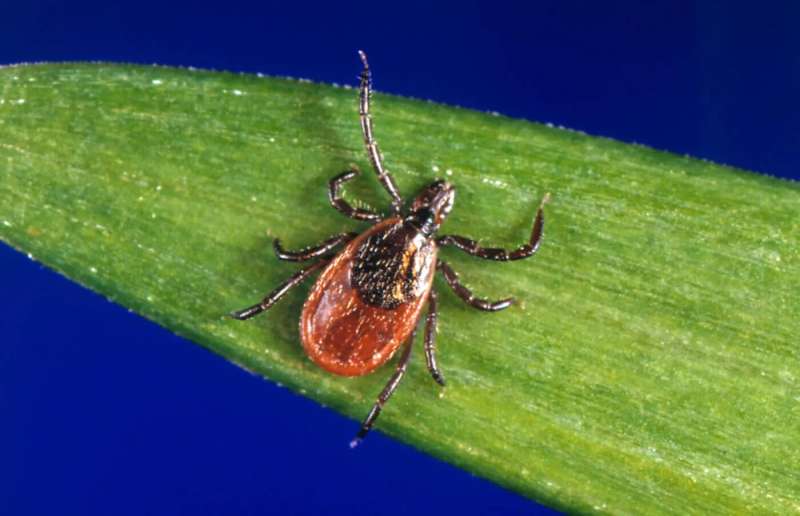
In Pennsylvania, a tick bite may bring more than one disease—and doctors may never know it.
And fall is also a busy season for adult ticks. Anaplasmosis is the state’s second-most common tick-borne illness. But because it can occur alongside Lyme disease and both infections respond to the same antibiotic, some cases may never be identified, experts say.
“We will probably see a higher case count before it reaches a stable level,” said Leah Lind, Lyme and tick-borne diseases coordinator at the Pennsylvania Department of Health. “But that’s so hard to predict.”
There are also more reports across the country, according to the Centers for Disease Control and Prevention, as the black-legged deer tick migrates to other areas.
Early anaplasmosis symptoms include fever, chills, severe headache, muscle aches, nausea, vomiting, diarrhea, and loss of appetite. If left untreated, it can worsen to respiratory failure, bleeding problems, organ failure, and even death.
Early-stage Lyme disease symptoms include fever, chills, headaches, muscle and joint pain, swollen lymph nodes, and erythema migraines, often described as a bull’s-eye rash. In rare cases of anaplasmosis, a rash is present.
“There is some evidence that your symptoms will be more intense if you’ve got both of the infections,” said Danielle Tufts, assistant professor of infectious diseases and microbiology and immunology at the University of Pittsburgh School of Public Health. “You can get co-infected with them, but again, if you get a treatment of doxycycline, it should take care of both.”
Lyme disease rash is so distinctive and common in Pennsylvania that it can be treated and diagnosed without testing, she said. If no test is conducted, however, then an anaplasmosis case may be missed.
The main risk of misdiagnosing a co-infection, she said, is not knowing, on the research side, how many cases there actually are.
There were 8,670 cases of Lyme disease reported as of the end of July, according to the Pennsylvania Tickborne Disease Dashboard. That is at least 1,000 fewer than at the same point in 2024 and 2025. The most recently available anaplasmosis data is from 2024, when 1,071 cases were reported for the year. Cases prior to that year had been going up, then dropped.
Lind said although reported cases are lower this year, ticks are still common enough that state officials consider them a risk for everyone.
Adult ticks become more active in the fall, said Nick Baldauf, entomologist and vector control program coordinator for the Allegheny County Department of Health. Although adults are more likely to carry infection, their larger size makes them easier to spot and remove. Meanwhile, ticks in the younger (nymph) stage carry less infection but are harder to detect, as they can be as small as a poppy seed. Ultimately, nymph ticks pass on disease to more people than adults.
Anaplasmosis is caused by ticks infected with the bacteria Anaplasma phagocytophilum, contracted mainly through the white-footed mouse and other small mammals, Baldauf said. Lyme disease is also spread through these same mammals. Deer are not hosts for Lyme or anaplasma.
“A lot of people that are contracting the disease never find the ticks,” Baldauf said. “And in all likelihood that they contracted that disease from a nymphal tick during May, June, or July.”
There are a few programs in place undergoing trials to orally vaccinate mice, he said. Its purpose is to prevent Borrelia, which causes Lyme, at its source through spray-coated pellets that mice consume. There are also vaccinations available for some pets and farm animals.
As for humans, Pfizer and Valneva are in phase three of testing a vaccine for Lyme disease. It may be available to the public in 2027. In the meantime, all three professionals recommended treating clothes and shoes with permethrin before going outside. For additional safety, Tufts recommended wearing long sleeves and long pants, and tucking pants into socks. “Once you get home, you know, remove all your clothes, put them in the dryer for 20 to 30 minutes on high heat because ticks are very susceptible to desiccation,” Tufts said. “So if you dry them out, it should kill them.”
Other tips she recommended after going outdoors is taking a shower to wash off unattached ticks; purchasing a tick puller or fine-tipped tweezers and removing the tick as close to the skin as possible, not by the body. Also, do not use a flame, Vaseline, or nail polish to kill the tick, as that could kill or stress the tick out and elevate the risk of disease. Some people might be unaware that a tick has bitten them, so she cautioned against mistaking tick-borne symptoms for a summer cold.